
London slides from summer to routine, and a familiar face steps into focus at a place many of you know well.
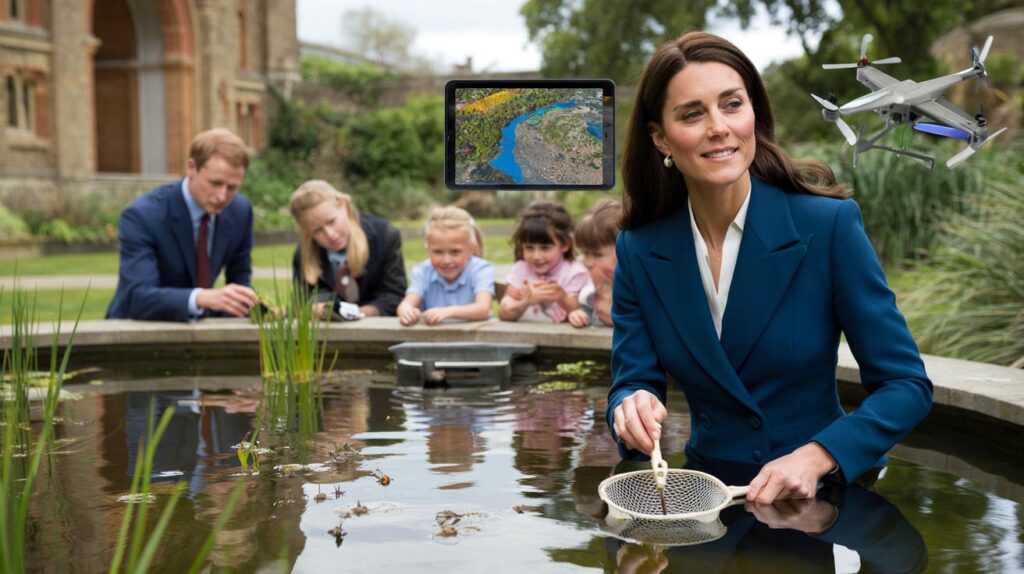
After a quiet August, the Princess of Wales returned to public-facing work alongside the Prince of Wales at the Natural History Museum, greeting staff and schoolchildren in a smart blazer and shirt. The visit blended two clear strands: conservation powered by technology, and hands-on nature learning for young people. Both threads mirror projects the couple have championed for years, now brought together on the same London stage.
A polished return to a familiar stage
Catherine arrived in a tailored, understated blazer with a clean, open-neck shirt, a look that signals business without stiffness. The setting — South Kensington’s Natural History Museum — carried weight. It is a place she has supported before, and where she has spoken about nature’s role in recovery and resilience. Standing beside Prince William, she greeted teams who care for the museum’s living spaces as carefully as its galleries.
Prince William’s part of the outing focused on how technology aids conservation. He met researchers who model habitats, map species and test tools that can scale protection work. The remit dovetails with his Earthshot Prize, which rewards practical environmental innovation with global potential.
Catherine’s schedule put children centre stage. She joined pond-dipping sessions, helped identify tiny swimmers and plants, and learned how the National Education Nature Park programme links school grounds, science skills and emotional development. The work fits her interest in social and emotional education, and it uses the museum’s gardens as a living classroom.
Two tracks, one message: smart tools protect nature at scale; small hands reconnect with it up close.
Why this visit matters now
For many families, September marks a reset. By choosing a joint engagement that marries conservation tech with pupils’ wellbeing, the couple set a tone for the new term: practical, hopeful and measurable. It also ties the royal calendar to a national place that millions of you have visited, turning a royal return into a public invitation to re-engage with nature after the summer break.
Nature as her sanctuary
Catherine has become a public advocate for making daily space for the outdoors. In a series of short seasonal films released this year under the “Mother Nature” banner, she described how time outside steadies the mind and knits people together. The Spring film, released in May, framed nature as her “sanctuary” and praised “the natural world’s capacity to inspire us, to nurture us and help us heal and grow.”
That point carried added meaning when she shared a message during cancer treatment last July, welcoming the reopening of the museum’s gardens. She wrote of creating “a special space which encourages people of all ages to reconnect with nature and learn more about how we can protect our natural world,” and hoped the gardens would prove “inspiring and transformative” for visitors managing their own stresses and recoveries.
“I know the power of nature to support our development and wellbeing, both by bringing us joy and helping to keep us physically, mentally and spiritually healthy.”
A conversation on the hills
In April, she appeared in a short film with Chief Scout Dwayne Fields near Lake Windermere. Wrapped in a beige wool turtleneck, jacket and matching flat cap, she spoke of a “very spiritual, very intense” reconnection when walking in wild places. The exchange underscored how personal experience now shapes her public agenda, linking the solace of a fellside path to classroom projects in city schools.
Three subtle signs of a carefully managed comeback
- Wardrobe signals intent: a structured blazer and unfussy shirt set a neat, professional tone without distancing warmth.
- Agenda shows range: conservation technology for impact at scale, balanced with children learning through touch and observation.
- Language stays consistent: repeated emphasis on reconnection, wellbeing and growth ties private experience to public service.
What each royal focused on today
| Person | Focus | Key action | Expected outcome |
|---|---|---|---|
| Prince William | Conservation technology | Met researchers to discuss tools that support field projects | Stronger pipeline between museum science and Earthshot-style solutions |
| Princess of Wales | Social and emotional education | Joined pond-dipping and discussed the National Education Nature Park | More schools using nature for learning, confidence and wellbeing |
Inside the museum’s living classroom
The museum’s gardens now function as a teaching ground. Children can compare habitats in a few steps, watch invertebrates up close and track seasonal change. Teachers gain a safe outdoor space where science meets personal development. The work links to the National Education Nature Park, which encourages schools across the country to map, improve and share the biodiversity value of their grounds.
At pond edge, learning becomes tangible. Pupils handle nets gently, log what they find, and discuss why a stickleback or tadpole prefers certain plants. These simple acts build scientific questioning, patience and care. They also open conversations about how time outdoors steadies mood and helps classmates support each other.
Small acts — testing water clarity, sketching a leaf, naming a beetle — build habits that last longer than a single lesson.
How you can take part where you live
You do not need a museum to make a start. A tray of rainwater on a balcony brings in mosquito larvae and water boatmen to observe safely. A log left to rot invites woodlice and beetles to show up for free science. A ten-minute walk to your nearest park gives a class, a club or a family a change in pace and a shared subject to talk about.
- Try a “mini pond” in a watertight container with stones for wildlife exits; supervise children and cover when not in use.
- Use a notebook or phone camera to record species; repeat the same spot weekly to watch change.
- Set simple rules: no feet in water, gentle handling, return every creature to where it was found.
- Compare two places — shade versus sun — and ask what differs and why.
What this signals for the months ahead
Expect the couple to keep pairing high-level environmental innovation with practical education. The museum visit shows how the two streams strengthen each other. Data and devices help target conservation. Meanwhile, regular time outside helps children build resilience, curiosity and social bonds that underpin learning. When royal engagements reinforce both sides, public projects gain profile and momentum.
For teachers and parents planning the term, nature-based learning remains an accessible tool. It costs little, supports science and supports mental health. The risks are manageable with supervision and clear boundaries. The benefits accumulate: more confident questions, calmer classrooms and a shared habit of care that travels from school to home.
And for those watching the diary, today’s blazer-and-shirt moment worked as a quiet statement. The Princess of Wales returned with purpose, the Prince of Wales brought his Earthshot lens, and the setting — a museum built on discovery — invited you to notice the details that point to a busy season ahead.



So good to see her back at the NHM! The blazer says business, the pond‑dipping shows heart. Loved the consistent language about wellbeing and reconnection—quiet but clear signals. 🙂
Is this a comeback or just careful PR? The “three signs” feel a bit choregraphed—neat wardrobe, tidy talking points, perfectly timed September reset.