
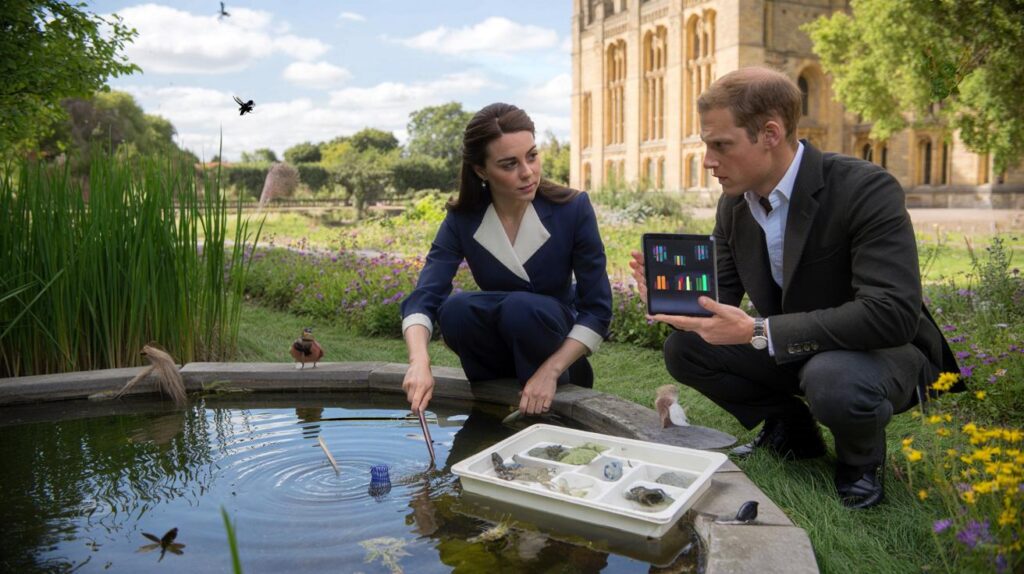
A late-summer return brings crisp shirts, a smart blazer and a purpose-filled walk through London’s most storied museum gardens.
The Princess of Wales stepped back into public duty alongside Prince William at the Natural History Museum, pairing a smart blazer with a crisp shirt and a focused agenda. The visit blended conservation science, hands-on learning for children and a message Kate has championed during recovery: nature can steady the mind and restore balance.
A confident return to the public eye
After the summer break, the couple chose a venue that speaks to both style and substance. Kate’s understated look—clean tailoring, simple lines—suited a day built around practical action with pupils outside. William, meanwhile, engaged researchers on using technology to accelerate conservation, a theme aligned with his Earthshot Prize work.
Two royals arrived with one clear thread: nature is not a backdrop, but a tool for learning, healing and safeguarding the future.
The setting also carried personal resonance for Kate. During cancer treatment last year, she backed the reopening of the Museum’s gardens and wrote about the way time outdoors had aided her wellbeing. That message anchors today’s outing: small, repeated moments in nature build resilience for children and adults alike.
Why the Natural History Museum matters now
| Who | Where | Focus | What it means |
|---|---|---|---|
| The Princess of Wales | NHM gardens | Social and emotional education | Hands-on pond dipping with pupils, building confidence and curiosity |
| The Prince of Wales | Research spaces | Conservation technology | Scaling tools and data methods celebrated by the Earthshot Prize |
| Schools | Across the UK | National Education Nature Park | Curriculum-linked outdoor learning and citizen science opportunities |
Tech on the trail of conservation
William’s brief centred on how sensors, imaging and data modelling can turbocharge restoration projects. Earthshot Prize finalists have shown how low-cost remote monitoring, AI-driven analysis and community reporting shorten the gap between evidence and action. Bringing those approaches into mainstream museum-led research can stretch limited funding and reach habitats that often go unmeasured.
From satellite pixels to pond samples, better data means faster fixes: identify threats early, target effort, measure impact.
Learning by getting muddy
Kate joined children at the water’s edge for pond dipping—an activity as old as a jam jar and as current as any STEM lesson. Nets and trays reveal insect larvae, snails and beetles, teaching classification, patience and care. The National Education Nature Park programme builds on that spark, giving schools a framework to map their grounds, boost biodiversity and track progress term by term.
The Princess’s deeper bond with the outdoors
Kate has spent recent months championing a series of seasonal short films—informally dubbed “Mother Nature”—that spotlight how green spaces lift mood and strengthen family bonds. She has called nature her sanctuary, a place that nurtures growth through routine contact and quiet moments. In a spring release, she stressed how time outside can steady physical, mental and spiritual health.
In April, she appeared in a short film with Chief Scout Dwayne Fields near Lake Windermere. Wrapped in a beige wool turtleneck, jacket and flat cap, she spoke about feeling a powerful, almost spiritual reset in wild places. That thread runs through today’s work with schoolchildren: give young people a grounded relationship with the living world, and they carry that steadiness into classrooms, sports and home life.
Five ways nature boosts your wellbeing and learning
- Stress reset in minutes: short green breaks lower heart rate and improve focus, making homework and revision feel manageable.
- Sharper thinking: varied sights and sounds train attention, helping pupils switch between tasks without mental fatigue.
- Real-world science: sampling water, soil and insects turns abstract topics into tangible discoveries pupils can explain.
- Social glue: group tasks outdoors require teamwork and communication, building peer trust and confidence.
- Daily movement: gentle activity outside supports sleep quality and mood, especially during exam periods or big transitions.
Five small habits to try this week: 10-minute green walk, balcony plant care, window-bird tally, sky sketch at dusk, weekend park micro-safari.
What today’s visit means for schools and families
The Museum’s education push arrives as schools seek low-cost ways to enrich lessons without adding workload. The Nature Park programme gives teachers ready-made activities, from species surveys to simple habitat upgrades, and a way to log gains across the year. Families can mirror those steps at home: a washing-up bowl makes a mini pond; a notebook becomes a nature log; a sill planter brings pollinators close.
Safety and inclusion matter. Adults should supervise water play, set clear boundaries and teach gentle handling of wildlife. Urban families can get the same benefits through street trees, pocket parks or even cloud-watching; access does not require acres of land. For neurodivergent children, predictable routines—same route, same bench, same time—can make outdoor time feel secure, not overwhelming.
Style meets substance
Kate’s pairing of a smart blazer and crisp shirt suited a day that balanced formal duty with hands-on learning. The look nodded to business-like purpose while keeping movement easy for kneeling at water trays or chatting with pupils at eye level. It signals where her public work is heading this term: practical, grounded, child-centred.
How to bring the Museum’s approach home
- Run a weekend “garden count”: tally birds or bugs for 15 minutes, then repeat next month to spot changes.
- Create a balcony or window herb pot: measure growth weekly and cook with the harvest.
- Start a school-to-home nature diary: one page per week with a drawing, a question and a new word.
- Use free mapping apps to mark local trees and habitats, then look up their seasonal changes together.
- Build a rain gauge from a bottle to link weather to puddles, ponds and plant health.
For secondary schools, conservation tech can be introduced with entry-level sensors, open data and simple coding. Pupils can compare classroom readings with public datasets, mirroring the Museum’s methods on a small scale. This mirrors William’s focus: harness technology so that every observation counts.
For families balancing busy schedules, try a “five-by-five” routine: five minutes outdoors, five days a week. Pair it with something you already do—school run, dog walk, post-dinner stretch. Over time, the routine becomes a reset button that supports the same wellbeing gains the Princess has championed since her treatment and recovery.



Loved seeing Kate back at the NHM with William. The focus on hands-on learning and those ‘five ways’ felt practical, not preachy. Short green breaks have genuinely helped my kids settle after homework. More of this, please—and kudos for linking museum research with schools.
Cool visit, but is this more PR than progress? We hear about sensors, AI and Earthshot every year—what projects will actually be funded and measured in London’s own parks? Also, pond-dipping is great; maintenance budgets for school grounds would be even better. Realy hope there’s follow‑through.