
Britain bins thousands of bananas each day. A simple kitchen move could save your fruit, your money, and your breakfast.
Shoppers across the country are swapping guesswork for a proven trick that slows ripening dramatically. The secret sits in most kitchen drawers, costs pennies, and takes seconds to use. No fancy gadgetry, no new cupboard space, just a smarter way to store what you already buy.
The two-week trick at home
Bananas ripen in a rush because they breathe out ethylene gas, which triggers their own softening and browning. Put them in a crowded fruit bowl with apples or peaches and that gas builds up, accelerating the whole process. Separate the bunch, and the ripening calms down. Target the stems, and you can slow it even more.
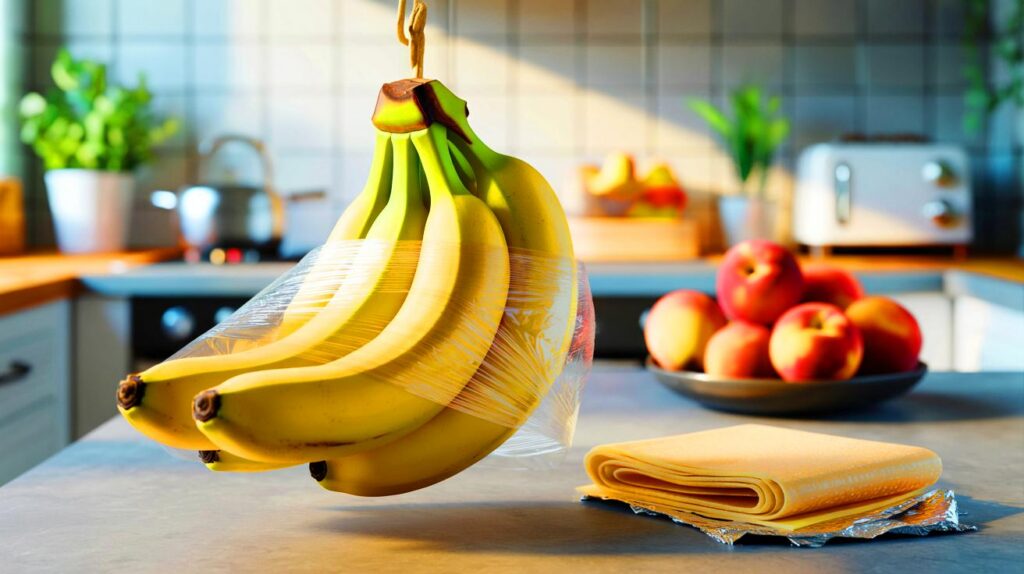
Here’s the move that’s winning converts: wrap the stems of the bunch tightly in cling film (or tin foil) and keep the bananas away from other fruit and heat sources. The wrap helps trap ethylene at the point it’s most densely released, so less reaches the rest of the fruit. Add distance from apples, radiators and ovens, and you cut the ripening speed again.
Wrap the stems, keep them apart, and steer clear of heat. Many households report up to 10–14 extra days of good colour and texture.
The method works best on firm, just-yellow bananas. It won’t reverse browning already underway, but it can slow what happens next. Results vary with room temperature, how green the bananas were at purchase, and how often you unwrap them.
Why bananas brown so quickly
Bananas produce more ethylene than most fruit. Ethylene is a natural plant hormone, and in closed spaces it acts like a loudspeaker for ripening signals. In a bowl, the gas from several items mixes and amplifies, sending bananas into overdrive. Warm kitchens add fuel, because higher temperatures boost the enzymes that soften banana flesh and darken the peel.
Keep the air moving, keep the fruit spaced, and you disrupt that cycle. Wrapping the stems doesn’t suffocate the bananas; it simply limits how much ethylene reaches the rest of each fruit and the bunch nearby.
Bananas don’t “go bad” by magic; ethylene and warmth combine to hurry them along. Control those two, and you buy time.
How to do it step by step
- Start with firm, unbruised bananas showing little to no spotting.
- Tear off a small square of cling film or a strip of foil.
- Wrap the stems tightly, covering where they join, with no gaps if possible.
- Place the bananas on a worktop or hang them on a hook, away from other fruit.
- Keep them clear of warm appliances such as ovens, toasters and air fryers.
- Peel back and rewrap only the stem of the banana you’re taking; leave the rest sealed.
Where to store them
Choose a cool, ventilated spot in the kitchen, out of direct sunlight. A simple banana hanger helps minimise pressure marks and improves airflow. If your home runs hot, move the bunch to the coolest room you can manage. Avoid sealed containers for whole bananas at room temperature; trapped moisture can make skins blacken faster and encourage mould.
Does the fridge help
The fridge slows chemistry, but it can damage banana skins. If you chill unripe or just-yellow bananas, you risk “chill injury”: the peel turns dark and the flavour can dull. For fully ripe bananas that you want to keep eatable for longer, the fridge can hold them for several extra days. Expect the peel to brown while the inside stays firmer than it would on the counter.
A practical split: keep unripe and just-ripe bananas at room temperature with wrapped stems; transfer fully ripe bananas you won’t eat within a day or two to the fridge. If you only need a short pause, refrigerate peeled slices in an airtight box with a squeeze of lemon to limit browning.
Eco-friendly wrapping options
If you’d rather skip cling film, use a small piece of foil, a beeswax wrap, or a reusable silicone cap. All three can create the same barrier over the stems. Beeswax wraps mould around the join and can be rinsed and reused. Foil is easy to shape and can be reused several times before recycling if it’s clean and uncontaminated by food.
Safety and hygiene
Use clean material to cover stems, not scraps that picked up crumbs or grease. Replace the wrap if it tears or loosens. Check the bunch daily for bruises or leaks—damaged fruit emits more ethylene and can spoil its neighbours. If one banana turns fast, remove it from the group.
What to do as days pass
Plan how you’ll use the bunch. Staggered ripeness saves waste and keeps variety on the menu. Move bananas along the following track depending on colour and feel:
| Storage method | Typical extra time | Best for |
|---|---|---|
| Stems wrapped, room temperature, away from fruit | Up to 10–14 days | Keeping just-yellow bananas snack-ready |
| Unwrapped in a mixed fruit bowl | 0–2 days | Speeding towards ripeness |
| Fridge (fully ripe only) | 3–5 days | Holding peak ripeness, peel darkens |
| Freezer (peeled, sliced) | 2–3 months | Smoothies, baking, ice-cream bases |
Buying smart and using the lot
Pick a mix of stages in one shop: a couple of green-tinged bananas for later in the week, and a few yellow for now. Keep the stems wrapped on the greener ones; leave the ready-to-eat fruit unwrapped if you’ll have them today. If weekend plans change, peel and freeze surplus bananas before spots spread.
Turn very ripe bananas into banana bread, pancakes, or overnight oats. Mash and freeze in portions for future baking. For a quick dessert, blend frozen slices with a splash of milk for a one-ingredient “nice cream”. Nothing needs to hit the bin.
Heat, humidity and the small print
Warm homes, sunny windowsills and steamy kitchens all speed ripening. Even with wrapped stems, 26°C rooms will move faster than cool ones. If your kitchen gets hot, shift bananas to a cooler hallway or pantry. Humidity matters too: high moisture can mark the peel, so keep bananas somewhere airy and dry.
Not every bunch behaves the same. Early bruising, transport conditions and variety affect shelf life. Treat the stem wrap and separation as a baseline, then tweak placement and temperature for your routine. The payoff shows up in fewer brown bananas and fewer midweek dashes to the shop.
One roll of cling film, a bit of distance and a cooler perch: three small tweaks, up to two weeks of gain.



Tried the stem wrap with foil last week and my bananas stayed firm and mostly spot-free for 9 days. I also moved them off the fruit bowl and away from the toaster. Simple tweak, big payoff for breakfast planning.
So we’re mummifying banannas now? I’ll give it a whirl, but if my windowsil turns into a tiny science lab I’m blaming you. Seriously though, the ethylene explanation actually makes sense.