
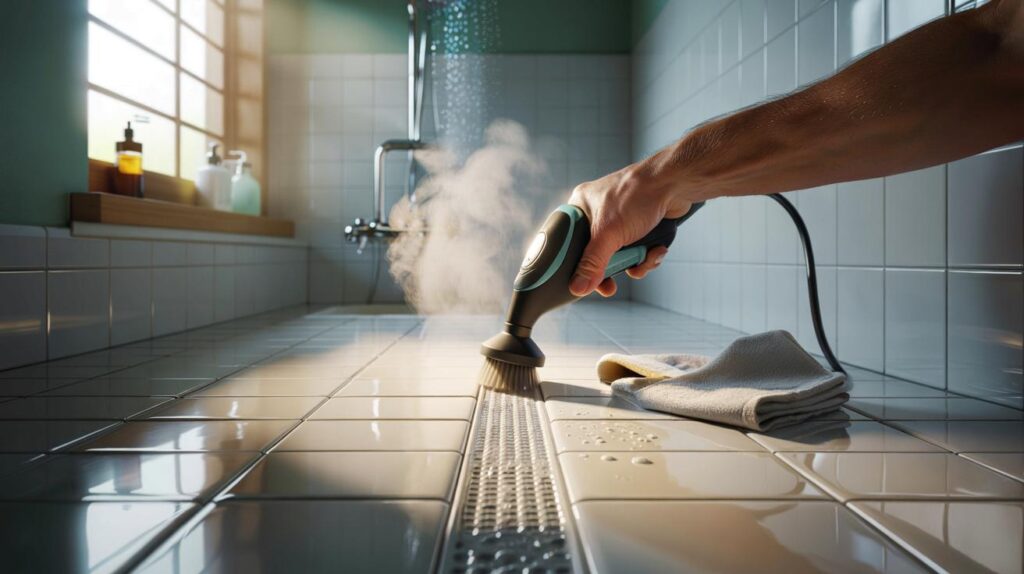
Tiles can sparkle, but grout tells the truth. That thin, pale line between squares is where soap scum settles, where damp lingers, where mould finds a quiet corner to bloom. We’ve all had that moment when the shower looks fine until daylight catches a fuzzy shadow along the edges, and suddenly it feels like the whole room needs scrubbing from top to bottom.
The kettle clicked off in the kitchen and the bathroom mirror was still fogged from my morning shower. I crouched by the tiles, eye level with the grout, and saw it: a faint grey cast that wasn’t there last week, a soft bloom in the corner where the shampoo bottles sit. On a Sunday, this is the point where time disappears into scrubbing and fumes, and the room smells like bleach for hours. Then a neighbour knocked, swore by a handheld steamer, and handed me hers. The hiss was gentle, the heat quick, and the dirt lifted like a bad mood. Grout doesn’t get dirty in one day; it gets neglected in tiny, quiet ways. Steam changed the script.
Why steam cleaners make grout look new again
Grout is porous, so it catches body oils, limescale, shampoo residue and tiny specks of soil that ride in on feet. When humidity lingers after a hot shower, that film becomes a welcome mat for mould, especially along the lower edges and behind bottles. Steam tackles both problems at once, loosening grime and reducing microbial guests without splashing buckets of chemicals on your walls. The trick is simple: heat softens the dirt, pressure lifts it, and a cloth removes what rises to the surface. Clean, yes, but also kinder on lungs and drains.
Think of a typical rented flat in Manchester: small bathroom, small extractor, big steamy showers after a late shift. I watched Jasmine, a nurse on nights, test a compact steamer on a single strip of grout for ten minutes before work. The before-and-after was subtle, then undeniable: the line turned from tired grey to the warm off-white it used to be. In homes where relative humidity nudges above 60% most evenings, that kind of quick reset can stall mould from taking hold along the edges where it loves to start.
The physics is friendly here. Steam at around 100°C softens the bonds between dirt and the grout’s pitted surface, so you don’t rely on a hard brush to do violence to it. Bleach can make grout look whiter by altering stains, but it doesn’t remove the film they live in, and the residue can feed the next layer of grime. Steam lifts, a microfibre traps, and ventilation dries the area so spores don’t find a damp landing pad. When heat does the heavy lifting, your hands and your bathroom breathe easier.
How to steam-clean grout the smart way
Start with a tidy space: move bottles, hang a towel over the bath edge to catch drips, crack a window. Fit a small nylon brush or a pinpoint nozzle to your steamer, wait for a steady hiss, and work in 30–40 cm sections. Hold the tip a centimetre or two from the line and glide slowly, counting to three on each 10 cm run so the heat has time to work. Trail a folded microfibre in your other hand and wipe immediately after each pass. Finish each section with a dry cloth and let air do the rest.
Most people rush. They sweep the nozzle like a wand and wonder why the line still looks murky. Slow down a fraction and avoid bogging the grout with too much moisture in one spot. Skip wire brushes that can scuff the surface. Go easy on scented cleaners before steaming — mixing unknown chemicals with heat is not a fun science experiment. Let’s be honest: nobody really does that every day. And yet, ten quiet minutes after a shower can keep the grout in the safe zone for weeks.
Here’s the mantra you can steal: use the heat to lift, the cloth to remove, the air to dry. Steam is theatre: heat, patience, wipe.
“Don’t chase perfection, chase a repeatable routine,” says a veteran housekeeper I met in Brighton. “Short, regular steam sessions beat epic scrubbing days every time.”
- Work top to bottom so loosened grime doesn’t drip onto cleaned lines.
- Swap cloth sides often; a dirty cloth just smears the story around.
- Finish with five minutes of airflow — fan on, window open, door ajar.
- For stubborn corners, a second slow pass beats pressing harder.
Stop mould in its tracks before it takes the stage
Mould thrives on routine: warm showers, slow-drying corners, a shy extractor fan. Break that routine with small, livable changes. Keep steam sessions short and regular, wipe the last metre above the floor where grout lines collect splashes, and give the room a gasp of fresh air after hot water. Swap that sealed bottle cluster for a caddy that lets air circulate. If you like a scented finish, use a light, rinse-free cleaner after steaming, not before, so heat and fragrance don’t wrestle on the same day. Share what works in your home — the best ideas often come from next door, not a lab.
| Key points | Details | Interest for reader |
|---|---|---|
| Steam lifts grime from porous grout | Heat softens soap scum and oils; pressure loosens debris; microfibre wipes remove the residue | Cleaner lines with less scrubbing and fewer harsh chemicals |
| Simple method, small sections | Glide 1–2 cm from grout, count to three per 10 cm pass, wipe immediately, dry and ventilate | Predictable results you can repeat in 10–15 minutes |
| Prevent mould after cleaning | Improve airflow, reduce damp corners, use caddies, do quick steam top-ups weekly | Longer-lasting brightness and fewer deep cleans |
FAQ :
- Does steam actually deal with mould on grout?Steam helps lift surface mould and the film it clings to, and heat can reduce spores on hard surfaces. For deep-rooted or widespread black mould, consider targeted products or professional advice.
- Is steam safe on all grout?It’s generally fine on ceramic tiles with cement-based grout. Be gentle on cracked or crumbling lines, and go cautious with natural stone or freshly sealed areas — test a discreet spot first.
- What kind of steam cleaner works best?A handheld unit with a focused nozzle and small nylon brushes is ideal for grout. Consistent steam output beats high pressure for this job, and a long cord helps you move smoothly.
- How often should I steam-clean grout?Little and often wins: a 10-minute pass weekly in busy showers, fortnightly in lower-use bathrooms. After a deep reset, those short sessions keep things bright.
- Can I use chemicals with my steamer?Stick to plain water in the tank. If you want a scented or disinfecting finish, apply a light, compatible cleaner after the surface has cooled and dried, never mixed inside the steamer.



Tried this today—10 minutes, slow passes, microfibre wipe. Grout looks new. No bleach fog. Love it 🙂