
Your food bill keeps creeping up, your fridge keeps coughing up limp veg, and you’re binning more than you’d ever admit. You cook, you try, and still it feels like the supermarket always wins. There’s a gentler way to eat well, waste less, and keep your money for better things than mouldy spinach.
It starts on a Tuesday evening, when the kitchen feels a bit tired and dinner is already late. You swing the fridge door and stare at a wilting half-pepper, a heel of bread, a pot of yoghurt with its lid sulking. Then it clicks: you’ve got more food than you think, just not lined up to behave.
You pull the pepper, a tin of chickpeas, a lonely lemon. Bread becomes crunchy crumbs in the pan. A splash of pasta water turns yoghurt into sauce. Ten minutes later, it tastes like you meant it.
What if dinner felt like that every night?
The Quiet Trick That Halves Waste: Shop Your Kitchen First
Most of us plan meals like we’re writing a fresh shopping list, not a rescue mission. The smarter way starts before you leave the house. Open your fridge, freezer and cupboards, and make a “must-use-first” list on your phone. It sounds basic, but it’s the difference between buying more eggs and remembering you’ve got eight already.
Give everything a date dot with a Sharpie. Leftovers become “Thu Curry”, not “mystery tub”. The second you label it, your brain sees a future meal, not clutter. It’s half admin, half magic. And when you do go to the shop, your list shrinks without you doing anything heroic.
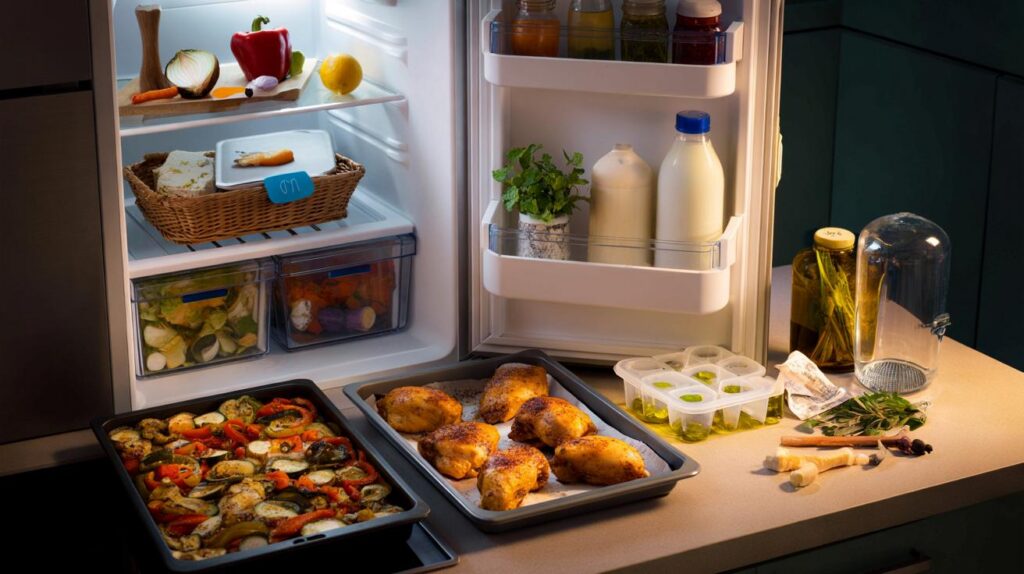
Here’s a tiny ritual that adds up. Put a shallow basket on the top fridge shelf called “Eat Me First”. That’s where the open feta, the halved onion, yesterday’s roast carrots live. Meal ideas spring out when ingredients sit together. You’ll spot that onions and yoghurt speak fluent shawarma, or that roast carrots and chickpeas are one cumin sprinkle from a solid supper.
A friend with three kids swears this basket saves them a tenner a week, minimum. They do Friday-night “Fend For Yourself” bowls with whatever’s in there. Not Instagram pretty. Properly satisfying. And on Sunday, that basket gets reset like a little domestic ritual that feels oddly calming.
Waste mostly happens because food is hidden, mislabelled or forgotten. Visibility beats willpower. Keep herbs in a glass with a splash of water on the fridge door, like flowers. Stick the newest milk behind the older one so you naturally follow first-in, first-out. Freeze a handful of grapes or berries when they start to slump; they become sweet ice cubes for porridge or mocktails. The point isn’t perfection. It’s small nudges that remove friction so you use what you’ve already paid for.
Batch Once, Eat Five Times: Foundation Cooking That Pays You Back
On one pan day a week, cook “foundation foods” that flex for days. Roast two trays: one with mixed veg (peppers, onions, courgettes, carrots), one with spiced chickpeas or chicken thighs. While the oven’s on, simmer a quick tomato base with garlic and a splash of soy for depth. Portion each into tubs: pasta sauce, soup starter, taco filler, frittata material.
Freeze little flavour bombs, too. Chop herbs and cover with olive oil in an ice-cube tray; pop out a cube into hot pans and everything tastes intentional. Save parmesan rinds, veg peels and onion ends in a freezer bag. When the bag’s full, simmer into a stock that makes even packet noodles feel grown-up.
Common mistakes are batch cooking a single dish you’ll get bored of and stuffing the freezer with anonymous bricks. Rotate bases, not full meals. Label tub fronts, not lids, so you can see what’s what without a freezer excavation. Portion for a realistic meal: two cups stew, one portion rice. Let’s be honest: nobody actually does that every day.
A quick maths moment. A £4 tray of chicken thighs stretched with chickpeas, onions and a tin of tomatoes can become tacos, pasta bake, and a soup for lunch. That’s three dinners and a lunch for under a fiver of meat. **Shop your fridge before you shop the aisle**, then **stretch proteins with plants**—it’s not stingy, it’s clever.
We’ve all had that moment when payday feels far away and the cupboard looks bleak. That’s where tiny hacks do the heavy lifting. Keep a “base sauce” list on your phone: tomato-garlic, yoghurt-lemon, tahini-soy, peanut-lime. If you’ve got a base, you’ve got dinner. And if you need a jolt of confidence, borrow it.
“I don’t batch cook meals, I batch cook options,” my neighbour Salma told me, stirring a pot of spiced onions. “Then I remix all week and nobody complains.”
- Stop tossing your veg peels: carrot and onion skins make stock; potato peels roast into crisps.
- Freeze your dairy smart: grated cheese, butter, even yoghurt in muffins; rescue milk in cubes for sauces.
- Save jar brines: pickle juice is a brilliant marinade or salad dressing starter.
- Keep a “leftover ledger”: a note on the fridge with what’s cooked and when it needs eating.
Small Habits, Big Wins: Tiny Tweaks That Stack Up
Cook pasta or grains once, eat them twice. A big pot of barley or rice becomes salad, then fried rice with the stragglers from your “Eat Me First” basket. Cold grains fry better anyway. And keep a kettle close: boiling water in the kettle is more efficient for blanching veg or starting stock than running your hob from cold.
Buy a whole chicken. Roast it, then pull the meat while warm; freeze in flat bags so it defrosts fast. The carcass makes stock. That one bird can anchor wraps, soup and a pie, giving you three different meals with one purchase. If meat prices have jumped, do the same with chickpeas—cook a big batch, then roast some, mash some, freeze some.
Season your salads, not just your stews. A pinch of salt on cucumbers and tomatoes for ten minutes pulls water, concentrates flavour and makes less dressing go further. Stale bread? Blitz into pangrattato with garlic and chilli flakes—sprinkle on pasta, soup, even fish fingers, and everything tastes richer. It feels like turning chaos into pocket change.
Shop timing matters more than couponing. Hit your supermarket during markdown hour—those yellow-sticker windows are usually late evening on weekdays or mid-afternoon on Sundays in the UK. Grab bread, herbs, meat, then portion and freeze the same day. If yellow stickers aren’t your vibe, lean seasonal. New-season carrots are cheap and sweet; roast a kilo and you’ve got sides, soup, and a blitzed dip with yoghurt and cumin.
Store things where you’ll actually use them. Put nuts and seeds by the kettle so you’ll toss them on breakfast. Keep a mini lazy Susan in your fridge for sauces so nothing lurks at the back. And decant cereals and rice into clear jars; it’s not just pretty, it tells you when you’re low so you don’t panic buy repeats. **A transparent kitchen is a thrifty kitchen.**
Pickle scraps like a home cook with secrets. Slice the tough ends of cucumbers, red onion, or radish. Pour over hot water, vinegar, salt, and a pinch of sugar. Ten minutes later your sandwich tastes twice the price. Stir-through hacks matter, too: a spoon of mustard in mash, a splash of pasta water into eggs for extra silky scramble, leftover wine frozen in cubes for fast pan sauces. Soy sauce in tomato sauce? Absolutely. Tiny, tasty, low-cost upgrades.
Some days you’ll burn the onions or forget the basket. That’s normal. The trick is to make your kitchen an ally, not a guilt trip. A little structure, a few clever defaults, and humble ingredients start to pull their weight for you. Share your “foundation food” day with a mate, swap half a tray of roast veg for their soup base, and you’ve both doubled variety with no extra spend.
| Point clé | Détail | Intérêt pour le lecteur |
|---|---|---|
| Shop your kitchen first | “Eat Me First” shelf, date dots, visible leftovers | Immediate waste drop and smaller shopping lists |
| Batch options, not meals | Roast trays, base sauces, frozen herb cubes | Flexible dinners all week without boredom |
| Small habit stack | Yellow-sticker timing, grain cook-ups, smart storage | Lower bills, faster cooking, better flavour |
FAQ :
- How do I stop throwing away fresh herbs?Chop, cover with oil in an ice tray, and freeze. Or stand them in a jar with water in the fridge door and snip as needed.
- Is batch cooking worth it if I live alone?Yes—portion flat in freezer bags so you can defrost quickly. Rotate bases (grains, sauces) to avoid repeats.
- What’s the cheapest protein to stretch meals?Chickpeas, eggs, and chicken thighs. Roast or simmer big batches and remix with spices and sauces.
- Can I freeze yoghurt, milk or cheese?Milk and grated hard cheese freeze brilliantly. Yoghurt can be frozen for baking or marinades; texture changes but flavour holds.
- What’s one habit that saves the most money?Label and date leftovers, then plan two meals around them. Sounds boring, saves pounds. Soyons honnêtes : personne ne fait vraiment ça tous les jours.



Just roasted a tray of veg + chickpeas and did the yoghurt–lemon base sauce—genious. The herb-in-oil ice cubes made Tuesday pasta taste intentional. My freezer no longer looks like a graveyard of anonymous bricks.
Question: does boiling water in the kettle really save energy vs the hob? I’ve heard it depends on the kettle’s efficency and how much you boil. Any rough numbers or sources?