
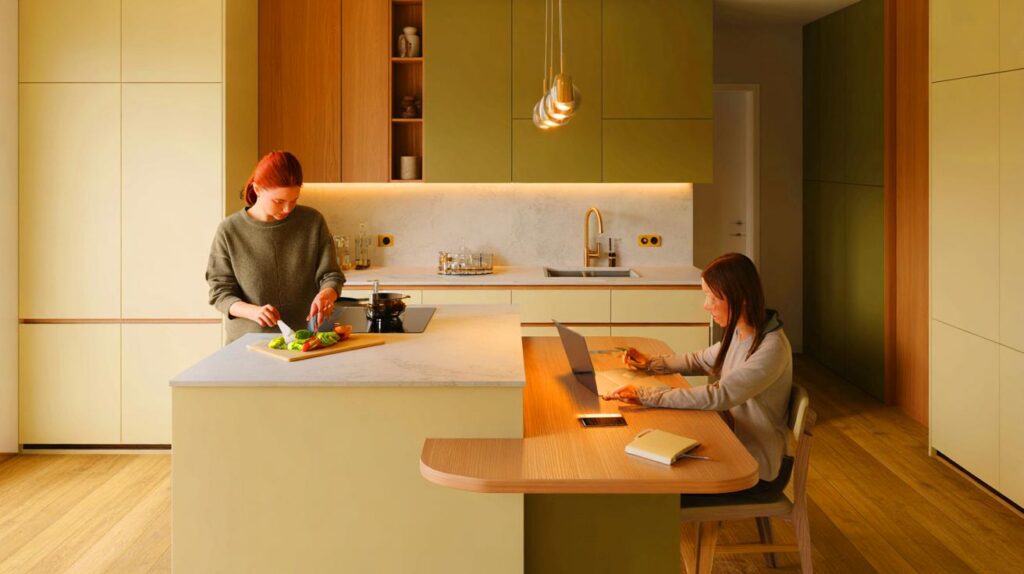
Your kitchen has changed more than you think. A new layout quietly reshapes family time, storage habits and renovation budgets.
Designers see a shift away from bulky centre-stage islands towards peninsulas with an integrated table. The new favourite uses less floor area, adds usable seating, and brings power, light and warmth within reach. Households want a room that hosts homework, emails and breakfast without losing cooking space.
Why kitchen islands are losing ground
Islands need generous clearances on all sides. Many UK homes cannot spare 1 metre walkways and 1 metre around appliance doors. That restriction turns an island into an obstacle rather than a hub. A peninsula fixes to one side, so you keep circulation on three faces and free up the centre of the room.
Function also matters more than showpiece scale. Families want a prep area that doubles as a proper table. Stools at a high bench suit quick bites, yet they rarely replace a dining surface. A peninsula with a table-height wing combines both without a second piece of furniture.
A single run can now do triple duty: prep bench, plug-in workstation and a comfortable table for daily meals.
The new hero: the peninsula with integrated table
Peninsulas fit against a wall or extend from existing cabinetry. That flexibility helps small and medium kitchens claim extra worktop without carving a hole in the plan. Side panels can hide drawers and shelves. The table end gives seated comfort for longer tasks.
Designers report rising requests for built-in sockets, pop-up chargers and task lighting along the peninsula edge. LED strips under the worktop lip brighten chopping areas and boost safety. Induction zones placed on the peninsula turn it into a cook-and-serve station for quick weekday meals.
Place the peninsula off a wall to regain floor area; add 2 double sockets to make it your household charging dock.
Materials and finishes that add warmth
Warm textures soften the clean geometry. Light oak, ash and walnut veneers temper the coolness of stone. Honed marble and matt granite resist glare and hide fingerprints. Antibacterial laminates and quartz tops reduce cleaning time and stand up to spills.
Tangible wins you can measure
- 90–100 cm: clear walkway most households need to move past seats and open appliances without collisions.
- 180–240 cm: typical length for a 3–4 seat peninsula table, comfortable for daily dining.
- 30 cm: useful overhang for knee space under the table edge; increase to 35 cm for tall stools.
- 60–90 cm: common depth range for a peninsula worktop; 70+ cm improves prep comfort.
- 75 cm and 90 cm: table height versus counter height; mix both with a stepped design if space allows.
- £1,200–£4,500: typical spend for a basic peninsula with laminate top and timber frame.
- £3,500–£8,000: typical spend when you add stone, electrics, LED lighting and sturdy storage.
- 2–3 m²: floor area often recovered compared with a full-size island needing four clear sides.
- 20–30 minutes a day: time many households reclaim by prepping, serving and working on one surface.
Size guide for real kitchens
| Kitchen width | Island feasibility | Peninsula with table | Recommended clearance |
|---|---|---|---|
| Under 2.7 m | Usually impractical | Good fit on one wall | 90 cm from seat edge to opposite surface |
| 2.7–3.2 m | Borderline | Strong candidate | 100 cm near ovens and the fridge |
| Over 3.2 m | Possible with care | Excellent with integrated table | 120 cm in high-traffic zones |
How 2026 colours are steering the look
Calm palettes stay in play, yet they warm up with natural tones and tactile grain. Three combinations set the pace for the coming season.
White and wood
White brightens small rooms and bounces daylight deep into the plan. Pale oak or ash introduces texture and a soft organic edge. Satin sheens beat high gloss for a calmer, more forgiving surface. This pairing sits well in open-plan spaces where the kitchen blends into the lounge.
Olive green and wood
Olive brings relaxed depth without feeling dark. Timber keeps it grounded and friendly. Brushed brass or matt black handles suit this tone. Many homeowners match it with light stone worktops, subtle veining and matt oak floors for a grounded, elegant feel.
Beige and white
Beige softens stark whites and promotes quiet continuity across walls, cabinets and textiles. Gentle marbles, textured ceramics and natural linen add layers without clutter. Warm lighting and copper or bronze notes stop the scheme from drifting into blandness.
White with wood for timeless calm, olive with timber for natural poise, beige with white for serene flow.
Planning tips that save mistakes
Start with movement. Mark appliance swing zones on the floor with tape. Add 10 cm if two people will pass behind a seated diner. Keep the hob at least 30 cm from the table edge. Fit heat-resistant panels near any seat facing a cooking zone.
Plan power early. A peninsula often needs a dedicated circuit for an induction hob, commonly a 32A feed in the UK. Add two double sockets for devices and small appliances. Ask a Part P qualified electrician to certify the work. Fit RCD protection for kitchen circuits.
Choose lighting layers. A trio of pendants looks inviting above the table wing. Place them 70–80 cm above the worktop to avoid glare. Add under-cabinet LEDs for prep, and a dimmer to switch from cooking brightness to evening softness.
Storage that works as hard as you do
Use the peninsula sides for slim pull-outs, trays and cutlery near the table end. Tuck recycling bins on the kitchen-facing side to streamline clear-up. Specify full-extension runners so every centimetre counts. Soft-close hinges keep noise down in open-plan rooms.
Costs, value and what to expect during installation
Budgets vary with materials. Laminate and timber frames keep costs low. Stone, solid wood and custom metalwork increase the bill. Many households land between £3,500 and £6,000 for a well-equipped peninsula with integrated table and electrical work. Stone offcuts sometimes cut hundreds off the price if you accept shorter lengths.
Installation usually takes 2–4 days once cabinetry arrives. One day covers electrics and first fix. Another day fits cabinets and worktops. A final visit handles lighting, sealants and snagging. You do not normally need planning permission, yet electrical work must meet regulations.
Who benefits most—and who should pause
Small kitchens gain the most because the peninsula adds surface without blocking circulation. Families who eat casual meals at home enjoy the table-height section. People who work from the kitchen value ready sockets and comfortable seating. Homes with awkward corners can align a peninsula to straighten the flow.
Pause if you host large parties often and need a central stage. A generous island still suits cook-alongs and free-form mingling. If the room is very narrow, a drop-leaf table attached to a straight run may give better legroom than a deep fixed peninsula.
Extra ideas to stretch the concept
Try a split-level build: 90 cm for prep, stepping down to 75 cm for dining on the same run. That shape hides mess from the living area and gives ergonomic comfort. Specify a curved table end to soften traffic pinch points. Add a concealed rail under the table to hang bags and headphones.
Think sustainability. Choose FSC-certified timber, low-VOC finishes and durable hardware. Recycled content quartz and efficient induction cut lifetime impact. LED lighting trims energy bills, and hard-wearing edges reduce replacement cycles. These choices pay back in daily use and in buyer appeal if you sell later.



Love this shift. Our 3.0 m-wide galley could never fit the 1 m clearances an island needs, but a peninsula with a 75 cm table wing would actually give us four real seats. The £3.5–6k range feels doable, especially if stone offcuts shave cost. LED under-lips + pop-up chargers = everyday wins. Definately bookmarking.