
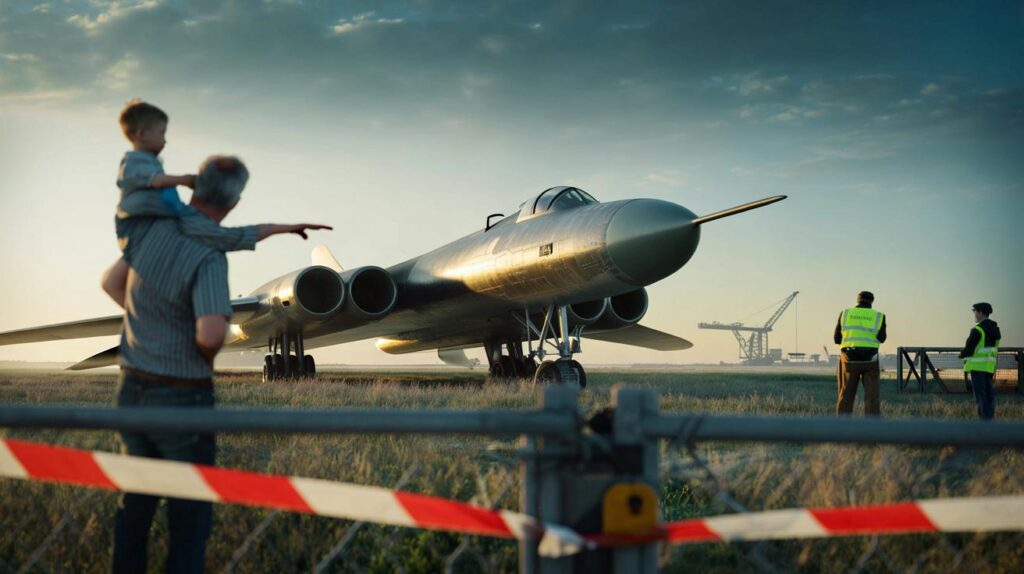
The last flying Avro Vulcan, the thunderous Cold War delta that once shook Britain’s skies, is now silent behind a locked fence. With its airfield shut and its future in limbo, an urgent appeal has been launched to move and protect it before corrosion, red tape, and simple time do what enemy fighters never could. If this rescue stalls, the final flying Vulcan could vanish from public life—quietly, and for good.
The wind comes off the empty runway with a dull hiss, tugging at the chain-link fence where a handful of visitors press close for a better look. Beyond the wire sits Vulcan XH558, grey as a raincloud, the last of its kind to take to the air, more sculpture now than aeroplane. A grandad lifts his grandson to see over the rail, and the boy points at the delta wing as if it might still leap skyward at any moment.
Once, you could feel this machine in your chest. The Olympus engines gave a howl that seemed to vibrate the marrow in your bones. Now it’s the quiet that lingers. Footsteps on gravel. Murmurs. And the odd, awkward question: what’s happening to it?
Some of the volunteers trade glances, shrug, and say they’re waiting on the next update from the trust. The noticeboard says “urgent appeal.” The tape on the fence flaps and flickers like a warning. The clock is ticking.
A Cold War icon on the brink
Vulcan XH558 is the last flying example of Britain’s most dramatic bomber, the triangular giant built to carry a nuclear deterrent and later loved as an airshow star. Retired from flight in 2015, it was meant to live on in a purpose-built home where people could walk beneath its wing and hear its story. That never quite happened. When the airfield that hosted it closed, the aircraft was left marooned on a site few can now access.
That’s why the charity behind the aircraft has launched an urgent appeal: funds are needed to dismantle, move and rehome the Vulcan in a secure, indoor space before weather and bureaucracy do their slow work. This is the last flying Vulcan left on Earth. Leave it outdoors, waiting on paperwork and goodwill, and the equation changes from “national treasure” to “logistical nightmare.” The appeal is a race against time, money, and the risk of official patience running out.
We’ve been here before, in a way. Years ago, tens of thousands of donors helped return XH558 to the skies, delivering what became known as the “Vulcan effect” at airshows—crowds surged, cameras lifted, and the howl wrote itself across summers. In 2015 the final season pulled audiences that British aviation hadn’t seen in decades. That goodwill didn’t die; it drifted, waiting for a new rallying point. The trust knows how to mobilise hearts and wallets. The difference now is the challenge is static, not airborne, and the timeline is uncomfortably tight.
Here’s the practical bit people don’t see from the fence. Moving a 32-metre wingspan bomber isn’t like transporting a classic car. You strip off the wings, stabilisers and delicate panels, employ specialist jigs and cradles, hire cranes, and plot a road route that dodges bridges, cables and bad tempers. There are police escorts, night closures, permits. Then the aircraft must be reassembled indoors by engineers who understand the Vulcan’s particular quirks. The bill runs to low millions. The risk of doing it poorly runs higher.
How to actually keep the Vulcan alive
The ask feels big until you break it down. Regular micro-donations—£3, £5, £10 a month—add up over a year, especially with Gift Aid. One-off gifts from people who saw the Vulcan fly can push the needle faster. Corporate partners can underwrite heavy lifts or sponsor gallery spaces in any new home, anchoring their name to living heritage. Share the appeal in your WhatsApp groups, local Facebook pages, and alumni networks. This is about memory as much as metal.
Watch out for copycat fundraisers that look legit but aren’t connected to the project. The official channels belong to the charity that owns and stewards XH558; give there, not via random links. If money is tight, pledge time: graphic design, legal support, community outreach, even stewarding when the aircraft is open again all matter. We’ve all had that moment where we mean to act and leave it till tomorrow. Let’s be honest: nobody actually does that every day.
Several readers asked what difference a small gift makes, and why the deadline seems fuzzy. The truth: transport dates hinge on permits and contractors, which only lock in once funds are essentially in place. Donate early, not late. Then tell one more person.
“We don’t need everyone to do everything. We need everyone to do something,” said one trustee by the fence, eyes on the big delta wing. “If we move now, the Vulcan lives where families can meet it for decades.”
- Target: low millions to cover dismantling, transport, and indoor reassembly
- Timeline: months, not years—permits and weather windows won’t wait
- Skills: DIY volunteers, pro engineers, project managers, PR and digital help
- Follow: the official Vulcan charity channels for updates and verified links
- Local action: write to councillors and MPs to support planning and access
What we lose if it goes
Stand under a Vulcan and you understand British engineering the way you understand a cliff or cathedral—by feeling small. It’s not nostalgia for everything the Cold War stood for. It’s recognition of teamwork and audacity: designers sketching improbable triangles, sheet-metal workers turning drafts into skin, crews learning the temperament of an aircraft that could float like a kite and roar like a storm. The Vulcan is a machine, yes. It’s also a story you can touch.
Ask a former ground crew member about the smell of Avtur in the morning frost. Ask a teacher who brought a class to see the bomber on a school trip and watched a quiet child go wide-eyed and curious. Museums hold paintings and pots in climate control because culture decays quickly when left to weather and chance. A 20th-century icon deserves the same care, or we shorten its life and shrink our future conversations with it.
Missing this moment would mean losing a living link to British aerospace genius. Maybe you never saw XH558 fly, or you did and thought you’d always have another summer. Share a memory with someone younger than you. Capture a photo and a voice note from someone older. The aircraft can be saved by money and muscle. Its meaning is saved by us telling each other why it matters, out loud, while we still can.
| Key points | Details | Interest for reader |
|---|---|---|
| Urgent appeal to save Vulcan XH558 | Funds needed to dismantle, move and rehome the last flying Vulcan in a secure indoor space | Be part of a national rescue with a tangible, visible outcome |
| Time-sensitive logistics | Permits, contractors and weather windows create a months-long—but closing—opportunity | Understand the real-world hurdles and why early action matters |
| Multiple ways to help | Micro-donations, corporate sponsorship, volunteering, and advocacy to local officials | Find an entry point that fits your budget, skills, and schedule |
FAQ :
- Is the Vulcan still airworthy?No. XH558 has been grounded since 2015 and will not fly again. Its future is as a preserved, accessible exhibit, potentially with ground runs or cockpit tours if conditions allow.
- Why can’t it just fly to a new home?The aircraft no longer meets the requirements to fly, and key systems and permissions are not in place. With the airfield closed, the only viable route is careful dismantling and road transport.
- How much money is needed, and what will it pay for?The appeal runs to the low millions. That covers specialist engineering, cranes, transport, permits, storage, and reassembly in a suitable indoor space, plus interpretation so the public can learn from it.
- What is the deadline?The practical window is months, not years, because permits, contractor availability and weather drive the schedule. Delays increase costs and risk further deterioration.
- How can I help beyond donating?Volunteer your skills, share verified appeal links, encourage your employer to sponsor, and write to local representatives supporting planning and access for the Vulcan’s new home.



I remember the Vulcan effect at Waddington; the howl hit you in the ribs. If the appeal is live, where’s the official donation page? Does Gift Aid apply to monthly pledges, and can employers match-give? I’ll set up a £10/mon sub—definately worth it if it keeps XH558 indoors this winter. Also, is there a list of skills needed so people can offer what they’re actually good at rather than just thier time?