
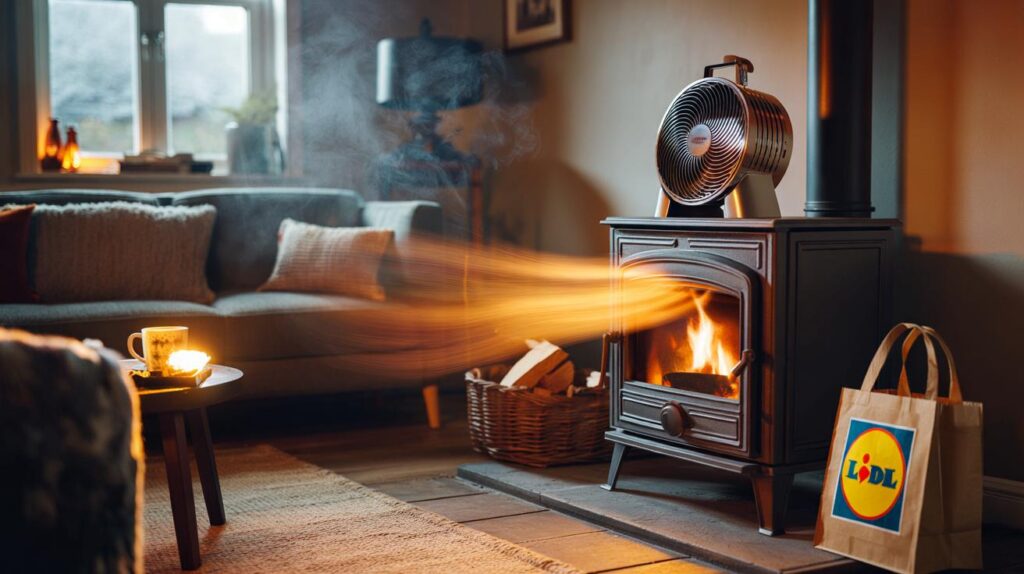
Cold corners creep back as autumn bites and bills loom. Households crave real warmth without rewiring or replacing pricey kit.
A small heat-powered fan sold by Lidl is turning heads because it moves the warmth you already pay for, pushing it into the parts of the room that usually stay cold. No sockets, no wiring, and no new stove required.
The mini fan people are talking about
Many living rooms feel toasty near the wood burner and nippy everywhere else. Hot air rises and pools above the appliance, while the far side of the sofa stays cold. A compact stove fan changes the airflow. It sits on top of the stove, or clamps to the flue, and nudges warm air out into the room so it reaches corners and seating areas.
Lidl sells the unit under its Tronic label. The attraction is simple: the fan runs on the stove’s heat. You get better heat distribution without adding a single watt to your electricity bill.
Starts spinning at about 55 °C and needs no plug, so it keeps working during power cuts.
How the thermoelectric trick works
The heart of the fan is a small thermoelectric module. One side touches the hot stove surface, the other faces cooler room air. The temperature difference produces a tiny current, which turns the blades. This is the Seebeck effect in action. The hotter the stove surface, the more vigorous the airflow becomes, within safe operating limits set by the manufacturer.
Because the fan makes its own power, there are no trailing cables, no batteries to replace, and no settings to fiddle with. It starts as the stove warms and slows as the fire dies down.
Two versions for different homes
Lidl lists two variants to suit space and layout. One sits on the stove top. The other fixes to the flue with a clamp, handy when the stove surface is cramped or unusually shaped.
| Model | Mounting | Size | Activation | Best for | Materials |
|---|---|---|---|---|---|
| Tronic stove-top fan (4-blade) | Rests on stove surface | Approx. 19 × 22 × 7 cm | Begins near 55 °C | Standard flat stove tops | Aluminium body, stainless handle |
| Tronic flue-mounted fan | Clamped to flue/conduit | Compact; footprint depends on clamp | Begins near 55 °C surface temp | Small tops or inset stoves | Aluminium body, stainless hardware |
Both aim at rooms up to roughly 35 m², such as lounges, open dining spaces or snug kitchen-diners. Each model runs quietly, so you hear the fire crackle instead of fan noise. A carry handle lets you reposition the stove-top version when it is cold.
Expect warmer corners and fewer cold spots in rooms up to 35 m² when the fan runs steadily.
Price, availability and what it means for your bills
The headline draw is price. Expect to pay under €20 in many stores, often the kind of impulse tag that sits well with a bag of logs. There is no ongoing energy cost, so every extra degree of perceived warmth comes from the wood you already burn.
Why does that matter? Better circulation can mean you stop overfiring the stove to heat distant seats. You may burn fewer logs to feel comfortable.
- If a typical household burns £350 of wood each season, a 10% cut from improved circulation would save about £35.
- Less overfiring also helps protect stove plates, baffles and flues from unnecessary stress.
- Warmth spreads faster after lighting, so you spend less time shivering at the far end of the room.
Under €20 to buy and zero running cost: a small outlay that helps your existing heat do more work.
Placement tips that make a real difference
Position shapes performance. The fan needs a hot base and room for airflow.
- Choose the hottest flat area on the stove top, usually near the back or side, not on a decorative ridge.
- Leave a clear path in front of the blades. Avoid ornaments, kettles or trivets blocking the stream of warm air.
- On a flue-mounted unit, clamp above the stove body where the pipe gets hot but remains within the maker’s rated temperature.
- Angle the airflow towards the part of the room that stays coolest, not straight at a wall.
- Use a magnetic stove thermometer to verify surface temperatures and keep within safe limits.
Safety and maintenance
Heat-powered fans get very hot in use. Treat them like any stove accessory.
- Do not touch or move the unit when the stove is lit or still hot. Use the handle only when fully cold.
- Keep children and pets away from the fan while spinning.
- Dust the blades and base when cold. A soft brush prevents grime from slowing the motor module.
- Check the base feet sit level to avoid tipping on cast-iron curves.
Who gains most from a stove fan
Owners of efficient stoves who battle stratified heat feel the biggest improvement. Open-plan spaces with a stove at one end often report warmer dining areas. Rooms with high ceilings benefit as the fan breaks up the layer of hot air trapped aloft. Small to medium lounges up to 35 m² see the most even results.
If your home suffers draughts, pair the fan with simple draught-proofing. Sealed floors, snug door brushes and lined curtains stop the warmth being chased out of the room.
What it doesn’t do
The fan does not increase your stove’s rated output. It does not replace proper ventilation or a carbon monoxide alarm. It will not heat other floors by itself. Treat it as a helper that moves existing heat to where you sit, not as a heater in its own right.
Real-world checks before you buy
- Measure your stove-top space. The 19 × 22 × 7 cm stove-top model needs a stable spot.
- Confirm your flue diameter if you prefer the clamped version. The clamp must fit securely.
- Look for a model with a firm handle and a solid, wide base to resist knocks.
- Ask about easy returns. Many Lidl markets offer 30‑day returns and home delivery when stock allows.
A quick comfort calculation you can try
Set a room thermometer at the sofa and another near the stove. Light your usual fire without the fan. After 30 minutes, note both temperatures. Now repeat on another evening with the fan in place. Many households see the sofa reading rise faster and track closer to the stove reading. That gap is your cold spot shrinking.
Extra advice for a warmer, cheaper winter
Combine the fan with sensible firing. Use seasoned logs at 15–20% moisture for clean flames and strong, consistent heat. Keep flueways swept so hot gases travel as designed. If you have an open stairwell, a simple doorway curtain or a part-open internal door can guide the warm stream into living areas without overheating the hall.
If you rely on a pellet stove or an inset fireplace, check compatibility. Some units already include fans; a separate heat-powered fan may add little in those cases. For traditional stoves without built-in blowers, this tiny accessory often delivers the quickest comfort upgrade you can buy for the money.



Sounds like a gimmick. If it doesn’t increase output, how can it save anything? Anyone got before/after thermometer readings?