
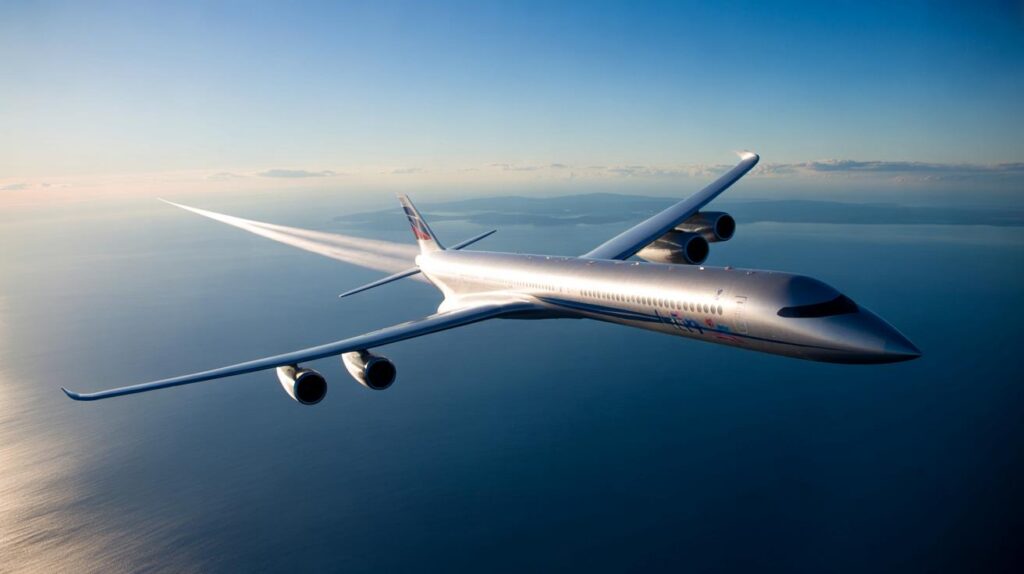
A new race is gathering pace above 50,000 feet, promising shorter journeys, tighter schedules and a shake‑up of long‑haul habits.
Two decades after Concorde bowed out, a fresh generation of supersonic projects is edging from render to runway. Backers say a 2029 debut could put transatlantic crossings back into the sub‑four‑hour club, with several major airlines pencilling the aircraft into future fleets and lawmakers easing a key regulatory brake in the United States.
What has changed since Concorde
The rulebook shift in the United States
In June 2025, US legislation cleared the way for controlled supersonic operations over land, lifting a decades‑long federal prohibition that followed Concorde’s noisy introduction. Regulators must still set noise and emissions limits on a route‑by‑route basis, yet the legal barrier that made domestic supersonic services impractical has been markedly lowered.
US lawmakers’ 2025 move to relax the overland ban has reopened the possibility of coast‑to‑coast supersonic services.
This matters beyond America. If the world’s largest aviation market begins to certify overland routes, manufacturers gain scale, investors gain confidence and airlines can schedule aircraft more efficiently between oceanic and domestic sectors.
New aircraft, new promises
The Denver‑based company Boom says its Overture jet is designed to cruise at around Mach 1.7, roughly twice the pace of many current long‑haul flights over water. The planned service ceiling sits near 60,000 feet, above most weather, with a cabin layout for approximately 60 to 80 passengers.
United has announced an intention to add 15 Overture aircraft to a future fleet, subject to safety and performance milestones. American Airlines and Japan Airlines have also placed commitments or pre‑orders. Boom speaks of a network potential of roughly 600 city pairs, with London–New York repeatedly cited as a flagship route.
Company projections point to London–New York in about 3 hours 40 minutes, compared with today’s six‑to‑seven‑hour schedules.
What it means for travellers
Time where it counts
The appeal is simple: time saved. A same‑day there‑and‑back for critical meetings becomes plausible without a red‑eye recovery day. For those connecting onwards, earlier arrival windows unlock extra banked connections and reduce missed‑flight risk.
- Transatlantic: London–New York in 3h40 (projected), trimming roughly 3 hours from many timetables.
- Domestic US: with the overland ban eased, city pairs such as Los Angeles–Washington are being touted at around 2 hours.
- Altitude: cruising near 60,000 feet can mean a smoother ride above most weather systems.
- Cabin size: 60–80 seats suggests a premium‑heavy configuration and faster boarding.
How the costs could stack up
Fares are not published, but early services are expected to sit nearer today’s business‑class pricing than economy. Limited seat counts, high development costs and premium slot usage point to yields that rely on corporate accounts, high‑net‑worth leisure and urgent travel.
Think of it as a time‑savings trade: if three hours saved each way equates to an extra working day on the ground, some travellers—and their employers—will pay. Loyalty programmes may cushion the blow if airlines allow mileage redemptions or status upgrades on selected frequencies.
| Route | Typical current time | Projected supersonic time | Time saved |
|---|---|---|---|
| London–New York | 6h00–7h00 | 3h40 | 2h20–3h20 |
| Los Angeles–Washington | 4h40–5h20 | ~2h00 | 2h40–3h20 |
Noise, fuel and climate
Quieter by design, but not silent
Concorde’s thunderous take‑offs and sonic booms shadowed its legacy. New designs aim to smooth shockwaves and curb community noise using refined aerodynamics and modern materials. Over water, higher speeds remain the main play. Over land, the regulatory green light depends on demonstrably lower noise footprints during climb, cruise and descent.
Fuel choices and emissions
Manufacturers and partner airlines are talking up sustainable aviation fuel (SAF) as a core element of the business case. SAF can cut lifecycle emissions relative to fossil kerosene, though availability and cost remain constraints. Expect early routes to prioritise airports with reliable SAF supply, blending with conventional fuel as permitted by certification.
Any credible supersonic revival will hinge on noise compliance and access to sustainable aviation fuel at scale.
Who is buying—and why
United’s public plan to take 15 Overture aircraft, plus commitments by American Airlines and Japan Airlines, signal a strategic bet: premium passengers will pay for time. For airlines, supersonic frequencies can complement, not replace, wide‑body services by siphoning high‑yield travellers onto fewer seats while preserving belly‑hold cargo on subsonic flights.
Airports will also weigh in. Turnaround times, ground‑noise profiles, and stand availability for a small, fast jet differ from traditional long‑haul operations. Secondary daily peaks could appear at business‑friendly times, such as early morning arrivals and late afternoon departures.
What still stands in the way
Certification and testing
The aircraft must meet stringent safety, noise and emissions standards across multiple jurisdictions. Demonstrating stable performance at high speeds, validating emergency procedures at extreme altitudes, and proving reliability in routine service will take time. The test campaign will face intense scrutiny after the industry’s learnings from past certification missteps.
Engines and industrial scale‑up
The propulsion programme is pivotal. A bespoke engine must hit efficiency, thrust and noise targets while remaining economically maintainable. Securing a durable supply chain for a low‑volume, high‑tech product is a non‑trivial ask. Any delay here can ripple across the entire timeline to 2029.
Economics through cycles
Supersonic economics depend on consistent premium demand. Corporate travel budgets fluctuate with economic cycles; fuel prices move; SAF supplies can tighten. Airlines will likely start with a handful of showcase routes and gauge elasticity before committing to broader networks.
How it could change your travel choices
If you fly regularly for time‑critical work, the calculus becomes straightforward: fewer nights away, greater schedule control, and the option to day‑trip transatlantic meetings. If you travel for leisure, the pitch will sit more on experience—fewer hours in a seat, more hours at the destination—offset by a price likely above a sale fare in business class.
Practical preparation looks familiar: flexible tickets to absorb weather‑related restrictions at higher altitudes, travel insurance that covers missed connections, and loyalty strategies aimed at earning or redeeming on supersonic sectors once they appear. Expect strict baggage allowances, given smaller holds and tight turnarounds.
The bigger picture for aviation
A successful launch would widen aviation’s spectrum: ultra‑long‑range twin‑jets at one end, ultra‑fast narrow cabins at the other. It could nudge competitors to accelerate research on quiet supersonic technologies and spur airports to plan for high‑speed operations. If overland approvals proliferate, domestic networks may see point‑to‑point pairs reshaped around two‑hour “short long‑haul” hops.
For now, the milestones to watch are concrete: full‑scale ground tests, noise‑signature demonstrations, engine programme updates, and the first published schedules and indicative fares. If those arrive on time, the question shifts from “if” to “which flight would you choose?”



3h40 LHR–JFK? If it’s safe and under £3k, I’m absolutely onboard. Same‑day meetings without the zombie red‑eye sounds dreamy 🙂 Just hope the cabin isn’t all suits—would love a few mileage seats for leisure, too.
Quicker is cool, but what about climate? SAF supply is tiny today, and “blends” don’t equal zero. If this relies on premium demand, shouldn’t the emissions math be crystal clear before we cheer?