
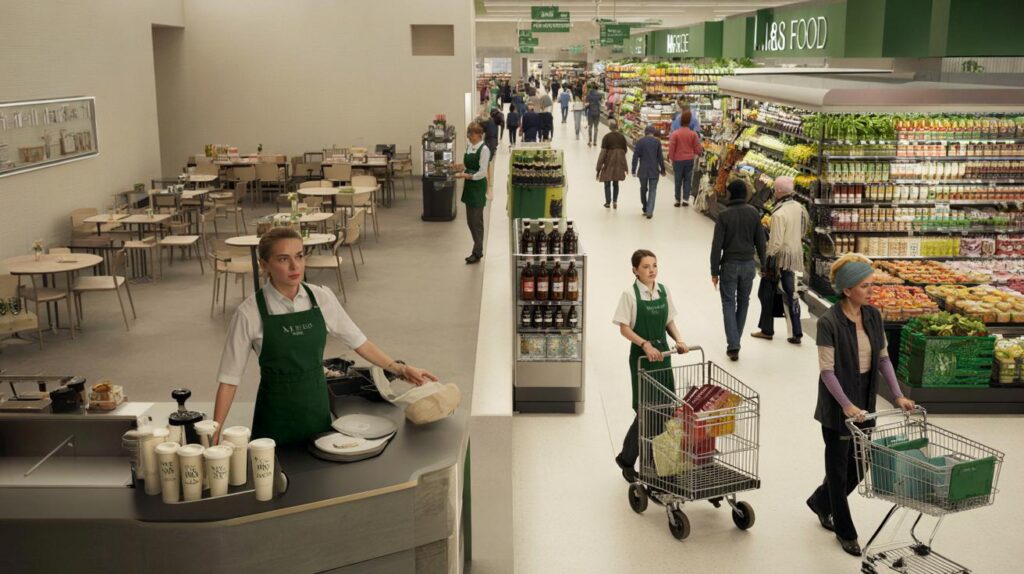
Shoppers are about to see familiar corners of their local M&S change shape, as the retailer doubles down on growth.
The chain is redesigning floor space as part of a national estate overhaul, promising wider grocery ranges, new coffee counters, and refreshed store formats. The push continues a multi-year plan to tilt the business towards food, speed up service, and attract bigger weekly shops.
What is changing in your local store
Marks & Spencer will remove 11 in-store cafes from smaller food shops, freeing room for shelves and chillers carrying high-demand lines. The move focuses on compact sites where seating areas limit the breadth of the grocery offer. The group says shoppers will see expanded ranges, faster replenishment, and clearer aisles as floor plans are reworked.
Only a small slice of the estate is affected: under 4 per cent of M&S’s 316 food shops will lose their cafe.
M&S will redeploy all affected cafe colleagues within the same stores. The business says no redundancies are planned and staff will shift into food, bakery or coffee-to-go roles. Coffee remains part of the mix in many places, either at full cafes, smaller counters, or grab-and-go points.
Where coffee survives and grows
Not every cappuccino is disappearing. M&S runs more than 300 cafes, coffee shops and coffee-to-go locations across the UK. Alongside the 11 removals in small food stores, the company is opening brand-new coffee shops in selected destinations. One new site is tied to the retailer’s store at Bristol Cabot Circus, where a barista-led offer and fairtrade beans are on the menu.
The strategy is selective: sit-down space in very small food stores gives way to groceries, while larger, high-traffic locations get upgraded coffee experiences. The bet is simple. Shoppers visiting for their full weekly shop want choice and availability first. Coffee will sit where it draws footfall and complements the food hall format.
Why M&S is reshaping its estate
The cafe change forms part of a wider £300m investment and “store rotation” programme. M&S has been converting some full-line stores into food-led formats and modernising food-only shops with new refrigeration, faster tills and brighter layouts. The retailer aims to grow its food store count to roughly 420 by the end of 2028, up from a current base of 316.
Target set: around 420 M&S food stores by late 2028, backed by a £300m spend to modernise and expand.
Management argues that food is the engine of growth. Bigger food halls can support a wider range, from price-marked staples to premium seasonal lines. The rotation plan also moves stores to locations with stronger parking, better access, and room for fulfilment services such as click-and-collect.
| Year | Approximate food stores | Notes |
|---|---|---|
| 2024 | 316 | Ongoing modernisation across food-only sites |
| End of 2028 | ~420 | Expansion goal under the store rotation programme |
What it means for jobs and customers
There are no planned job losses linked to the cafe removals. Staff will be reassigned within their stores and trained for new roles. For customers, the immediate change will be visible space reclaimed for food. Expect deeper ranges in fresh, chilled and groceries, along with more promotional space and faster shelf restocking.
- 11 cafe areas in small food stores will be repurposed for grocery space.
- Fewer than 4 per cent of the 316 food shops are affected by a cafe closure.
- New M&S coffee shops are opening in selected larger sites, including Bristol Cabot Circus.
- All impacted colleagues will be redeployed within their stores.
- More food halls are planned as the estate grows towards about 420 stores by 2028.
For some communities, the loss of seats may be felt. Older customers and parents often use cafe tables as a rest point. M&S says coffee-to-go counters and nearby full cafes will pick up the slack. Shoppers who rely on a mid-shop pause may want to check in-store signs about the timing of changes and alternatives within the same retail park or town centre.
The cyberattack backdrop
This estate work lands in the wake of a significant cyberattack confirmed on Easter Sunday. M&S had to suspend online orders for six weeks while systems were secured. The company has told investors the incident will carry an estimated cost of around £300m. The investment figure for stores is similar in size, but relates to the separate modernisation programme already underway.
Board focus now sits on resilience and pace. Digital recovery continues behind the scenes, while the physical estate push goes on. The aim is clear: use store upgrades to protect momentum, rebuild online confidence, and keep customers loyal during a competitive year for grocery spend.
How this fits the retail battleground
Every major grocer faces pressure on price, convenience and range. Discounters win on simplicity and value. Supermarkets with strong fresh offers and credible premium lines can defend share by sharpening store layouts and availability. M&S’s shift towards larger food halls mirrors a trend across the sector: make the weekly shop slicker, keep shelves full, and add coffee where it earns its place.
Removing sit-down cafes from small-format food stores addresses a basic constraint: space. A dozen tables can mean dozens of missing SKUs. Reclaiming that footprint helps M&S add core lines, seasonal showstoppers and rapid-replenishment space at the front of store. Where footfall supports it, the chain will still run full-service cafes and enhanced coffee counters.
What shoppers can do now
Check notices near store entrances for refurbishment timings. Ask colleagues where the nearest full cafe sits if your local seating area is closing. Look for coffee-to-go points during the transition. If you plan a larger weekly shop, expect more choice in fresh produce, dairy and ready meals once the refit finishes. Keep an eye on opening hours as works may shift trading patterns for short periods.
Extra context for your wallet
Space moves are about trade-offs. A cafe seat supports dwell time. A metre of ambient shelving carries dozens of items that shoppers need every week. For a food-led retailer, higher availability and fewer gaps can lift sales and reduce substitutions in online orders. That is why M&S is pushing range breadth and stock depth in compact stores while building flagship food halls elsewhere.
There are risks. Some shoppers value the social role of an in-store cafe and may divert to rival chains that keep seating in smaller towns. The upside for many customers will be fuller shelves, faster queues and a better chance of finding promoted lines in stock. If you rely on a sit-down coffee during your shop, plan a quick stop at a nearby M&S coffee-to-go counter or a partner cafe on the same high street.



Curious how this will affect people who rely on a sit-down break. If 11 cafes in small stores go, older shoppers and parents could be loosing a rest point. Will there be extra benches or nearby seating signposted, not just coffee-to-go? The aisle clarity sounds good, but comfort matters too in a neighbourhood grocer.