
Cold nights are creeping in, budgets feel tight, and small choices now could spare you big heating shocks later.
Household shoppers get a timely boost next week as Aldi rolls out a line-up of wallet-friendly warmers. The headline act is a £9.99 radiator reflector kit, a simple insulation tweak long championed by money guru Martin Lewis as a smart way to keep heat in the room and cash in your pocket.
What you’ll get for £9.99
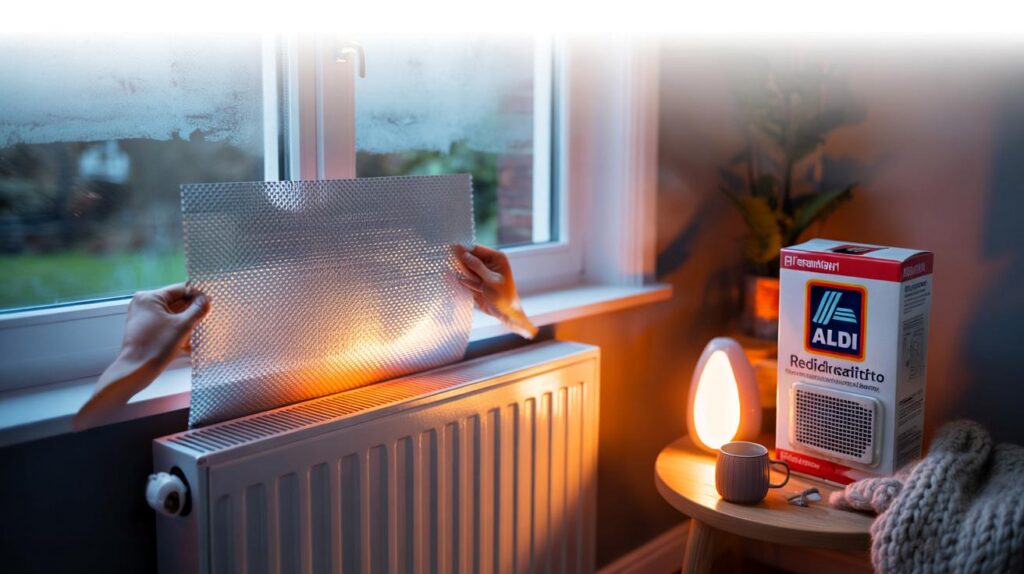
Aldi’s radiator reflector kit lands in UK stores on Thursday 23 October, priced at £9.99. The pack includes self-adhesive strips for tool-free fitting and a bubble-foam core designed to improve thermal performance. Aldi says a single pack covers up to three radiators, which suits a typical lounge, bedroom and hallway set-up in many homes.
On sale nationwide from Thursday 23 October for £9.99. One pack can insulate up to three radiators.
The reflective surface claims to send up to 86% of infrared heat back into the room rather than letting warmth leak into an external wall. You can fit it in minutes without removing the radiator, and you won’t see it once installed because it sits behind the panel.
Why radiator reflectors matter
Radiators on external walls lose heat through the brickwork. Reflective panels act like a one-way mirror for warmth, bouncing energy back into the living space. Martin Lewis has repeatedly recommended this type of gadget when the cold sets in, noting that it boosts the output you actually feel without touching the thermostat. He doesn’t back a particular brand; he backs the principle.
Target external-wall radiators first. That’s where reflectors deliver the biggest gain for the smallest spend.
If you want a no-spend workaround, kitchen foil behind a radiator can help a little. Purpose-made panels typically perform better, stay in place, and resist crinkling or tearing.
A quick fitting guide
- Measure the radiator’s width and height; cut the panel slightly smaller.
- Clean the wall area behind the radiator to help the adhesive grip.
- Stick the self-adhesive strips to the panel edges; slide behind the radiator and press to the wall.
- Prioritise external walls and rooms you heat most: lounge, bedrooms, home office.
How much could you save?
Small measures add up. Imagine you run your heating for 5 hours a day on colder weeks. If reflectors reduce heat loss from two external-wall radiators, you need less boiler run-time to reach the same comfort level. Even trimming just 1 kWh of gas use per day during a cold snap can offset the £9.99 outlay within a few weeks. Your figures will vary by boiler, insulation and habits, but the principle remains: keep the heat you already pay for.
Spend £9.99 once; keep recouping when the thermostat clicks on, day after day.
More “heat the human” gadgets coming to Aldi
Aldi is staggering launches over two dates, with portable warmers and insulation bits designed to target you, not your entire home. That approach often slashes energy use because you heat the person in the room, not empty spaces.
Available from 23 October
| Product | Price |
|---|---|
| Radiator reflector kit | £9.99 |
| Multi‑purpose insulation wrap | £9.99 |
| Ceramic personal heater (approx. 32p per hour) | £14.99 |
| Oscillating ceramic tower heater (approx. 53p per hour) | £24.99 |
| Dehumidifier, 2L tank (rooms up to 15 m²) | £39.99 |
Available from 26 October
| Product | Price |
|---|---|
| Heating blanket (four colours) | £24.99 |
| Heated mattress pad, king | £24.99 |
| Heated mattress pad, double | £22.99 |
| Heated mattress pad, single | £14.99 |
| Heated airer, winged | £34.99 |
| Heated airer, upright | £79.99 |
| Premium hot water bottle | £6.99 |
What MoneySavingExpert fans also swear by
For pin-sized power costs, direct-to-person heat works well. Here are pocketable options often cited by the MSE community when the mercury drops:
- USB gloves and hand warmers
- Heated insoles and electric gilets
- Microwaveable wheat bags
- Long 1.5L hot water bottles and reusable warmers
- Electric heat pads and foot warmers
- Single electric blankets
Warm the body you’re in, not the rooms you’re not using.
Running costs: what those pennies mean
The quoted 32p and 53p per hour for Aldi’s ceramic heaters give you a quick way to budget. If you sit at a desk for two hours with a personal heater at 32p per hour, that’s 64p for targeted comfort. Compare that to turning up central heating for the whole home over the same period, which often costs more and heats unused rooms.
Heated airers dry laundry without blasting the tumble dryer. The upright model costs more upfront, but it helps avoid moisture build-up that comes from clothes draped over radiators. Pair it with the dehumidifier to pull water out of the air, cut condensation and curb mould risk.
Smart add-ons that multiply the gain
Thermostatic radiator valves let you dial down spare rooms and push heat to lived‑in spaces. Draught strips around doors and letterboxes stop warm air slipping away. Close curtains at dusk to trap radiant heat; open them in daylight to grab free solar warmth. Use the reflector kit where cold walls steal the most energy, then reduce your boiler flow temperature to improve efficiency if you own a condensing model.
Safety and sizing tips before you buy
- Check room size: the 2L dehumidifier suits spaces up to 15 m²; larger rooms may need a bigger unit or longer run-time.
- Keep portable heaters on flat, uncluttered floors; never cover them; don’t run them unattended.
- Hot water bottles need fresh seals and careful filling; replace older ones that show cracking.
- Electric blankets and mattress pads should match your bed size and include overheat protection; follow washing guidance.
A quick plan for your first weekend
Map your radiators and mark the ones on external walls. Buy one £9.99 reflector kit and fit those first. Set a lower thermostat target by one degree and assess comfort. Add a personal ceramic heater by your work chair for short bursts. If laundry looms, switch to a heated airer and run the dehumidifier for a couple of hours to keep damp at bay. These small steps create a warmer home and a calmer bill.



That 86% “heat reflection” — is that measured as IR reflectivity or real room‑side heat retention? Any independant test data (BRE/Energy Saving Trust) or quantified U‑value impact? Would love real‑world figures on external‑wall radiators vs internal walls.