
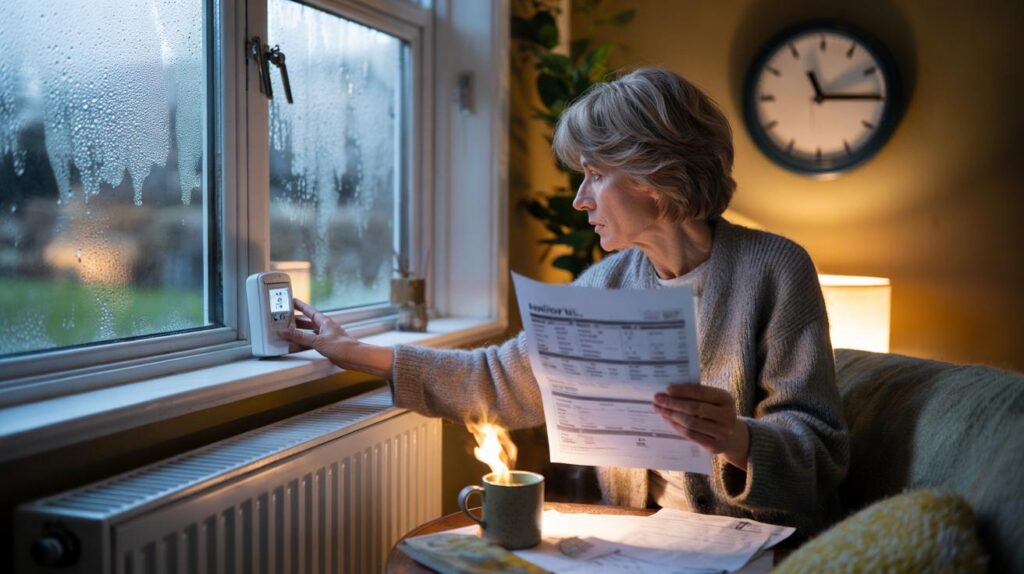
Colder mornings are back, and households face a familiar dilemma: comfort, condensation and the true cost of each warm hour.
As the first chilly snap nudges people toward the thermostat, the question resurfaces: run the boiler low all day, or heat in short, targeted bursts? MoneySavingExpert founder Martin Lewis has weighed in with clear guidance, while engineers point to one key exception linked to damp homes.
What Martin Lewis says about the ‘low and constant’ myth
Martin Lewis’s long-standing advice remains straightforward: most homes save money by heating only when needed. That means using your programmer and thermostat to bring rooms up to temperature for set periods, rather than leaving the system idling at a low level around the clock.
For most households, timed heating controlled by the thermostat beats leaving it on low all day.
His reasoning rests on simple physics and pounds-and-pence logic. You pay for every unit of heat pushed into a building. If you keep feeding heat in continuously, you spend more energy offsetting losses through walls, floors, roofs and draughts. Timers and thermostats reduce runtime and cut those losses.
The damp-prone exception
There is a caveat. Some heating engineers argue that in homes with persistent condensation and wet walls, a gentle background temperature can help keep fabric dry, reducing how quickly heat escapes. In properties where moisture builds up and lingers, heat loss accelerates as damp material conducts heat faster.
If your home suffers from condensation and cold, wet walls, a mild background heat can limit heat loss — but pair it with ventilation.
That does not mean blasting radiators all day. The tactic is a modest “setback” temperature, plus controlled ventilation. The aim is to lower humidity and stop the building fabric from getting clammy, not to run the boiler constantly.
What rising bills mean for your choices
The price cap means an average dual-fuel household pays about £1,720 a year, rising to roughly £1,755 between 1 October and 31 December. When every degree and every hour counts, the way you schedule heat matters more than ever.
Small percentage changes add up. Shaving 5 percent off use is worth about £88 a year at a £1,755 annual bill. That’s achievable by trimming setpoints, tightening schedules, and avoiding waste.
Low and constant versus timed bursts: what really wins
| Approach | When it helps | Risks or downsides | Best practice tips |
|---|---|---|---|
| Leave heating on low all day | Very damp, badly insulated homes where fabric stays wet | Higher energy use as you continually replace lost heat | Use a mild setback temperature and ensure ventilation to manage humidity |
| Timed heating in focused bursts | Most reasonably dry homes; modern or upgraded insulation | Rooms cool between runs if schedules are too short | Programme short pre-warm periods before occupancy; adjust room-by-room |
Get more from your boiler without spending a fortune
Many households pay more than needed because of everyday slip-ups. Heating specialists flag four common traps — and how to avoid them.
- Cranking the thermostat does not heat rooms faster. It just overshoots. Set the temperature you actually want and let the thermostat do the work.
- Blocked radiators waste heat. Sofas, curtains and covers trap warmth, forcing the boiler to run longer for the same comfort.
- Programmes matter. Set start times a little before you need heat, then allow the thermostat to hold steady.
- Lower boiler flow temperature can save gas. Many condensing boilers run more efficiently with flow set around 55–60°C, if radiators still keep you warm. Try a step-down and test.
Cutting waste — not comfort — is where the easy wins sit: smart schedules, clear radiators, and a sensible setpoint.
How real households are scheduling heat this autumn
Patterns differ by insulation and lifestyle. Some owners of newer, well-insulated homes use a morning hour and an early-evening block with a 19–20°C setpoint. Others in older properties favour a lower setpoint during the day when occupied, then a deeper setback when out. There’s no single right answer; choose the shortest schedule that leaves rooms comfortable when you need them.
Condensation, ventilation and why humidity changes heat loss
Moist air and damp walls carry heat away faster. That is why a house that “feels clammy” can empty warmth quickly once the boiler stops. Manage moisture alongside heat:
- Use extractor fans in kitchens and bathrooms during and after use.
- Keep trickle vents open to control background moisture.
- Dry clothes outside or with a vented tumble dryer when possible.
- Consider a small dehumidifier for problem rooms, run on cheap-rate hours if you have them.
What changes if you have a heat pump
Heat pumps work best with steady, low-temperature heating. A modest, continuous setpoint often proves efficient because the system’s coefficient of performance improves with lower flow temperatures. Short, intense bursts suit gas boilers; gentle, longer runs tend to suit heat pumps. If you have a heat pump, start with a continuous schedule at a lower room setpoint and fine-tune from there.
A quick plan you can try this week
Step 1: set a sensible target
Choose 18–20°C for living spaces when occupied. Bedrooms can sit lower. Lower each room by 1°C and check comfort for a few days.
Step 2: programme short, smart bursts
Try 45–60 minutes before you get up and 60–120 minutes before your evening routine. If rooms are still warm when you head to bed, shave 15 minutes from the evening block.
Step 3: tune the boiler, not just the thermostat
Drop boiler flow temperature a notch and test radiator performance. If rooms take too long to warm, step it up slightly. Aim for the lowest setting that keeps pace.
Step 4: tackle heat waste in the room
Pull furniture 20–30cm clear of radiators. Bleed radiators that gurgle or feel cold at the top. Shut doors to rooms you are not heating.
What the numbers might look like
Suppose your annual bill sits near £1,755. Trimming gas use by just 5 percent saves roughly £88 a year. Removing two unnecessary heating hours each day across a 26-week season equates to about 364 hours. If your system uses around 3 kWh per hour during those periods, that’s close to 1,100 kWh saved — a sizeable cut. The exact figure varies by home, but the principle holds: shorter, sharper schedules reduce runtime and cost.
When a ‘background heat’ approach makes sense
If your home is cold, badly insulated and prone to condensation, try a gentle daytime setback of 15–16°C, combined with extractor fans and trickle vents. Keep living spaces warmer only when occupied. The goal is to keep walls dry while avoiding all-day high temperatures.
Extra tips that stack up over winter
- Thermostatic radiator valves let you reduce temperatures in spare rooms and hallways, diverting heat where you feel it.
- Draught-proofing letterboxes, gaps around skirting and unused chimneys slows heat loss for little cost.
- A clean boiler filter and annual service maintain efficiency and reliability when you need it most.
- Smart thermostats and zoned controls can trim run times by learning patterns — handy if your schedule varies.
As bills edge to £1,755 for the quarter, the winning strategy is targeted heat, drier rooms, and fewer wasted hours.
If you want to go further
Consider a weekend audit: list rooms, note comfort, and write down the actual minutes of heat you needed to feel fine. Test a 1°C reduction for three days. If it feels the same, keep it. If not, step back up. Calculate what a 10 percent saving would be on your bill and use that as motivation; on £1,755, that’s about £176 back in your pocket.
For older, leaky homes, small measures compound: reflective radiator panels on external walls, heavy curtains closed at dusk, and loft top-ups to current depth guidance all slow losses. Layer these with smarter schedules and you shift the balance from paying for constant losses to paying for warmth you actually feel.



So the gist is timed heating beats “low and constant” unless the place is clammy. For a 1930s semi with partial insulation and some condensation on north walls, would a 16°C daytime setback plus two heating blocks be the sweet spot? Any guidance on pairing this with extractor fan schedules to keep humidity down?