
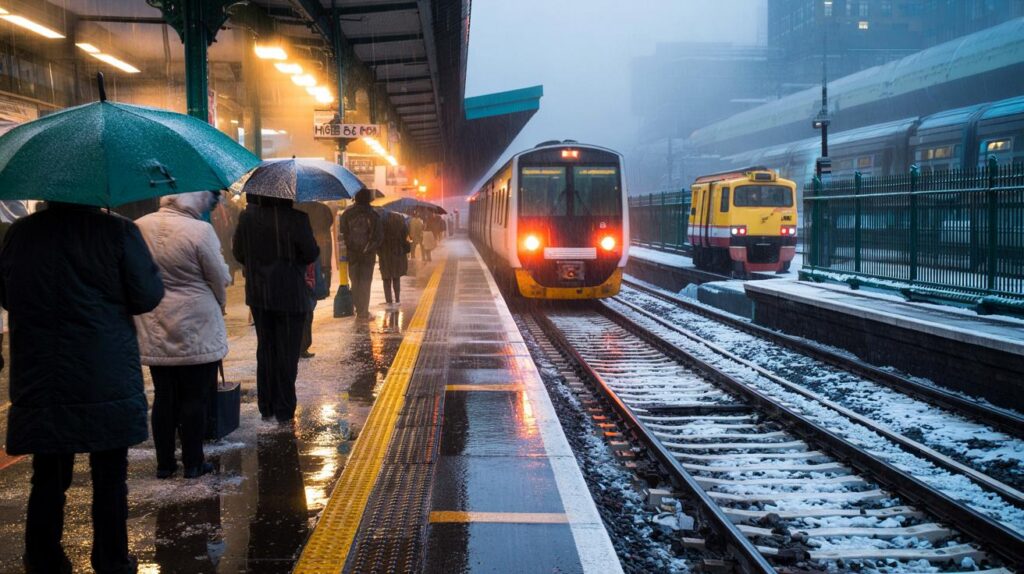
A fresh Met Office three‑month outlook has landed, hinting at a winter that could sway between soggy Atlantic surges and sharp, breath‑catching cold. It’s not a siren, more a steady bell: be ready for a season of swings. Travel plans, heating budgets, school runs — everything on that thin edge where weather becomes life.
The platform clock at Clapham Junction was half mist, half light, and people tightened scarves without thinking. A gritter rolled past in the near‑dark like a beast coming out of storage. In the corner shop, the radio flicked from early pop to a weather bulletin, and the owner scribbled “salt” on a reorder list.
*The sky looked like wet slate, and you could smell the cold before it landed.* I watched a neighbour thump his boiler casing like a guilty conscience, then glance at his smart meter. The Met Office says the next three months could lean milder and wetter overall, with bursts of genuine chill. That last bit got my attention.
What the Met Office is really saying
Seasonal guidance isn’t a crystal ball, it’s a set of odds. The Met Office outlook points to a greater chance of unsettled spells driven by the Atlantic, punctuated by shorter cold snaps. Think rain and wind doing most of the talking, then a sudden hush where frost takes over.
We’ve all had that moment when the forecast says “rain later” and it turns into a flooded school run or a cancelled shift. Picture mid‑December: the jet stream dips, the river climbs its banks, and the next day a polar airmass cuts in behind. Pavements glaze, trains crawl, and every group chat lights up with “Who’s got grit?” The winter script rarely sticks to one genre.
What drives it? Big players like the North Atlantic Oscillation, the state of the polar vortex, and sea surface temperatures. A positive NAO often means milder, wetter spells; a disrupted vortex can open the door to cold plunges. The current signal tilts toward blustery, damp phases with shots of cold rather than a locked‑in freeze. **The signal leans milder and wetter, with cold snaps cutting through.** Translation for daily life: umbrellas earn their keep, and de‑icers won’t gather dust.
How to get winter‑ready without the drama
Start with your home’s weak spots. Bleed radiators, lag exposed pipes in lofts and cupboards, and set thermostatic valves so rooms heat evenly. Ten minutes on a weather‑alert app and a quick check of roof gutters could save a weekend of mopping floors. Small, boring jobs, big quiet wins.
Most people wait for the first icy morning to act. Let’s be honest: nobody does that every day. Swap the scramble for a basket by the door with essentials — gloves, torch, scraper, portable charger. In the car, keep a blanket, snacks, and a bottle of water. **Frozen pipes are a problem you can prevent in ten minutes.** A slow drip on the coldest nights can be the difference between a shrug and an insurance call.
Cold‑weather prep isn’t macho; it’s neighbourly. Share road‑grit with the person next door, and find the stop‑tap together before you need it. On travel days, aim for the first train, not the last, and save the station hotline in your phone. Build in slack time and keep a Plan B you won’t hate using.
“Weather is about preparation, not panic. You can’t control the front, only your response.”
- Set up Met Office push alerts for your postcode.
- Lag pipes, clear gutters, test smoke and CO alarms.
- Create a car kit: scraper, torch, blanket, high‑vis, power bank.
- Know your stop‑tap and your nearest grit bin.
- Batch‑cook one freezer‑friendly meal for outage days.
Travel, bills, and the rhythm of daily life
Commutes bend under winter, they don’t break if you plan the curve. Book earlier trains on risk‑heavy days, choose bus routes with gritter access, and move video calls to daylight windows when Wi‑Fi dropouts feel more likely. An extra five minutes to warm brakes and clear screens is not wasted time; it’s insurance you can touch.
Energy costs bite harder when rain taps the window for weeks. Draft‑proof letterboxes and keyholes, use heavier curtains, and nudge the thermostat down one notch while shifting heat to occupied rooms. If you’re eligible for support schemes, check the criteria now rather than mid‑freeze. Warm rooms beat warm houses when budgets are tight.
Community matters most when the weather turns difficult. Check in on someone who hates asking, and swap favours like plants swap light in winter. **Winter isn’t the enemy; unpreparedness is.** A brief text — “Headed to the shop, need anything?” — can do more than any forecast. Quiet care is the strongest umbrella.
This outlook doesn’t scream blizzards. It points to a restless season that swings between washouts and whiteouts in short bursts. There’s room for the crisp weekend where breath hangs silver over a park run, and the Tuesday where your phone buzzes with a rain warning and the dog refuses the walk. The trick is to move with it, not against it.
| Key points | Details | Interest for reader |
|---|---|---|
| Atlantic‑led spells | Higher chance of milder, wetter phases, with wind and heavy rain at times | Plan travel windows, protect against damp and surface water |
| Intermittent cold snaps | Short, sharper drops in temperature; frost, ice, hill snow likely | Prep car kits, insulate pipes, adjust routines on risk days |
| Preparation over panic | Simple home fixes, alerts, and neighbour networks beat last‑minute scrambles | Save money, cut stress, keep daily life moving |
FAQ :
- Will it snow where I live?The outlook hints at colder snaps, with higher odds of snow over northern areas and high ground. Lowland snow is possible in brief bursts, not guaranteed.
- What’s the difference between an outlook and a forecast?An outlook gives probabilities over weeks to months, not exact days. A forecast is specific to days and hours. Think “pattern” versus “plan.”
- How can I get alerts without doomscrolling?Use Met Office push notifications for your postcode and set transport operator alerts. Keep it lean: two or three trusted sources beat a dozen tabs.
- How do I stop pipes freezing?Lag exposed pipes, keep indoor doors ajar for airflow, and run a slow drip on the coldest nights. Know your stop‑tap so you can cut water fast.
- Are there support schemes if it turns very cold?Check for government and local council help such as cold‑weather payments or warm spaces. Eligibility and thresholds vary, so look up the latest guidance now.



Three-month outlooks always hedge. Any actual probabilties or just vibes?