
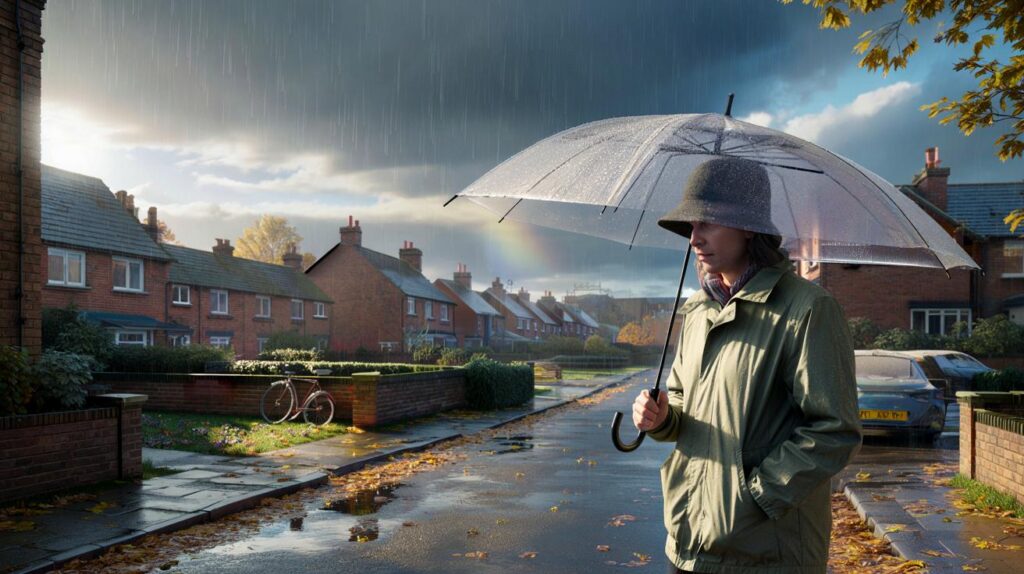
Coats wait by the door and thermostats twitch as autumn deepens, yet winter’s script remains unwritten for millions of households.
The Met Office has issued its three‑month outlook for October to December, pointing to a season more likely to feel familiar than fierce. Signals tilt towards near‑average temperatures and rainfall for the UK, with mild conditions more plausible than a prolonged freeze. Wind looks set to behave itself, too, with a stronger than not chance of typical bluster rather than a storm‑laden run.
What the headline numbers say
Long‑range guidance offers probabilities rather than day‑by‑day detail. For the coming three months, the balance of risk favours seasonal conditions, with a gentle nudge towards mild rather than bitter.
Temperatures: 55% chance of near average, 30% chance of mild, 15% chance of a colder‑than‑average season.
Rainfall: 70% chance of near average overall, with a lower likelihood of a broadly wetter‑than‑average period.
Wind: 65% chance of near average, 20% windier, 15% calmer.
| Element | Most likely outcome | Probability | Alternative outcomes |
|---|---|---|---|
| Temperature | Near average | 55% | 30% mild, 15% colder |
| Precipitation | Near average | 70% | Lower chance of broadly wetter period |
| Wind | Near average | 65% | 20% windier, 15% calmer |
Rainfall split: north and west vs south and east
Regional contrasts are threaded through the outlook. Upland areas across the north and northwest lean wetter, while the east and south are more likely to sit on the drier side of typical. That pattern mirrors a classic Atlantic‑facing setup, where fronts spend more of their energy on windward hills and cool coasts, then weaken as they slide into the lee.
For communities and services, the implications are practical:
- Rivers draining the Pennines, Highlands and Cumbrian fells may see more frequent rises after frontal passages.
- Lowland farmland in East Anglia and the South East could pick up longer dry windows between systems.
- Reservoir managers in wetter catchments may watch storage closely as early winter inflows develop.
- Urban drainage in western cities benefits from regular leaf clearance as autumn downpours peak.
Near‑average rainfall over three months still allows for short sharp bursts. A single wet week can flood streets, even if the season as a whole balances out. The signal here is for distribution rather than deluge.
Temperature pattern: cool snaps still likely
A 55% chance of near‑average temperatures does not erase frost. The UK can expect chilly mornings, brief northerlies and the odd ice day, folded between milder spells drifting in from the Atlantic. With a 30% chance of a generally mild outcome, energy demand may peak less often, yet cold episodes can still bite.
Households might time their readiness to the first radiators‑on week. Older buildings lose heat quickly in brisk winds, even on days that look innocuous on the thermometer. Schools, care homes and small businesses can build flexibility into staffing and heating plans, aiming for comfort without runaway bills.
Gardeners and growers should prepare for a stop‑start season. Hardy greens cope with average chills, but a clear night behind a weak cold front can still scorch tender leaves. Frost fleece and cloches earn their keep in these in‑between winters.
Wind and storm risk
With a 65% chance of near‑average wind, the broad risk of frequent damaging storms is lower than a stormy scenario would bring. Yet the 20% chance of a windier pattern keeps the door open to one or two named systems tracking sharply across the British Isles.
Coastal routes, high bridges and upland passes remain the pinch points in any gusty spell. Even without a rampant storm season, crosswinds can close lanes and topple schedules. For ferry operators and logistics firms, diversified routing plans reduce headaches when a low deepens faster than forecast.
What this means for you
Seasonal weather still disrupts if preparation lags. A steady plan covers you for both milder runs and sudden cold snaps.
- Commute: keep a spare layer and waterproof in your bag; train delays track heavy rain more than deep cold.
- Home: book boiler servicing before the first frost; bleed radiators to cut wasted energy on marginal days.
- Car: wipers, tyres and screenwash matter more in near‑average, wet‑leaning weeks than snow chains do.
- Health: check in on neighbours during clear, still nights; radiative frosts can dip fast after sunset.
- Insurance: photograph gutters and roofs after maintenance; documentation speeds claims after a squally front.
Why the forecast leans this way
Seasonal outlooks rely on ensembles of computer models and slow‑moving climate drivers. Warmth in parts of the North Atlantic can influence pressure patterns and the track of autumn storms. The North Atlantic Oscillation steers moisture and momentum. Forecasters test thousands of plausible weather futures, then assign probabilities based on how often each theme appears.
That is why the message sits in percentages, not promises. The guidance sketches the season’s broad canvas, while daily forecasts fill in the strokes a week or two ahead.
What could flip the script
A shift in the high‑latitude pattern, or a disturbance to the stratospheric polar vortex later in the season, can tilt Europe into colder air for a spell. Blocking highs over Greenland or Scandinavia can also divert Atlantic systems and open the door to Arctic feeds.
There remains a 15% chance of a broadly colder season, leaving room for a notable cold spell if patterns align.
That lower‑likelihood path would favour longer frost runs, slick roads and higher energy draw. It remains a risk to keep in mind rather than a baseline expectation.
Key dates and what to watch next
Late October into early November often delivers the leaf‑fall peak, which clogs drains ahead of the first big frontal rain. Early December can bring the first widespread frosts under clear skies after a cold front. Watch for model agreement on high‑pressure blocks or repeated deep lows; those clusters set the tone for a fortnight at a time.
For context, “near average” refers to conditions measured against the 1991–2020 climate baseline used by UK forecasters. In a warming climate, that average already sits higher than it did for earlier generations. A near‑average winter today can still feel milder than memories from the 1980s, yet it holds enough bite for ice on pavements and glaze on rural lanes.
If you plan events, a simple simulation helps: assume half your dates face damp, breezy weather; one in four lands mild and dry; one in four risks a chill or a soaking. Back‑up venues, marquee heaters and flexible timings save costs when forecasts pivot. For runners, hikers and football clubs, a rotating kit list—base layer, light waterproof, warm hat—covers nine days out of ten in a season like this.



So… 55% near-average means I can cancel my snow boots preorder?
Appreciate the probabilities over promises. The regional split matches what we see in the North West. Any guidance on how often those “short sharp bursts” tend to cluster—are we talking 2–3 days back-to-back or spread out? Trying to plan staff rotas for a small delivery firm.