
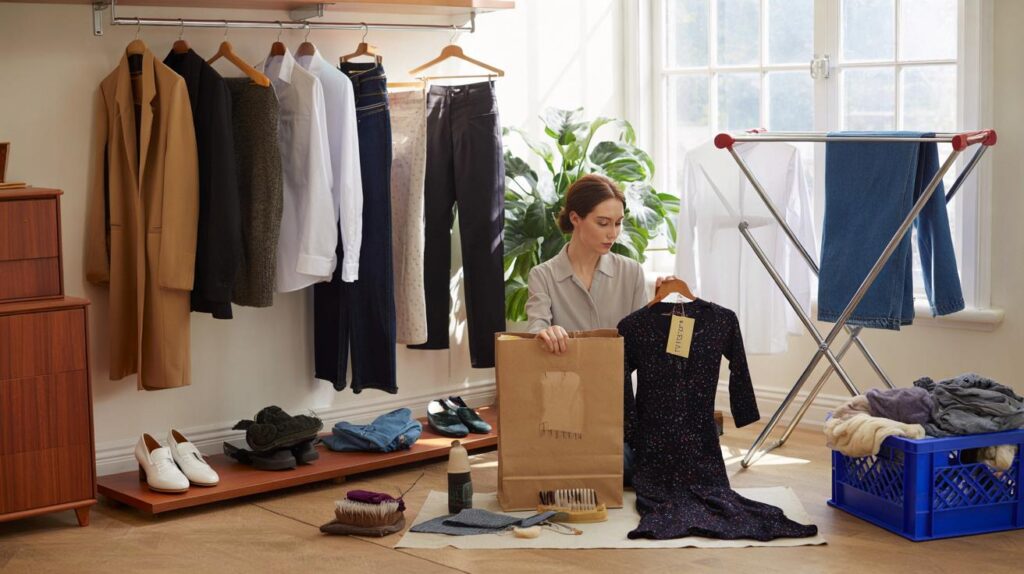
Our wardrobes got louder, cheaper and bigger, while our bins quietly filled with last season’s mistakes. The promise of endless choice feels good at the till, yet it’s costly for our space, our wallets and the planet that stitches it all together.
Tuesday, 7:42am, a cold flat and a wobbly chair by the wardrobe. I’m rifling past sequins I never wore, a skirt that pinches, five nearly identical black jumpers, and the jacket that makes me feel like a CEO and a scarecrow at the same time. Outside, the street hums awake; inside, hangers clack like cutlery, a small orchestra of indecision as the kettle rumbles and time skitters away. I find the only shirt that always works, crisp and easy, then notice the tag still on a dress I bought after scrolling past a micro-trend that lasted a fortnight. My tote bag sighs as I toss it in. What if less wins?
Why clearing space can shrink your fashion footprint
Owning fewer clothes isn’t about beige turtlenecks and moral superiority. It’s about wearing what you already love, longer and harder, so each garment earns its place. When a blouse gets 50 wears instead of five, the water used to grow cotton and the energy spun through factories spread over real life, not a photo. Think of it as your wardrobe’s heartbeat slowing to a healthy rhythm, where pieces rest, recover, return to duty, and then retire with grace. You buy slower, you care better, you feel lighter. The planet does too, even if it doesn’t post about it.
Here’s a tiny London story. Mia, a stylist friend who hates waste, trimmed her wardrobe to 40 core pieces last autumn, then tracked “wears” in her notes app for three months. Her black blazer hit 62 wears, outpacing a whole set of party dresses combined, and her weekly laundry dropped to a single load done on cool cycles. She spent less in the January sales, partly because she knew what she owned, partly because the thrill had faded. Most of us wear roughly 20% of our clothes 80% of the time; Mia just admitted it, then made that 20% brilliant.
Minimalism changes the math. Lower demand slows churn, pushing brands to sell clothes that last and nudging supply chains away from the quick-hit treadmill. Longer use also slashes microfibre shedding and energy used in repeated washing, especially when you switch to gentle detergents, air-drying, and fewer, fuller loads. Your costs shift too. A £150 coat worn 150 times beats a £50 impulse buy worn twice, every day of the week. That’s **cost per wear**, the only number a minimalist truly cares about. Cleaner closets shrink returns, cut buyer’s remorse, and give you back that quiet thing we all crave: time.
Decluttering that actually sticks
Start with four piles: Keep, Mend, Donate, Recycle. Pull everything out, then handle each piece and ask one brutal question: would I buy this today, in my size, at full price? Try a 20-minute timer, a mirror you trust, and daylight that doesn’t lie. Build a small “test capsule” on the rail with a tight palette and silhouettes that flatter you from the boot of the car to a boardroom. Aim for 30–40 pieces in rotation, not forever, just for a month. The right few will rise. The noise will fall. Your mornings will stop muttering.
Guilt is the stickiest fabric in the wardrobe. Gifts you never liked, sale steals that never fit, the jeans that promise a future version of you who doesn’t eat chips. Let them go kindly: donate to a local charity shop with clear quality guidelines, resell what holds value, and recycle what’s beyond wear through council schemes or brand take-backs. We’ve all had that moment when a favourite T‑shirt is threadbare but feels like a friend; store one or two sentimental pieces in a labelled box and call it done. Let’s be honest: nobody does that every day, which is why simple rules win.
Care is your long game. Wash less and smarter, brush wool, shave pilling, learn a two-minute button stitch, and switch to wooden hangers for structure. Build a tiny repair kit and keep it with your kettle filters and spare fuses, not buried in a drawer. A good cobbler is London’s most underrated sustainability hub, and a tailor can make an almost-fit into a keeper. Quality over quantity starts at the checkout, but it lives in the aftercare drawer you actually open.
“The greenest garment is the one you’ll still be wearing next year,” says Brixton tailor Samir Patel. “If the shoulders sit right and the hem is clean, you’ll reach for it without thinking. That’s sustainability you can feel.”
- Denim: wash inside out on cool, air-dry, skip the tumble. Indigo thanks you.
- Donations: bag only clean, wearable items; recycle the rest, don’t offload trash.
- Resale: list in daylight, honest sizing, one crisp outfit shot wins clicks.
- Laundry: use liquid at 30°C, full loads, a guppy bag for synthetics to curb shed.
- Repairs: 10 minutes with a needle extends life by seasons, not weeks.
Living with less, dressing with more intention
You don’t need a monk’s rail to feel the shift. A pared-back wardrobe gives you a style spine: clearer choices, faster mornings, a look that wears like your handwriting. Friends will call it effortless, but it’s just fewer variables and better tools. You’ll notice fabrics again, how linen moves on a train platform, the way a good shirt holds you through a long day. You’ll buy slower because you’re not chasing holes, you’re curating a cast. Clothes are stories we carry. When you declutter, you edit the plot and write stronger scenes. That energy is contagious, spilling into kitchens, inboxes, calendars. The surprise is simple. Less isn’t empty; it’s room to breathe.
| Key points | Details | Interest for reader |
|---|---|---|
| Wear more, buy less | Stretch each piece to 30+ wears, track usage, rotate seasonally | Saves money and cuts carbon without killing personal style |
| Care beats replacement | Cool washes, air-drying, basic repairs, proper storage | Extends garment life and keeps favourites looking sharp |
| Curate a capsule | Stick to a palette, versatile silhouettes, and **capsule wardrobe** rules | Faster mornings, fewer regrets, stronger signature look |
FAQ :
- How many pieces should a minimalist wardrobe have?There’s no sacred number. Start with 30–40 in active rotation for a month, then adjust until mornings feel calm and outfits flow.
- What do I do with sentimental clothes?Keep one or two in a labelled memory box, take a photo of the rest, and pass them on. The feeling stays even when the fabric goes.
- How can I stop impulse buys?Use a 7‑day rule and a wish list. If it still works with three outfits you own after a week, then it earns a try-on.
- Can minimalism still be stylish and fun?Yes. Focus on cut, texture and fit, then add one seasonal twist. A strong base makes any playful detail look intentional.
- What about workwear and weekends?Build a shared core: trousers, blazer, knit, white shirt, good trainers or loafers. Swap accessories to slide from desk to dinner.



Loved this—“cost per wear” finally clicked for me. I trimmed to a 35-piece test capsule last month and mornings are quiet again. The laundry tips (30°C, full loads, air-dry) cut my energy bill, and a guppy bag made me notice less fuzz. Also, Mia’s 62-wear blazer stat was weirdly motivating. Thanks for making minimalism feel human, not preachy.