
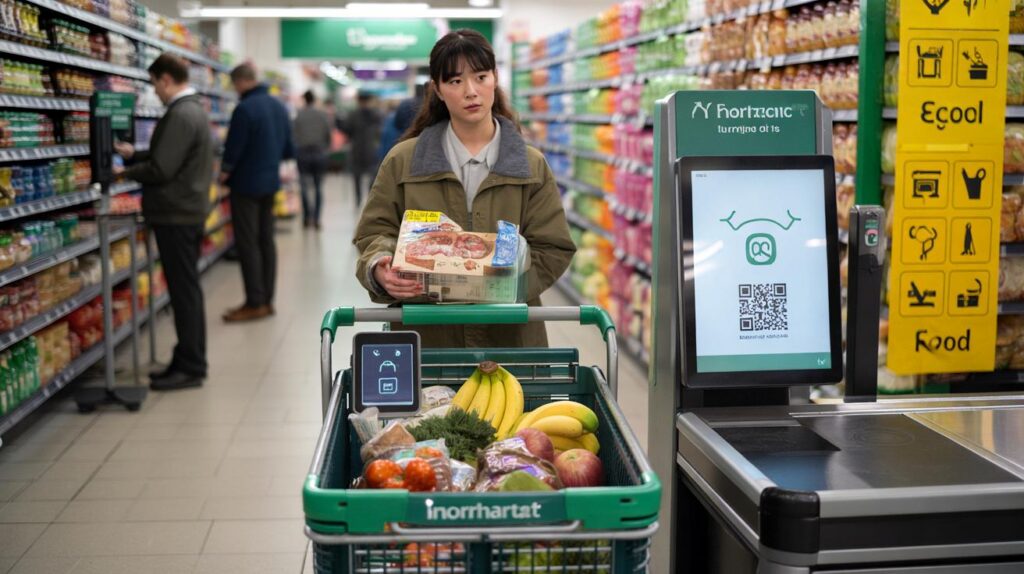
Queues feel longer, budgets feel tighter, and shoppers want fewer faffs at checkout. A new cart on trial could change that rhythm.
UK grocer Morrisons plans to bring Instacart’s Caper Carts — ai-enabled “smart” trolleys — into a single store in early 2026, with a wider rollout on the table if the pilot lands well. The move adds fresh tech to a chain that has just trimmed the price tags on 650 products ahead of the festive rush.
What Morrisons is planning
The supermarket will test a fleet of ai-equipped trolleys that let customers scan items as they shop, view a running total, and move to payment without unloading everything at a till. The carts combine weighing scales, sensors and a touchscreen. Fresh produce can go directly into the basket after a weight check, while packaged groceries scan via barcode.
One-store pilot in early 2026, using Instacart’s Caper Carts, with a potential UK expansion thereafter.
At the end of an aisle run, customers won’t queue for a staffed till. Instead, they take the trolley to self-checkout, scan a code presented on the trolley’s screen, and pay. The cart and the terminal sync the basket so payment can be wrapped up quickly.
How the smart trolley works
Caper Carts blend several recognition tools. Scales verify weight-based items. Computer vision and sensors help the trolley confirm what you place inside. A screen shows prices, promotions and a live total. The technology aims to cut repeated handling of items and reduce the pause between shopping and paying.
- Scan-as-you-go with a live spend total
- Built-in scales for fruit, veg and bakery items
- On-cart screen for product info and offers
- Barcode handoff at self-checkout to complete payment
- Potential integration with loyalty and digital receipts
Real-time totals, built-in scales and ai sensors target smoother baskets, fewer surprises and faster exits.
Why Morrisons, why now
British shoppers have moved heavily towards self-service, but frustration with queues and rescans still bites. By shifting scanning into the aisle, Morrisons hopes to speed trips while nudging spend through clearer pricing and relevant promotions on the screen. The timing also aligns with cost-of-living pressures: the chain has announced 650 price reductions, and an easier shop could amplify that message of value.
What it could change in store
Smart carts alter the flow of a supermarket visit. Staff spend less time clearing bottlenecks at tills and more time on availability and service. Promotions can become more targeted, triggered by what you add to the cart. Waste and shrink could fall if the cart’s sensors spot mis-scans or weighables without PLUs. For families, the immediate spend total may help rein in impulse buys.
| Step | Traditional shop | With ai trolley |
|---|---|---|
| Pick items | Place in trolley, track spend mentally | Scan as you pick, live total on screen |
| Fresh produce | Weigh at a separate scale or at checkout | Weigh in the trolley’s basket |
| Promotions | Shelf labels and paper leaflets | On-screen prompts while you shop |
| Payment | Unload, rescan, pay at till | Scan the on-cart code at self-checkout, pay |
The players behind the tech
Instacart owns Caper AI, the developer of the carts. The platform has been rolled out with North American grocers and is now pushing into international markets. For Morrisons, this partnership bridges digital retail tools and physical aisles, blending the chain’s in-store strengths with a more guided shopping experience.
What shoppers might notice first
The cart is heavier than a standard trolley due to the built-in hardware. It needs charging, so stores will keep docking stations out of the way. The screen will display prices and basket totals throughout the trip. At payment, there’s no need to haul items onto a belt, which removes a major pain point on busy weekends.
Opportunity and friction
The promise is speed, certainty on spend and cleaner data for the retailer. The risk lies in adoption. Some shoppers enjoy scanning on a phone; others prefer human tills. The cart must feel simple on first touch. It must also handle everyday wrinkles — loose herbs in bags, bakery pick-and-mix, multibuys, age-restricted items requiring a staff approval ping.
Data handling will get scrutiny. A cart that knows your basket, and possibly your loyalty ID, will build a profile of preferences. Clear consent, easy opt-outs and transparent retention policies will matter just as much as shiny screens. Stores will also watch for misuse, from deliberate mis-scans to items lifted out after the cart’s final tally. Retailers using similar tech have set up real-time flags for staff to assist rather than confront.
What success looks like
If the pilot shortens peak-time queues, reduces rescan rates and lifts customer satisfaction, expansion will follow. The format might start in larger sites with high self-checkout adoption and move to busier urban locations later. The carts could also absorb more features over time, such as on-screen recipes or aisle navigation tied to your list.
Context for the UK grocery market
Smart checkout technology has advanced in fits and starts. Phone-based scan-and-go reached scale, but many shoppers still default to fixed terminals. Just-walk-out formats grabbed headlines, then met operational and cost challenges. Smart trolleys sit somewhere in between: they keep the physical browse while preventing a second round of scanning. They also fit existing store layouts, which reduces disruption and capital demands.
Morrisons’ price activity suggests a two-pronged strategy: sharpen value while streamlining the shop. If the cart makes budgets more visible and trips shorter, value perception could rise even if household spend stays flat. That matters during a winter when staples, treats and gifts all compete for space in the basket.
How it might affect your weekly shop
Imagine a 35-item shop with seven fresh items and three multibuys. Today, you pick, queue, unload, rescan and repack. With an ai trolley, each item is scanned once, the produce weighed in-basket, and multibuys flagged on screen. At the end, a single code links your basket to payment. If you usually spend 12 minutes queuing and unloading, even halving that frees time for a quick top-up before school pick-up or a calmer exit with kids in tow.
There are trade-offs. A new process can feel fiddly on the first go. Multistep promotions and age checks still require a human nod. And the carts won’t replace every till — some shoppers will stick with a person at the checkout. The likely outcome is choice: standard trolleys, baskets, self-checkouts and smart carts side by side, with staff guiding people to what suits them best.
What comes next
Look for signage in the pilot store explaining the flow, with staff helping on the first few aisles. Expect loyalty prompts and a push for e-receipts. If results hold, the chain will pick a second and third location with different demographics to test the model’s range. Measurements will include queue time, basket size, scan accuracy and the rate at which people try the carts again.
For tech-curious shoppers, the appeal is clear: predictable bills and fewer bottlenecks. For budget-stretched households, pairing 650 price cuts with a clearer, calmer shop could sharpen the sense of control. The real test arrives in early 2026, when the first customers wheel a smart trolley out of the bay and decide within a few aisles whether it earns a place in their routine.



If this means halving the weekend queue and showing a live total, I’m in. Pairing it with 650 price cuts feels like the first good news for my food budget in ages. Just make the first-use tutorial painless and I’ll trolly—uh, totally—switch 🙂
Cool idea, but what’s the data polciy exactly? If the cart links my loyalty ID, I want clear consent, retention limits, and the ability to shop “guest.” Also, how often do mis-scans trigger staff checks? Nothing worse than being held up because a loose herb bag confuses the sensors.