
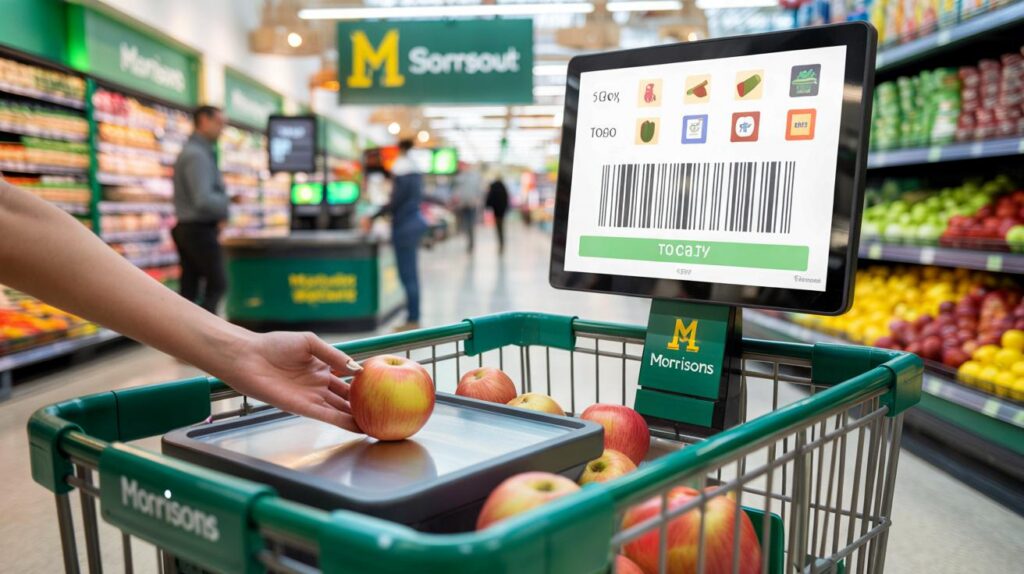
Brits stare down another change to the weekly food shop as digital tools creep from apps to the humble trolley.
Morrisons plans to pilot artificial intelligence trolleys in early 2026, starting with one store before a potential national rollout. The supermarket says the project aims to blend speed, convenience and better budgeting without scrapping self-checkouts or traditional tills.
What Morrisons plans to do
The retailer will introduce Instacart’s Caper smart trolleys to a single site as a first step. If shoppers respond well, more locations will follow. The machines use computer vision, weight sensors and onboard screens to recognise products, tally spending and guide the checkout process.
Morrisons is pitching the launch as the UK’s first fully integrated AI-powered trolley programme, with a live trial scheduled for early 2026.
Unlike simple scan-and-go handhelds, the trolley itself becomes the scanner. A screen shows a running total, promotions and basket composition. Built-in scales weigh loose produce. A barcode displayed on the trolley completes payment at the self-checkout area, removing the need to rescan items.
Key features shoppers will notice
- Live basket total with itemised pricing as you add goods.
- Weight sensors for fruit, veg and bakery items, reducing trips to separate scales.
- On-screen prompts that nudge correct placement and reduce mis-scans.
- Barcode handoff at self-checkout to finalise payment in a single scan.
- Potential loyalty card integration and relevant offers on the screen.
Scan as you shop, see your spend, and hand off your basket with one barcode at the end.
How the smart trolleys work
The Caper trolley uses cameras and AI models to identify packaged goods by shape, label and barcode. Weight sensors check that what goes into the basket matches what the system expects. The screen confirms each item, price and any multi-buy eligibility. If the system is unsure, the screen asks for a barcode scan or a quick tap to confirm the product.
When you finish, the trolley generates a single code. You scan it at a dedicated point in the self-checkout area. The payment terminal pulls your verified basket into one transaction. You pay, bag and leave. Staff still hover nearby to clear age-restricted products and help with any errors.
Why this matters for shoppers
Queues often shape how people feel about a shop. By moving scanning into the aisle, queue time should fall. The live total also helps households keep to a budget. That matters after a long period of inflation and squeezed incomes.
| Scenario | Estimated time saved | Budget control impact |
|---|---|---|
| Medium basket (25 items) | 8–12 minutes vs. standard self-checkout | Live total can curb impulse spend by £2–£5 |
| Big shop (55 items) | 12–18 minutes vs. rescanning at till | Running tally aids swaps to cheaper lines |
These figures depend on store layout, network reliability and shopper familiarity. The biggest time gains tend to appear at peak hours, when queues build.
Morrisons recently cut prices on 650 lines. The smart trolley arrives as the chain leans into value and convenience.
What it could mean for staff and stores
AI trolleys do not remove the need for people on the shop floor. Colleagues still check ages for alcohol, handle refunds, help with produce lookups and keep trolleys charged and clean. The pilot will test where staff should stand, how many lanes are needed and how quickly customers learn the flow.
Shrink risk sits in the spotlight. Mis-scans and basket tampering remain possible with any self-service approach. The weight checks and camera confirmation aim to cut errors. Expect Morrisons to try extra prompts for high-risk categories and to monitor anomalies in real time.
Privacy and data questions
Smart trolleys see products and sometimes hands, but they do not need to identify people to function. Even so, shoppers will want clarity on what gets recorded, how long it is kept and how promotions are targeted. The pilot should spell out data handling, opt-outs and the security of payment handoffs.
The bigger retail picture
Grocers face a simple problem: shoppers want speed without losing control. Many chains tried phone-based scan-and-go. Some loved it; others drifted back to tills. A trolley that handles scanning, weighing and checkout tries to bring the best of both worlds, especially for families who prefer not to shop one-handed with a phone.
Hardware costs matter. Smart trolleys are pricier than standard steel frames and need maintenance, batteries and software support. That is why trials start small. Stores will watch whether baskets get bigger, visits become more frequent and satisfaction scores rise. If all three move in the right direction, the business case strengthens.
What happens next
The 2026 pilot will stress-test the basics: battery life across a full trading day, camera accuracy under bright and dim aisles, and Wi‑Fi coverage in corners where signals usually drop. Training will be light-touch at first, with staff guiding early users and signage breaking down the flow in three steps.
- Step 1: place items in the trolley and check the on-screen confirmation.
- Step 2: weigh and confirm loose goods when prompted.
- Step 3: scan the trolley barcode at the self-checkout and pay once.
Practical tips if you try one
Think of the screen as your budget friend. Set a target spend in your head before you start. Use the running total to decide on swaps. If the trolley flags an item it does not recognise, try the barcode or ask a colleague. For produce, place items steadily so the scale can settle.
Families can split jobs. One person loads; another watches the screen. That reduces corrections and speeds the shop. If you prefer human tills, nothing changes: the pilot adds a new option rather than removing old ones.
Under the bonnet: how the AI and sensors play together
The cameras recognise packaging and barcodes. The scale checks weight ranges to avoid mismatches. The system fuses both signals to improve accuracy. If a product looks like a tin of tomatoes and weighs like one, it clears faster. If the signals disagree, the screen asks you to confirm. Software updates refine these models as more items pass through.
A quick savings simulation
Take a £72 weekly shop with 40 items. If the trolley helps you spot two multi-buys you would have missed and nudges one own-label swap, you might trim £2.80 without hunting for shelf labels. If you skip a duplicate because the live tally reminds you what is already in the basket, you avoid waste at home. Small wins stack up over a year.
The promise is simple: less queue, clearer spend, fewer hassles with loose produce. The pilot will show whether it sticks in real stores.



Curious how much data these trolleys actually collect. Do they film faces, or just hands and products? What’s stored, for how long, and can I opt out without queing up at a manned till? The transparency bit is definitley the deal‑breaker for me.
If the trolley tells me I’ve already got five tins of tomatoes, does it also stop me buying a sixth during a weak moment? Asking for a friend 🙂