
Your boxes are stacked, your keys are ready, but your dog is reading a different script on moving day.
House moves unsettle routines, scramble smells and flood dogs with unfamiliar noise. You want a clean break. Your dog needs continuity, control and calm. Build that bridge early and you will avoid messes, escapes and panicked calls to the vet.
Why dogs wobble when their home changes
Dogs map the world with scent and habits. Home smells like safety, not wallpaper. Removing furniture erases the map. New floors, echoes and neighbours overload their senses. Anxiety shows fast. You may see clinginess, pacing, panting, drooling or sudden accidents indoors. Puppies and seniors react more. Noise-sensitive dogs struggle with slamming doors, stairwells and lift dings. Many will guard beds or doorways when unsure of the new territory.
Most dogs take one to three weeks to settle. Plan the first 72 hours with military precision to set the tone.
Build calm before the chaos
Start weeks ahead with predictable cues
Keep the skeleton of the day the same. Meals, walks and bedtime should hold steady to anchor your dog while the furniture shifts.
- Stage a few boxes two to three weeks early, then add more slowly, so the picture changes in small steps.
- Play scent games among the boxes to turn them into sources of fun, not threat.
- Train a reliable “place” on a mat or bed. Reward your dog for parking there while you pack.
- Visit the new area for short sniff-strolls if practical. Build a future walking route before the move.
- Use a pheromone diffuser or collar from seven days before moving. Many dogs relax with a steady signal of safety.
- Practise alone-time in gentle doses if your routine will change after the move.
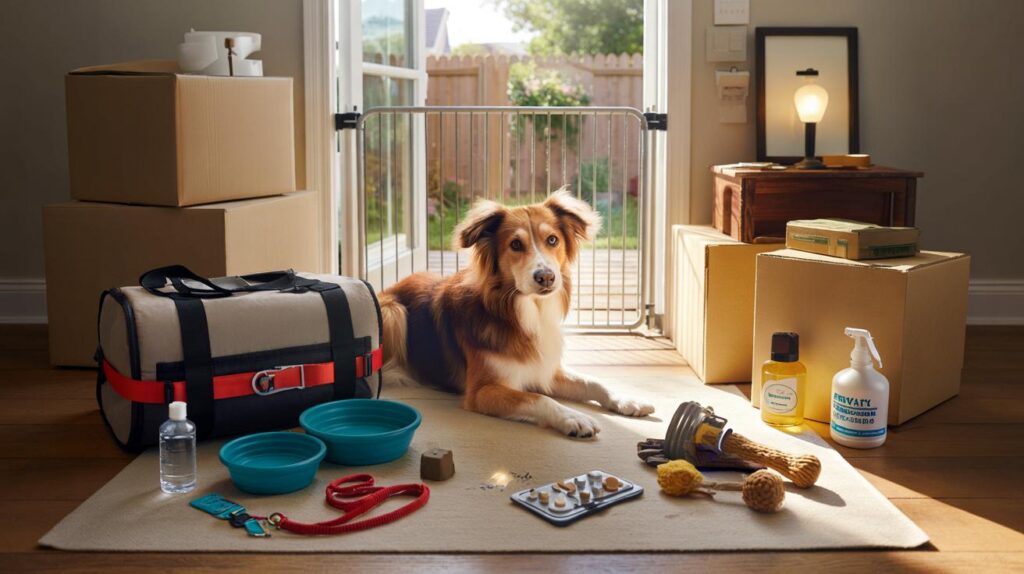
Pack a canine go-bag
Do not bury the essentials at the back of the lorry. Keep them with you in a labelled bag you can grab in seconds.
- Lead, harness, seat-belt clip or travel crate, and poo bags.
- Bed or blanket, unwashed, to carry familiar scent.
- Food for three days, collapsible bowls and a water bottle.
- Medication, treats, favourite chew and a long-lasting puzzle toy.
- Spare ID tag with your mobile number. Update microchip records before you hand over keys.
- Enzymatic cleaner for inevitable toilet slips during the first night.
Never load the bed, bowl or lead onto the van until you lock the old door for the last time.
Moving day: safety, travel and toilets
Chaos opens doors. People forget gates. Set up a “safe room” before anyone starts lifting. Use a back bedroom or bathroom. Place the bed, water and a chew inside. Close the door and add a clear note to keep it shut. A baby gate adds a secure second barrier. Walk your dog well before the van arrives.
In the car, Rule 57 of the Highway Code applies. Secure your dog with a crash-tested crate or a seat-belt harness. A loose dog can distract you or cause injury in a sudden stop. Offer water at each break. Skip a large breakfast to reduce carsickness. Ask your vet in advance about anti-nausea tablets if your dog vomits on short trips. Stop every two hours for a short, calm loo break on lead.
| When | Action | Why it helps |
|---|---|---|
| 2–3 weeks before | Stage boxes; train “place”; start pheromone | Builds predictability and positive links |
| 48 hours before | Pack go-bag; check microchip; pre-plan walking route | Cuts delays and anxiety spikes |
| Moving day | Safe room; restrained travel; light meals | Prevents escapes and carsickness |
| First 72 hours | Room-by-room tours; frequent toilet breaks | Limits accidents and stress |
First 72 hours in the new place
Secure and familiarise
Check fences and gates before your dog explores the garden. Plug gaps under decking and around bins. Test balcony latches. Store cleaners and cables out of reach. Keep your dog on lead for the first garden visits, even if it feels safe.
Set up one quiet corner as basecamp. Place the bed, toy box and water there. Feed in that spot for three days to build a strong home signal. Tour one room at a time. Reward sniffing and calm pauses. Keep visitors short and quiet until your dog relaxes.
Expect a toilet accident. Do not scold. Use an enzymatic cleaner to remove scent markers. Add extra loo trips after meals, after naps and before bedtime. Most dogs reset house training within a week when we give them more chances to get it right.
Keep the rhythm steady
Hold walk times and meal windows. Add mental work rather than more miles. Scatter feed in a quiet room. Offer a stuffed chew when you unpack. Ten minutes of training drains more stress than an hour of over-stimulating fetch in a new park.
Consistency beats intensity. Small, repeated wins tell your dog the new address is safe and predictable.
Prevent escapes and incidents
Change the ID tag to your mobile and house number on day one. Update the microchip database as soon as you can. Inform your pet insurer of the new address to keep cover valid. Tell neighbours you have a dog and share your number in case of a gate left ajar. For flats, practise lift manners on lead. Use a double-door routine in communal areas.
- Use a long line in unfamiliar parks for seven to ten days.
- Teach a strong recall with high-value food in hallways before trying it outdoors.
- Log a quiet vet registration visit midweek, not on the first frantic day.
Red flags that need quick help
- Refusing food for 24 hours, or repeated vomiting or diarrhoea.
- Relentless pacing, howling when left or destructive chewing that draws blood.
- Sudden aggression at doorways, near beds or around food in the new space.
- Continuous panting at rest, trembling or glazed eyes for more than an hour.
Call your vet if you see these signs. A behaviourist can design a short plan to stabilise routines and reduce risk. Remote sessions work well once you share a floor plan and video of your dog’s behaviour.
Costs you can trim without cutting care
Prevention saves real money. A weekend emergency consult can reach £200. Motion sickness tablets cost far less than deep-cleaning a hire van. A pheromone diffuser runs £25–£35, while a carpet replacement runs into hundreds. Borrow a crate from a friend or rescue instead of buying a new one at £60–£150. A certified seat-belt harness costs £12–£25 and prevents fines and injuries.
Plan your walk timings to avoid out-of-hours fees. Book a pre-move nurse clinic for weight, worming and a quick travel chat. Many policies include helplines for behaviour questions. Owners who follow a checklist often avoid one or two urgent visits in the first month, cutting typical pet-care spend by up to 40%.
Seasonal realities and smart add-ons
Short daylight and cold pavements change routines. Shift main walks to daylight and use reflective gear. Dry paws after wet trips to reduce slips on new floors. Use rugs near doorways for traction. If your dog shivers, add a snug coat for outdoor loo breaks to speed the job along.
Consider a “settle soundtrack” at low volume to mask new building noises. Build a scent bridge by wiping a soft cloth on your dog’s cheeks and rubbing it on skirting boards at nose height. Run a two-minute daily “find it” game in each room to anchor curiosity to the new space.
Extra ideas to widen the benefits
Use the move to refresh cue reliability. Pair each room with a calm exercise: kitchen equals mat work, lounge equals chew time, hallway equals recall drills. This zoning prevents door-dashing and begging. Rotate toys weekly so novelty comes from you, not from street noise.
Set a risk register for the building and area: fox holes under fences, busy car parks, communal bins, lift doors that close fast. List mitigations next to each risk. Review after seven days. You will spot patterns and tighten the plan before mishaps start costing money and peace of mind.



Brilliant guide—packing a canine go-bag and keeping the bed unwashed for scent were tips I hadn’t considered. The safe-room + baby gate combo seems like a real escape-stopper. I’m moving next month and was worried about my noise-sensitive spaniel; starting the pheromone diffuser a week early and doing sniff-strolls near the new place feels doable. Also appreciate the reminder to update microchip records before keys change hands. Thanks for making this practical, not just theory.
I’m curious about the “cut vet bills by 40%” claim. Is that based on survey data or insurer stats? I believe prevention helps, but 40% sounds high—any citations or a breakdown (e.g., how many avoided out-of-hours visits vs. meds)? Not trying to nitpick, just want evidance to share with my partner.