
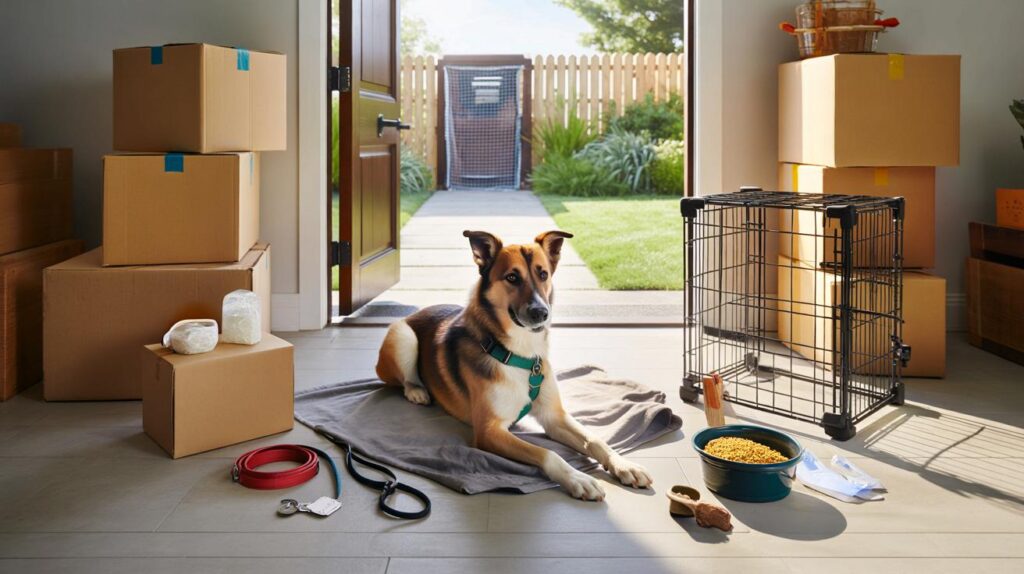
Cardboard towers, jangling keys, a wag that will not settle. For many families, moving day tests nerves, habits and patience.
Dogs see home with their noses and routines, not with estate photos. Strip out familiar scents and mealtime rhythms, and stress spikes. With a plan that starts weeks out, you can lower the risk of barking, pacing and indoor accidents, and help your dog land calmly in the new postcode.
Why dogs struggle with sudden change
Dogs anchor themselves to predictable cues. They map rooms by smell. They memorise walk routes and door sounds. A sudden pile of boxes wipes those cues away. You may notice clinginess, scattered sleep, vocalisation, and toileting lapses. Sensitive dogs show stress yawns, lip licking and a tighter body posture. Older dogs and adolescents often react more.
Change the surroundings slowly and preserve the daily rhythm. That combination calms most dogs faster than any gadget.
Start early with a staged transition
Week minus four: make boxes normal
Bring a few boxes into living spaces two to three weeks before packing. Scatter kibble trails over and around them. Play short games near them. Keep sessions under five minutes and upbeat. Leave a blanket your dog uses on a box so it gathers scent.
Week minus two: preview the new life
If you can, walk your dog near the new home at quiet times. Let them sniff verges and corners. Stand still and let the environment do the work. If travel is long, practise short car trips with rewards at the end. Update ID tags in advance with your new postcode and phone number. Check your microchip details online or with your vet.
Week minus one: protect the routine
Fix meal times and walk windows and hold them. Do not wash bedding this week. That scent continuity matters. Pack non‑essentials only. Leave bowls, lead, bed, a favourite toy and long‑lasting chews unpacked.
Keep feeding and walk times unchanged within a 30‑minute window for at least 10 days around the move.
Build a dog go‑bag for moving day
Pack a single bag you keep with you, not in the van. Include essentials you will need before the first box is opened.
- Lead, collar, harness and a spare tag with your mobile number
- Two days’ food, measuring scoop and a collapsible water bowl
- Unwashed bed or blanket, plus a familiar toy
- Poo bags, cleaning spray, paper towels and a doorstop
- Long‑lasting chew or lick mat to occupy your dog during loading
- Medication, vaccination card and vet contact details
- Portable crate or baby gate for safe confinement
Keep stress low on the day
Contain before you load
Give your dog a good sniff‑heavy walk early, 20–30 minutes at a quiet time. Feed a smaller breakfast to reduce car sickness risk. Settle them in a closed room with their bed, or use a crate. Put a sign on the door so no one opens it. Many dogs bolt when doors swing and furniture moves.
Travel safely and simply
Use a crash‑tested car harness or a secured crate. Stop every two to three hours for water and a short sniff break on lead. Offer a chew, not a full meal. Ask your vet before using any calming products. Some dogs respond to pheromone collars or L‑theanine chews; sedation can worsen disorientation if misused.
Land softly in the new home
Secure the perimeter and the plan
Walk the boundary before your dog explores. Check for gaps under fences, loose latches and open under‑deck spaces. Keep your dog on lead for the first garden visit. Inside, set up one calm corner with bed, water and toys away from foot traffic. Use gates to block stairs or unsafe rooms until you inspect them.
Many escapes happen in the first 48 hours. Lead in the garden and slow, supervised tours cut that risk sharply.
Toileting without drama
New smells trigger marking and confusion. Take your dog out on lead after waking, after eating, after play and every two to three hours for the first days. Praise and reward outside toileting. Clean any indoor accidents with an enzymatic cleaner that removes odour, not just masks it. Avoid scolding; it increases anxiety and hiding.
Rebuild routine in the first week
Recreate your schedule on day one. Serve meals at the normal times. Keep walks at similar lengths and routes, even if the scenery changed. Add one new room at a time. Train two or three simple behaviours daily—sit, settle on a mat, touch—so your dog earns rewards in the new space and regains confidence.
Your 30‑day settling timeline
| When | What to do | Why it helps |
|---|---|---|
| Day −30 to −14 | Boxes appear, short play around them, car trip practice | Desensitises to packing and travel cues |
| Day −14 to −7 | Walk near new area if possible, confirm ID and microchip | Builds scent maps and safety net if lost |
| Day −7 to −1 | Fix routine, keep bedding unwashed, prepare go‑bag | Preserves comfort cues during upheaval |
| Moving day | Pre‑walk, safe confinement, secure travel, controlled unloading | Reduces escape and motion stress |
| Days 1–7 | Lead in garden, room‑by‑room access, frequent toilet breaks | Prevents accidents and overwhelm |
| Weeks 2–4 | Expand walks, reintroduce training games, host calm visits | Rebuilds confidence and social routine |
Three risks people underestimate
Door dashing during loading
Friends carry sofas. Doors swing open. A startled dog can sprint in seconds. Assign one person to dog duty. Use a lead whenever doors open. Put a note on the door for helpers.
Invisible hazards in a new garden
Gaps under a fence look small until adrenaline kicks in. Plants such as yew and foxglove are toxic. Do a hands‑and‑knees inspection. Block holes with temporary mesh. Remove toxic plants before off‑lead time.
Stress‑linked stomach upsets
Diet changes and nerves can trigger loose stools. Keep food the same for a week. Split meals into smaller portions. Offer water little and often. Call your vet if vomiting or diarrhoea lasts beyond 24–48 hours or your dog seems lethargic.
Calming tools that actually earn their keep
Many families use a pheromone diffuser in the new sleeping area for the first month. A vet‑approved probiotic can support gut balance. A snuffle mat or scatter feeding lowers arousal quickly. White noise or a talk radio station reduces sudden outside sounds in terraced streets. Choose a well‑fitted harness and a two‑metre lead for control without tension.
When in doubt, shorten the day: fewer visitors, simpler walks, more predictable quiet time.
If you cannot preview the neighbourhood
Run “smell at home” games before the move. Hide treats in easy places and let your dog hunt them out. Rotate three toys so one always smells familiar. Record a five‑minute loop of your new home’s typical sounds once you arrive—boiler hum, corridor footsteps—and play it softly while you settle your dog with a chew. Then pair new street sounds with rewards at the window.
When to call for help
Contact your vet if your dog stops eating for more than 24 hours, pants heavily at rest, or shows aggression around doorways. A qualified behaviour professional can design a plan for separation distress or noise sensitivity. Most dogs adjust within two to three weeks when routines hold steady.
Extra gains while you move
Use the reset to tackle nagging issues. Practise loose‑lead walking on new routes without old triggers. Create a “settle” station with a mat in the new living room, and reward calm every evening. Label a cupboard for dog gear so everyone finds leads and poo bags fast. Teach a rock‑solid recall in the garden before visiting the local park.
Families on tight budgets can repurpose household items. A bath mat becomes a settle target. A muffin tray with tennis balls turns into a scent puzzle. A rolled towel smeared lightly with dog‑safe paste becomes a 10‑minute decompressor. These low‑cost tools buy calm while boxes wait.



Fantastic breakdown. The week‑by‑week routine + the go‑bag checklist is exactly what I needed before next Friday. I’d add vet records in both paper and phone photos (learned that the hard way). Also, “don’t wash bedding” is a gem—I would’ve definitley messed that up. Thanks for the calm, practical tone.