
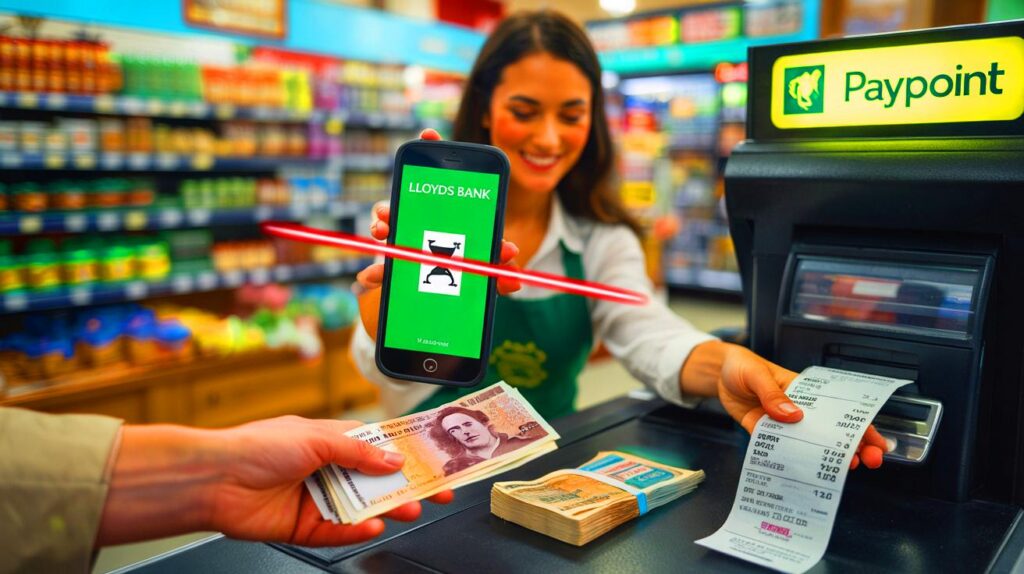
Britons juggling notes and coins have a new route to bank their cash, tied to a strict cap and a ticking clock. Shops on your street now matter as much as branches, with a barcode acting as your counter slip.
Lloyds has launched app-generated barcodes that let customers pay cash into their accounts at PayPoint tills nationwide. The change arrives with clear limits: a £300 daily ceiling and a £600 monthly cap, plus a short validity window for each code.
What is the new £300 rule
The bank now lets customers deposit up to £300 in notes and coins per day using a barcode created in its mobile app. There is also a £600 monthly limit for this barcode route. Each barcode lasts two hours from creation, so you must complete the transaction before it expires.
The deposits are taken at PayPoint locations, a network of more than 30,000 convenience stores, supermarkets and newsagents. According to the network, 94% of sites open seven days a week, and most people live close to at least one outlet. The idea is to give you a cash counter on the doorstep, without a detour to a branch.
Deposit up to £300 a day via barcode, subject to a £600 monthly cap. Your code expires after two hours.
More than 30,000 PayPoint stores can accept deposits. Most open seven days, placing cash banking in everyday shops.
How the barcode deposit works
You generate a unique code in the “Everyday” section of the Lloyds app. Staff scan it at a PayPoint till, take your notes and coins, and process the amount against your account. You leave with a receipt.
- Open the Lloyds app and go to the Everyday section.
- Choose to pay in cash and select your amount.
- Generate the barcode and head to a nearby PayPoint store.
- Present the barcode to be scanned and hand over your cash.
- Keep the printed receipt and check your app for the updated balance.
The barcode includes only what staff need to process the deposit. If the two-hour window lapses, make a fresh barcode in the app before trying again.
Tip: create the barcode just before you leave, so you have the full two hours to reach the till and pay in.
Where you can pay in cash
The barcode route sits alongside the bank’s existing cash options. Customers can still use branches of Lloyds, Halifax and Bank of Scotland, cash‑in/out machines, Community Banking Hubs, and Post Office counters across the country.
| Channel | Availability | Typical limits | What to know |
|---|---|---|---|
| PayPoint barcode (new) | 30,000+ shops, many open 7 days | £300 per day; £600 per month | Barcode valid for two hours; receipt provided |
| Lloyds/Halifax/BoS branches | During branch hours | Varies by branch policy | Counter service; larger deposits possible |
| Cash in/out machines | Selected locations nationwide | Machine limits apply | Fast self‑service with notes; coins vary |
| Post Office counters | About 11,500 branches | Subject to Post Office handling rules | Deposits and withdrawals for everyday banking |
| Banking Hubs | Growing network of shared counters | Hub policy applies | Counter services run by the Post Office |
You can find your nearest PayPoint via the Lloyds app. The breadth of outlets means many people can combine a grocery run with a cash deposit.
Who gains and who may hit the cap
Good for everyday cash users
This suits people who handle small sums: carers reimbursed in cash, parents banking pocket money, part‑time sellers at car‑boot sales, or anyone who collects tips. Local shops often sit closer than a branch, so time savings can be real, especially on Sundays.
When the limit could bite
The £300 daily limit will squeeze higher‑cash traders and club treasurers banking weekend takings. The £600 monthly cap means you cannot use this route for larger balances from multiple events across a month. You will need a branch, a Post Office, or a machine for bigger totals.
- Split deposits across days if your cash is modest and time allows.
- Use a branch or Post Office for larger single deposits.
- Track your month‑to‑date total in the app to avoid hitting £600 unexpectedly.
- Always keep the PayPoint receipt until the balance shows correctly in your account.
Why Lloyds is doing this
Shopping habits have changed. Branch footprints have shrunk. People still need to bank cash from time to time. Partnering with a large retail network offers reach and long opening hours without building new counters. The caps help manage risk, reduce cash handling costs, and deter money‑laundering attempts.
PayPoint locations already handle parcels, bill payments and top‑ups. Adding cash deposits for a major high‑street bank folds banking into everyday errands and spreads the points of access across communities.
What about speed, checks and charges
Processing time can vary by route. Check your app after paying in. If the balance does not appear promptly, retain your receipt and contact support via the app.
Staff may ask brief questions about the transaction. That protects customers and stores. Bring basic ID if you are depositing frequently or larger sums through other channels.
The bank has not flagged a specific fee for the barcode route. Account holders should review their account tariff in the app to see if any charges apply to cash services.
A quick example to see how the cap works
Say you have £520 to bank after a busy week: £220 in notes and £300 in coins. You could make one £300 PayPoint deposit today, then another £220 tomorrow. That would reach the daily cap both days but stay within the monthly £600 cap for barcode deposits. If you later need to pay in more cash in the same month, switch to a branch, a Post Office counter or a suitable machine.
If your barcode runs out while you queue, do not hand over cash. Open the app and generate a fresh code, then ask staff to scan the new one. Stores understand that codes expire and can re‑scan quickly.
What this means for your weekly routine
Households who still use cash can now bank it during milk runs or parcel drop‑offs. Students can clear out jars of coins without trekking across town. Small sellers can tidy their float after a shift, even on a Sunday. The feature broadens choice but does not replace traditional counters for larger deposits.
If you handle cash regularly, set a simple rhythm: make small, frequent deposits at PayPoint, and schedule a monthly visit to a branch or Post Office if you exceed the cap. Keep an eye on your month‑to‑date total in the app. The mix of channels—shops, hubs, machines, and branches—lets you match the route to the amount in your pocket and the time you have.



Actually love this. With 30,000+ PayPoints around, there are three on my street. My nearest branch is miles away. Being able to drop £50–£100 after a Sunday shift and get a receipt is perfect. The two‑hour barcode window is fine if you generate it before leaving. Thanks, Lloyds.
£600 per month is pretty low tbh. If you’re a club treasurer or a market stall with lots of coins, that cap will bite fast. Feels like it’s caping savings convenience rather than enabling it. Why not allow higher limits with extra checks?