
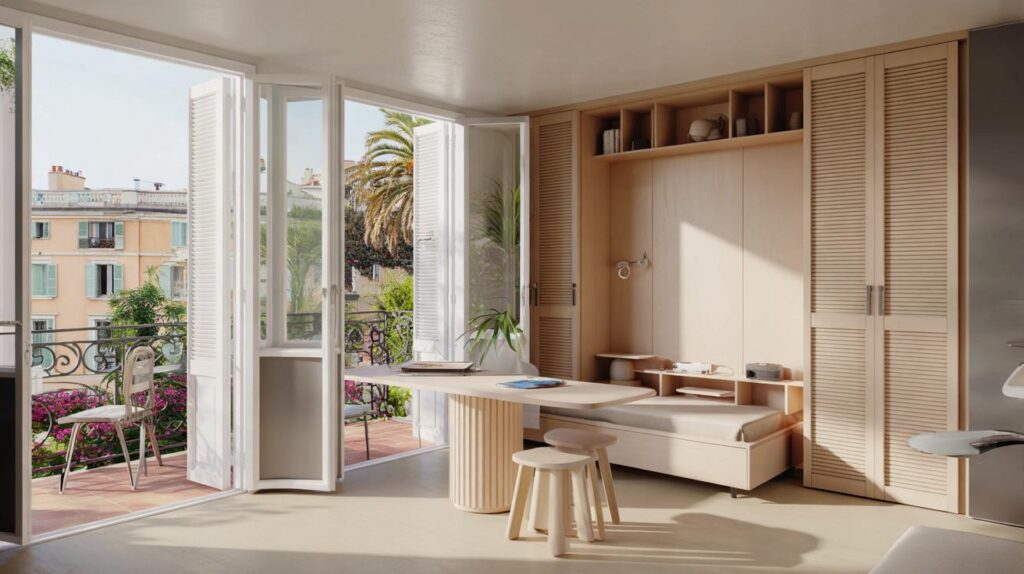
Sunlit balconies and weekend beach bags meet a tougher reality in Nice: space squeezes, long absences, and rising security risks.
Owners juggling a pied-à-terre and a primary home face two quiet drains on joy and money. Crammed rooms steal comfort. Empty weeks invite trouble. A few targeted changes turn a lock‑up‑and‑leave flat into an easy, secure base that earns its keep when you are not there.
Space you can actually use
Every square metre in a second home must work hard. You do not live there full time. You arrive with specific plans. Your gear appears in bursts. Furniture must adapt to that rhythm.
Modular pieces that earn their footprint
- A wall bed with integrated shelving frees 3–4 m² by day in a 35–45 m² flat.
- A compact table that extends to seat six helps weekends with guests without swallowing the room.
- A sofa bed with hidden storage holds spare bedding and reduces bulky cupboards.
- Stackable stools slide under a console and double as bedside tables.
Choose slim profiles and raised legs to reveal floor area. Fit tall, shallow cupboards instead of deep, low units. Use pocket or sliding doors to recover swing space. Opt for hardwearing, salt‑air‑friendly finishes; aluminium, marine‑grade fabrics and lacquered fronts cope better near the sea.
Design for changeovers, not display. Pieces must fold, roll, stack and hide. Your future self will thank you every arrival day.
Off‑site storage that acts like a spare room
Seasonal kit eats space. Beach umbrellas, wetsuits, ski bags, spare crockery and bikes sit idle for months. Keeping all of it in a compact flat chokes daily comfort. Off‑site storage in Nice solves the timing mismatch.
Look for 7‑day access, keypad entry, cameras and individual alarms. Many facilities provide flexible month‑to‑month terms, so you scale up before summer and trim back in winter. Treat the unit as a rotating buffer for bulky, rarely‑used items.
| Unit size | What it fits | Typical monthly cost (€) | Best for |
|---|---|---|---|
| 1–2 m² | Beach kit, 4–6 boxes, small tools | 35–60 | Studios and one‑beds |
| 3–4 m² | Two bikes, suitcase set, spare chairs | 70–110 | Frequent hosts |
| 5–7 m² | Sports gear, seasonal linens, extra appliances | 120–180 | Families and long summers |
Label every box, add a quick inventory and keep duplicate basics in the flat. You want arrival days to feel simple. Move in with a weekend bag and collect extras only if you planned them.
Freeing just 2 m² in a 40 m² apartment feels like gaining a whole nook—roughly 5% more living area without building.
Security while you are away
Empty homes invite attention. Research in France indicates unoccupied properties face roughly four times the burglary risk of main residences. Owners need layered deterrence and fast alerts.
A layered approach that fits city flats
- Monitored alarm hub with door and window sensors sends instant push alerts.
- Compact cameras facing entry points record on motion and deter at the door.
- Smart locks give time‑limited codes to cleaners and guests. No key‑cutting risk.
- Programmable roller shutters simulate presence at sunrise and dusk.
- Smart plugs vary lamps and a radio. Random timing beats fixed schedules.
Ask your insurer which devices lower premiums. Photograph serial numbers and keep an off‑site list. Fit a small safe bolted to masonry for passports and jewellery. Avoid leaving spare keys in plant pots or meter boxes; thieves know those spots.
Presence beats secrecy. Timed lights, moving shutters and brief, regular checks push burglars toward easier targets.
Decluttering rhythms for homes you do not live in
Second homes suffer from “micro‑abandonment”. Each trip leaves a few extra items. Over a year, clutter creeps. Build routines around the calendar.
Quarterly rotation that keeps rooms calm
- Spring: bring in light duvets and beach kit; send winter linens to storage.
- Summer: keep only seven‑day toiletries per person; move spares off‑site.
- Autumn: pack outdoor cushions dry; oil patio furniture; store before storms.
- Winter: bring board games and thicker throws; remove unused small appliances.
Use clear bins for seasonal items. Put a laminated “departure checklist” on the inside of the front door. Include fridge clear‑out, water stopcock, shutters programme, and alarm set. If you hire a caretaker, the same sheet standardises the handover.
Letting weeks that pay the bills, not raise stress
Short lets can offset charges and fund upgrades. Guests care most about cleanliness, ease and trust. Space and security choices influence all three.
Set up for five‑star frictionless stays
- Keep one locked owner’s cupboard. Move personal items to storage during peak months.
- Provide clear appliance cards with simple diagrams in English and French.
- Use a smart lock or key box with time‑bound codes to remove key handover delays.
- Add mattress protectors, spare bulbs and a labelled fuse map for quick fixes.
- Photograph the flat after each clean. You build a dated condition log without hassle.
Check local rules for registration and permitted letting patterns. Factor cleaning, laundry and call‑out fees into your nightly rate. A tidy, flexible layout photographs well and usually lifts occupancy. Security features also reassure families and longer stays.
Your photos sell the promise; your layout and check‑in keep the promise; your storage protects the promise.
A quick, numbers‑first mini‑plan
Take a 42 m² one‑bed near the tram. Replace the fixed bed with a wall bed (+3.2 m² daytime). Add two tall 35 cm‑deep wardrobes (+1 m of extra hanging). Rent a 2 m² storage unit (€45/month) for beach kit, winter duvets and a spare set of cookware. Fit a smart alarm, a video doorbell and programmable shutters (€600–€1,200 depending on brand and installer). Result: a living area that hosts four for dinner, an uncluttered bedroom by night, and quieter insurance conversations.
Extra angles that matter on the Côte d’Azur
Moisture, salt and heat
Sea air speeds corrosion. Choose stainless or galvanised fixings. Vent wardrobes with small louvres. Use breathable storage bags for linens to prevent musty smells after long gaps. Run a dehumidifier on a timer in shoulder seasons.
Insurance and neighbours
Tell your insurer the flat is a second home. Different terms may apply to water leaks and theft. Share your number with the syndic or a trusted neighbour. If an alarm triggers or a storm cracks shutters, someone local can look within minutes.
A simple risk ladder
- Noisy clues: piled post and a dark balcony flag absence to opportunists.
- Visible deterrents: cameras and shutters reduce drive‑by attempts.
- Fast response: monitored alerts and a nearby keyholder limit damage.
Where to go next
Sketch your flat’s floor on one sheet. Mark dead zones behind doors and under windows. Target those first with sliding doors and low‑profile storage. List bulky items you use fewer than 20 days a year and move them to a 1–3 m² unit. Programme shutters and lamps on staggered schedules. Add a smart lock and one interior camera covering the entrance only, to balance privacy and safety.
If you plan to let, run a weekend simulation. Pack a two‑night bag. Arrive as a guest would. Time how long it takes to find glasses, turn on the hob and set the shower. Every delay marks a label to add or a shelf to move. Over two or three cycles, your Nice base becomes lighter, safer and easier to share.



Where does the 28% figure come form? Is it your own survey of small flats in Nice, or a general rule of thumb? Also, 4x more break-ins sounds dramatic—any link to the French research you cite?
Loved the numbers-first mini-plan—finally something actionable for a 40–45 m² pied-à-terre. The tip about 35 cm-deep wardrobes and sliding doors is gold. Printing the departure checklist for our hallway now 🙂