
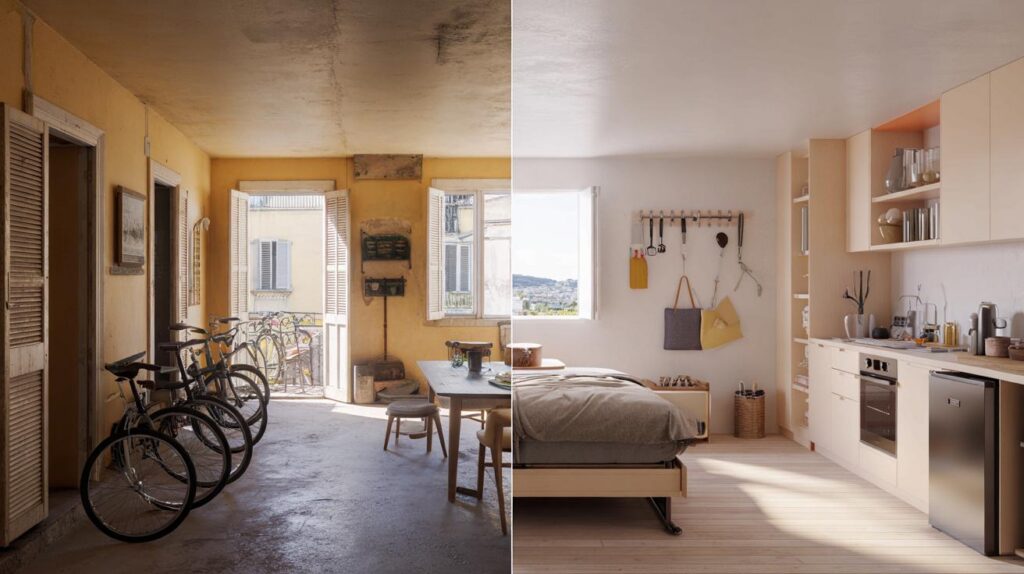
Sunshine lures you to Nice, but empty weeks lure opportunists. Space runs short, costs creep up, and worry lingers.
Owners now treat their pied-à-terre like a compact, high‑value asset. They shape rooms to work hard, shift seldom‑used gear out, and harden security for the weeks they are away. The result cuts stress between stays and boosts appeal if you let the flat for part of the year.
Space you can actually use
In a secondary home, every square metre should earn its keep. That means folding, stacking, sliding and hiding. Think sofa bed for visiting friends, wall bed for a true double, and an extendable table that serves both solo breakfasts and family dinners. Build storage into the base of seating. Use headboards with cupboards. Raise beds to clear space for drawers.
Design for change. A room that flips from lounge to sleeping area in 90 seconds saves money and arguments.
Keep navigation obvious. Label switches. Put pans, plates and cutlery in one reach zone. Mount hooks near the door for beach bags and keys. Store spare linen in vacuum bags under the bed. Keep the palette light to catch the Côte d’Azur sun and make small rooms feel open.
Smart layouts for tight kitchens and small balconies
In Niçois apartments, the kitchenette and balcony carry a lot of weight. A two‑ring hob plus a combi‑microwave handles short stays. A slimline dishwasher frees half an hour every day. On the balcony, a fold‑flat bistro set and stackable loungers deliver flexibility without hogging floor space.
- Use magnetic knife strips and ceiling rails to free worktops.
- Choose nesting cookware and collapsible colanders.
- Install a narrow, high pantry pull‑out beside the fridge.
- Fit an outdoor storage bench for cushions and snorkels.
Off‑site storage that pays for itself
Beach gear, skis and spare crockery steal space for eleven months to shine for one. A local storage unit solves the imbalance. You keep the flat airy, the cupboards lean, and the transitions between seasons painless. Many facilities around Nice offer 7‑day access, CCTV, alarms and unit sizes you can scale up or down as life changes.
| Item | On‑site outcome | Off‑site outcome |
|---|---|---|
| 4 bikes | Hallway blocked; walls scuffed | Flat entrance clear; faster changeovers |
| Set of winter duvets | Overfilled wardrobe; musty smell | Fresh closets; less airing time |
| Spare dinnerware | Risk of breakage by guests | Kept for owners; fewer losses |
Move anything used under 30 days a year out of the flat. You reclaim up to 30% of liveable space.
Pack by season and label clearly: “Summer linens,” “Winter duvets,” “Owner‑only kit.” Photograph each box and save the images in your notes app. You will know what you have and where it sits without opening a single lid.
Keeping the address safe when you are away
Empty homes draw attention. Interior data show vacant properties suffer up to four times the burglary risk of main residences. Build layers, not just a single alarm. Start with strong doors, high‑quality cylinders and latch guards. Add smart sensors on doors and windows. Fit a siren that shouts loudly enough to make intruders leave quickly. Connect the system to your phone so you can confirm an alert, call a neighbour, or escalate.
- Smart alarm with mobile alerts and battery backup.
- Discrete cameras covering the entrance and main living space.
- Motorised shutters on a randomised schedule to simulate presence.
- Smart lights that switch in different rooms at different times.
- Water‑leak and smoke sensors for non‑security emergencies.
Presence beats silence. Timed shutters and lights make a flat look lived‑in while you sit on a runway in London.
Avoid leaving house rules or spare keys in plain view. Use a coded key safe in a spot that cameras cover. Rotate codes after each service call. If your building has a concierge, log your travel dates and contact details with them. They spot unusual activity faster than any app.
Insurance, co‑ownership and what to check next
Read the secondary residence clause in your policy. Many insurers ask for approved locks, periodic inspection, and proof of alarm use. Your syndic may also regulate cameras in communal areas and external shutters. Confirm what you can automate and when you can run deliveries, cleaners or contractors through shared hallways.
Preparing for seasonal letting without losing control
If you rent between your own stays, design the flat to reset in minutes. Keep owner‑only items off‑site. Provide clear, laminated guides for appliances. Use uniform white towels and labelled storage baskets so your cleaner can audit quickly. A connected lock or keypad removes the key hand‑off headache and logs entries.
Rules shift across French cities, and Nice applies registration and change‑of‑use controls for short lets in many cases. You should confirm current steps with the mairie and your syndic before listing. The goal is simple: stay compliant, keep neighbours onside, and protect your investment.
What guests notice first
- Light and airflow: uncluttered windows, working blinds, quiet fans.
- Immediate clarity: Wi‑Fi code, bin days, emergency numbers on one card.
- Storage that welcomes them: half‑empty wardrobe, luggage rack, shoe mat.
- Honest equipment: sharp knives, a good shower, a kettle that boils fast.
Great reviews come from predictability. Guests find what they need in the first 60 seconds—or they do not.
Two planning exercises before your next flight
Space audit in one afternoon
Walk each room with a timer. For every item, ask: did we use this in the last visit? If not, tag it for storage. Aim to remove three bulky items per room. Photograph every cupboard when you finish. Use those photos to brief cleaners and contractors remotely.
Security drill you can run from your sofa
Arm your alarm. Try each entry in turn. Confirm alerts arrive on your phone and on a second person’s phone. Trigger a test on smoke and leak sensors. Review camera angles at night and daytime to avoid glare. Set shutter and light schedules that vary by day. Update key‑safe and Wi‑Fi codes.
Extra ways to keep a Niçois flat resilient
Humidity creeps in from sea air. A compact dehumidifier and window vent trickle grilles keep wardrobes dry. Fit water‑shutoff valves with remote control for the kitchen and the boiler cupboard. Service air‑conditioning before peak heat to avoid breakdowns in August. Store terrace cushions in sealed bags to block salt mist.
If you juggle stays, create a two‑box system: “Arrive” and “Depart.” The first holds coffee pods, toiletries and chargers you want on day one. The second holds bin bags, laundry tabs and a spare set of linens to set the stage for the next visit. Keep both boxes in off‑site storage and swap them in the boot of a hire car in ten minutes.
Finally, think people as much as products. A reliable cleaner, a handyman who knows the fuseboard, and a neighbour with your number beat any single gadget. Build that circle now, while the sun is still out on the Baie des Anges.



Is the “up to 4x burglary risk” figure from French Ministry data or an insurer’s dataset? Could you share the source and the sample size? I’m cautious with big multipliers.
Love the ‘design for change’ idea—our 28 m² pied‑à‑terre needs that mentality. We swapped to a wall bed + extendable table and it already feels bigger. Any brand tips for slimline dishwashers that doesnt sound like a jet? Also, the headboard‑with‑storage hack is really clever. Thanks for the super practical write‑up!