
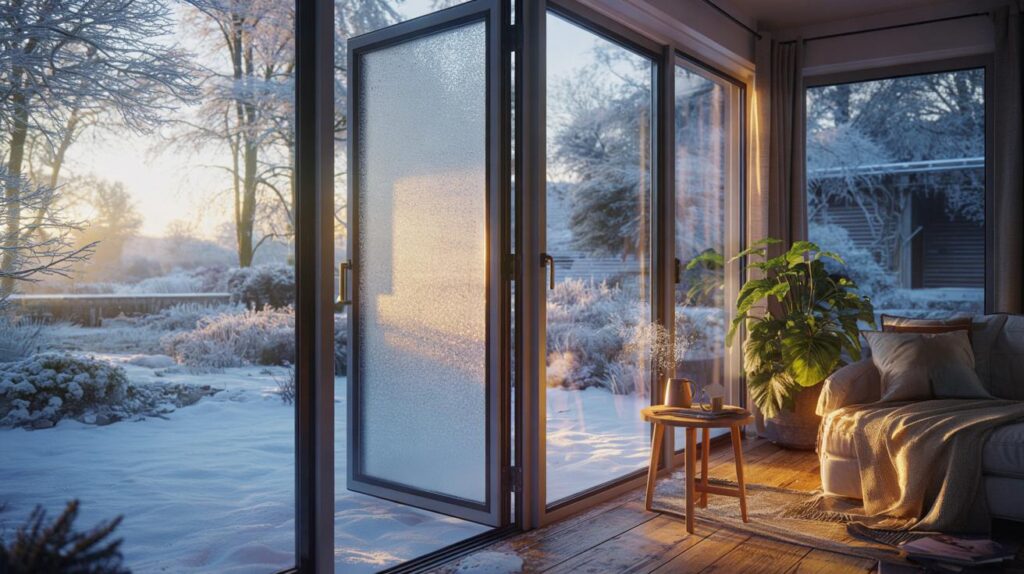
Cold mornings are back, and the same winter puzzle returns for many households. Keep the light, cut the bills, stay warm.
Design-led glazing promises to change that ritual. A wave of “smart” panes now treats the window as the heater’s ally, not its enemy. Instead of piling on curtains, the glass manages heat, glare and privacy at the touch of a button or entirely on its own.
How smart glazing pushes out draughts while keeping daylight
Smart windows adjust to weather and daylight in real time. They tint under strong sun, clear when skies turn grey, and hold onto warmth when outside temperatures fall. The pane behaves like a dynamic thermal barrier, so the room feels even, calm and bright.
The gain comes from two fronts. First, better insulation reduces heat slipping through the glass. Second, controlled solar gain tops up warmth when the sun shows, without the harsh glare that sends blinds down. The result is fewer cold spots near glazing and a gentler temperature from wall to wall.
Independent tests report up to 30% lower heat loss versus standard double glazing, with no need for blackout drapes.
The tech inside the pane
- Electrochromic layers: a small voltage darkens or clears the glass, trimming solar gain and glare while preserving views.
- Thermochromic coatings: heat alone shifts the tint, so windows react passively to sunshine and temperature swings.
- Phase‑change inserts: microscopic materials absorb heat when rooms warm up and release it as the air cools, smoothing peaks and dips.
- Smart controls: timers, light and temperature sensors, and app control set scenes for privacy, work, rest and evening warmth.
Why heavy curtains struggle to compete
Thick curtains help, but they fight the window’s strengths. They block light, they gather dust, and they often trap moist air against cold glass. That moisture encourages condensation and, in stubborn cases, mould on sills and frames.
By contrast, smart glazing keeps the view open while limiting losses. The window stays part of the room’s design. Sofas can sit close to the glass without a chill on your shoulders. Home offices get glare control without turning the space into a cave.
| Option | Heat loss reduction | Daylight | Privacy control | Typical cost | Notes |
|---|---|---|---|---|---|
| Thermal curtains | Moderate, depends on fit | Low when closed | High when closed | Low to medium | Risk of condensation behind fabric; dust and cleaning required |
| Smart windows | High versus standard double glazing | High, finely controlled | Adjustable at a tap or automatically | Medium to high | Works year‑round, integrates with home controls |
| Low‑e retrofit film | Low to moderate | High | Low | Low | Good stop‑gap for rentals or listed façades |
You keep the daylight, tame the cold spots, and gain privacy on demand—without the bulk of pelmets and linings.
Money, payback and the 2025 twist
Households care about the numbers. For a three‑bed semi, winter heating can swallow £900–£1,400 a year depending on usage and tariffs. If smart glazing trims heat loss by 10–30% compared with older double glazing, that points to potential annual savings in the range of £90–£420, with bigger wins in draughty rooms and south‑facing bays.
Upfront costs vary widely. Full smart units for a typical bay window can sit in the low thousands, with controls, sensors and installation included. Retrofit smart films that switch from clear to frosted offer privacy and some solar control at a fraction of that, though they bring smaller insulation gains. Ask for a calculation based on your window areas, orientation, frame condition and current U‑values.
The mainstream shift is already under way. IKEA has trailed an autumn 2025 smart range that includes glazing panels sized for common apartment and house dimensions. That signals scale, simpler buying, and kits designed with renters and renovators in mind.
Where smart panes shine
- South and west‑facing living rooms that overheat in spring sun yet feel chilly by night.
- Street‑level windows where you want daylight and immediate privacy after dusk.
- Home offices needing glare control for screens without constant blind fiddling.
- Bathrooms and bedrooms where frosted‑on‑demand beats permanent frosting.
- Large sliders and bi‑folds that currently force furniture away from the glass.
What to ask your installer
- U‑value target: what whole‑window U‑value will the system deliver, frame included?
- g‑value range: how much solar gain can it admit at its clearest setting, and how much does it block when tinted?
- Power and controls: does it need mains power, and what happens in a power cut?
- Warranty: length of cover for the glass, electronics and the switching performance.
- Condensation strategy: will trickle vents or ventilation tweaks be part of the plan?
- Retrofit compatibility: can panes drop into current frames, or do frames need upgrading?
- Cleaning: what products protect the coatings and sensors over time?
Practical steps before the cold bites
Seal obvious gaps around frames with quality draught strips, then deal with the pane. If replacement is not on the cards this year, a low‑e film can lift comfort for a small outlay. Keep trickle vents clear to reduce condensation, and use a simple hygrometer to keep indoor humidity near 40–60%.
If you rely on blinds or curtains for now, fit a snug track and return the fabric into the wall to cut side leaks. Avoid resting fabric against the glass. Leave a small gap at the top to allow air movement and reduce moisture build‑up on the pane.
Design gains you can feel
Smart glazing respects the mood of a room. Natural light picks up wood grain, soft textiles and ceramic surfaces, while accurate tint control stops colours from washing out. The absence of bulk fabric opens sightlines and makes compact rooms feel larger. Evening privacy arrives with a tap, and Sunday sunlight floods the kitchen at breakfast without a glare fight.
Heating systems benefit as well. A steadier room temperature eases the strain on boilers and heat pumps. Radiators cycle less often, and rooms reach setpoint more quickly after doors open. If you plan a heat pump, better glazing helps you choose smaller emitters and lower flow temperatures.
Risks and how to manage them
- Privacy at night: clear glass remains clear if you forget to set a scene. Schedule a dusk routine.
- Power dependency: electrochromic layers need control power. Ensure a manual override.
- Data: app‑linked systems may push data to the cloud. Check settings and local control options.
- Glare balance: very dark tints can affect colour perception. Choose a neutral grey tint profile.
For those weighing the switch, a simple simulation helps. List each window, its size, orientation, and current glazing type. Estimate winter sun hours for south and west elevations, and note rooms where you routinely close blinds. Your installer can feed those inputs into a model that plots bill savings and thermal comfort gains against cost, room by room.
The move pairs well with other upgrades. Combine smart glazing with airtightness work and a smart thermostat, then add an exterior shade for heatwaves. The package sets you up for cooler summers, warmer winters and rooms that look and feel better every day.



If IKEA hits 2025 with standard sizes, I’m in. Anyone tried a retrofit in uPVC frames?
30% savings feels like best‑case conditions. Can anyone share real‑world bills before/after, including calcualtions for U‑value improvements and orientation? And what’s the realistic payback once you factor maintenance and electronics that may age faster than the glass?