
The real difference comes from chemistry, not labels.
Shoppers face aisles of bottles and boxes, each louder than the last. A chemist cuts through the noise with a clear pick for cleaner clothes, a healthier machine, and fewer micro-messes for the planet.
Why ingredients beat branding
Detergent works because of the active ingredients, not the color of the cap. Surfactants sit at the heart of every formula. They grab oil with one end and water with the other, lifting grime off fibers so the drum can rinse it away. If your water runs hard, calcium and magnesium can tie surfactants in knots. That is why good detergents add water softeners and metal chelators. They keep the cleaning molecules free to do the job.
The quiet power players
Enzymes target specific stains. Proteases break down protein marks like sweat and blood. Amylases tackle starches from sauces. Lipases split oily soils. With enzymes, low-temperature cycles, even 20 °C, still cut through daily dirt. Oxygen bleaches matter too. Percarbonate releases active oxygen in the wash. It fades dingy greys without shredding fibers the way harsh chlorine can. Fragrance changes the scent, not the cleanliness. Brighteners make whites look whiter by reflecting light, but they do not remove soil.
For strong cleaning at low temperatures, look for enzymes plus an oxygen bleach such as sodium percarbonate.
Powder or liquid: which one makes sense
Both formats clean. They do it differently. That difference matters for stains, hygiene, and machine care.
Powder: strengths and caveats
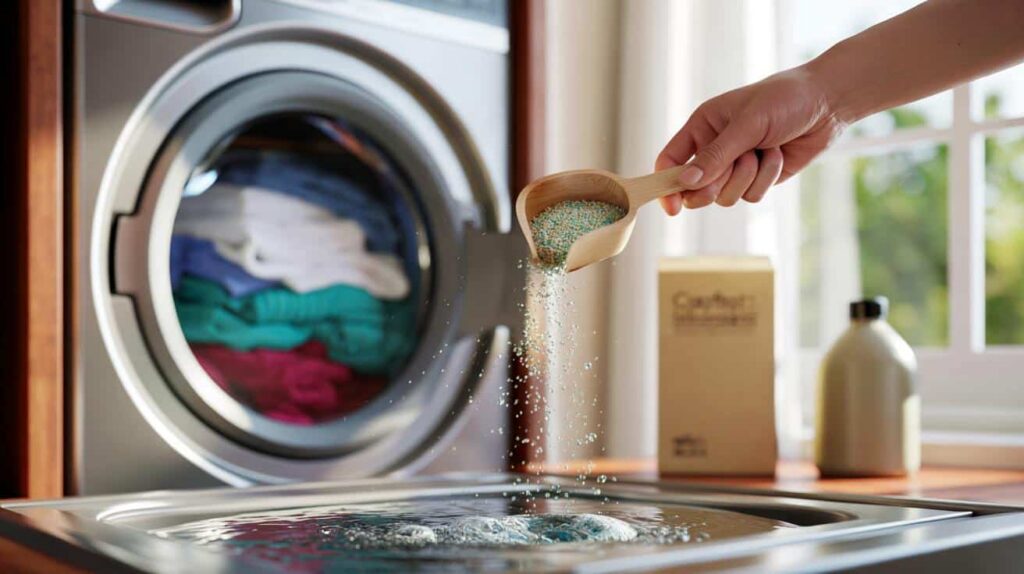
Powder keeps key ingredients separate until the water hits. That helps oxygen bleach stay potent. With percarbonate and peroxides in the mix, powder lifts stubborn marks and also sanitizes the drum and pipework a bit each cycle. Cardboard boxes often replace plastic jugs, which cuts packaging waste. The trade-off: dose it right and let it dissolve. Modern powders dissolve well at 30 °C and below, but cold taps, tiny loads, or a packed drum can leave specks. Pre-dissolving a tablespoon in warm water solves that on tricky loads.
Liquid: where it helps
Liquid flows, so it spreads well on fabrics. It excels at quick, cold washes. You can dab it straight on a cuff or collar as a fast pre-treat. Most liquids skip peroxides, since those can be unstable in solution. Without that oxygen boost, biofilm in the machine can build up faster. Regular maintenance keeps smells at bay. A hot maintenance cycle and a door seal wipe make a big difference.
| Situation | Powder | Liquid |
|---|---|---|
| Greasy or set-in stains | Strong, thanks to oxygen bleach | Good with pre-treat, weaker bleaching |
| Low-temperature daily loads | Very good with enzymes | Very good, easy dosing |
| Machine hygiene | Helps limit odor build-up | Needs more frequent cleaning |
| Packaging footprint | Often cardboard, lower plastic | Usually plastic bottles or pods |
The expert’s verdict
Chemist Nathan Kilah points to powder as the smarter default for most homes. The winning combo: enzymes for cold performance plus activated oxygen bleach for whitening and hygiene, packed in a recyclable box.
Pick an enzyme-rich powder with activated oxygen bleach, ideally in cardboard packaging. It cleans well and trims plastic use.
One more shift changes results fast: dosage. Big labels push big scoops. Your clothes do not need that much detergent. Extra suds cling to fibers. Residue can trap odors and dull fabrics. It also feeds gunk inside the machine.
How to dose smartly
Start with about half the label dose for normal soil and a mid-sized drum. Add a small bump only when you wash a very dirty load or your water is very hard.
- Soft water: 40–60% of the label dose
- Medium water: 60–80% of the label dose
- Hard water or very dirty clothes: up to the full dose
Check your water hardness on your utility bill or with a cheap strip test. If you see lots of limescale on taps, assume medium to hard water. A scoop of powder designed for hard water already includes softeners. Avoid doubling up with separate softeners unless a stain guide suggests it.
Keep the machine healthy
Clean the washer on a schedule. Run an empty 60–90 °C cycle with a powder that contains oxygen bleach every 6–8 weeks. Pull out and rinse the detergent drawer. Wipe the rubber door seal and the glass. Leave the door ajar to dry. These habits stop the musty feedback loop.
Less detergent, hotter occasional maintenance cycles, and airflow around the door keep odors away.
What to look for on the label
Skip vague promises. Scan for functional terms that predict performance:
- Surfactants listed early in the ingredients
- Enzymes: protease, amylase, lipase, cellulase
- Oxygen bleach: sodium percarbonate or “oxygen-based bleaching agents”
- Builders/softeners: sodium carbonate, zeolites, citrate
- Low-fragrance or hypoallergenic if sensitive skin runs in the family
Extra tips that stretch results
Pre-treat with purpose
Grease: rub a drop of liquid detergent on the spot and wait 10 minutes. Protein stains: rinse cold first, then enzyme wash. Mud: let dry, brush off solids, then wash. These moves save re-washes and detergent.
Match cycle and load size
Small loads need less detergent and less water. Mixed fabrics clean better on a cycle that tumbles long enough to lift soils. Overfilling prevents rinsing. A handbreadth of space at the top of the drum keeps water flowing.
Pods and strips?
Pods offer clean dosing but often use plastic films and may lean on fragrance. Strips cut plastic but vary in enzyme strength. For consistent stain removal, a good powder still sets the bar.
Cost, skin, and planet: the wider picture
Powder often beats liquid on cost per wash. Lower doses stretch savings further. For sensitive skin, favor fragrance-free versions and add an extra rinse only if needed. On waste, cardboard beats plastic, and lower doses mean fewer trucks and less energy per load. Cold cycles save energy, and with enzymes plus oxygen bleach in the box, you still get crisp results.
A small shift—enzyme and oxygen bleach powder, smarter dosing, simple machine care—delivers brighter laundry and fewer headaches.
If you want a quick sanity check, run a three-load test at home. Wash the same set of towels with your current liquid at the label dose, then with the same product at half dose, then with an enzyme-and-oxygen powder at half dose. Smell, feel, and weigh drying time. Towels that dry faster usually carry less residue, which signals a cleaner rinse and better long-term hygiene.


