
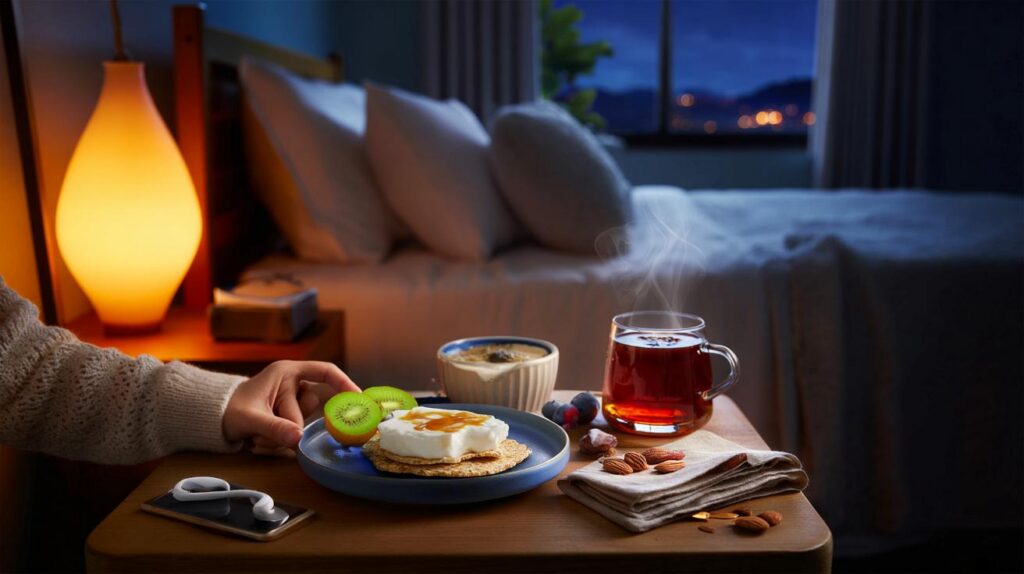
When night stretches on and your stomach grumbles, the clock isn’t your only obstacle.
The city is quiet, but your kitchen is not. The fridge light paints the tiles white as you weigh up cheese or cereal, tea or nothing at all. Steam rises from a mug, the phone screen glows, and you tell yourself you’ll be in bed in five minutes.
From the next room, the soft rustle of a duvet. The neighbour’s cat knocks something over, and your mind races to emails, to tomorrow’s school run, to that awkward message you still haven’t answered. You chew, you scroll, you hope for drowsiness that never quite lands.
Sleep often feels like weather: you check the forecast, you carry on, you get caught out. Yet some of it is craft. The right food, at the right time, can quietly tip the balance. So can a simple wind-down habit that feels less like discipline and more like a small kindness to yourself. The trick sits on your plate.
Why a small night-time snack can switch on sleep
A light, balanced snack can smooth the landing into sleep by settling blood sugar and feeding the brain’s nightly chemistry. Think of it as a dimmer switch, not a light switch. Too much food and your digestion will steal the spotlight; too little and a 3 a.m. hunger alarm may wake you.
Carbohydrates help shuttle tryptophan, the amino acid that your body uses to make serotonin and then melatonin, across the blood–brain barrier. Pair that with a little protein, and you’ve got a steady release rather than a spike and crash. **Small carbs plus protein is the sleepy combo.** Timing matters too: aim for 60–90 minutes before bed, so your stomach isn’t busy while your brain is trying to let go.
Emma, 33, swapped her late cheese board and wine for oatcakes with almond butter and a sliced kiwi. After a week, she noticed she was falling asleep faster and waking once instead of three times. It wasn’t magic; it was chemistry plus routine. Tart cherry juice has been linked to modest gains in sleep duration in some small trials, and kiwifruit before bed has shown promise for sleep onset. That’s not a guarantee for everyone, but it’s a nudge in the right direction.
Your body’s clock likes rhythm. A heavy, spicy or ultra-fatty meal late at night keeps core temperature higher and digestion louder. That wrestles with melatonin’s cue to cool down and drift off. Simple swaps—wholegrain over white, yoghurt over ice cream, toast with turkey rather than crisps—nudge glucose gently. *A small snack, not a feast.* The idea isn’t to “fix” insomnia with food; it’s to lower hurdles so your natural sleep can do its job.
The evening snack playbook (and the little rituals that make it work)
Set a snack curfew: pick a 60–90 minute window before lights out, then keep portions to a cupped-hand size. Build a three-part plate—fibre-rich carbs, a little protein, and something sleep-friendly. Oatcakes with peanut butter and sliced banana. Greek yoghurt with a chopped kiwi and a drizzle of honey. Wholegrain toast with turkey or hummus and cucumber. Warm milk with cinnamon and a few almonds. A small glass of tart cherry juice if it agrees with you.
Match the food with quiet routine. Dim the lights across your home, not just in the bedroom. Swap loud screens for gentle sound: an audiobook chapter or rain noise. Do five slow stretches by the sink or a minute of box breathing with your tea. **Stop thinking of snacks as guilty; start seeing them as tools.** You’re building the signal that says “night mode” across body and brain.
Common trip-ups happen because life is messy. You come home late and inhale a takeaway, or you “just check” one more thing and the snack turns into a full second dinner. Chocolate and coffee creep into the evening. Alcohol knocks you out, then wakes you at 3 a.m. Be kind to yourself and course-correct tomorrow. Pick one change, not six. We’ve all had that moment when the day runs you instead of the other way round.
Your morning starts the night before. A few true-and-tested pairings:
“Think of your evening snack as a dimmer switch for the brain: gentle carbs to open the door, a little protein to hold it there, and calm habits to walk you through.”
- Oats + protein: Porridge made with milk, topped with walnuts and blueberries.
- Fruit + nuts: Kiwi or cherries with a small handful of almonds or pumpkin seeds.
- Toast + lean protein: Wholegrain toast with turkey or smashed chickpeas.
- Warm drink: Camomile or a milky herbal blend; keep it caffeine-free after mid-afternoon.
- Timing rule: Snack 60–90 minutes before bed; stop liquids 30–45 minutes before lights out.
What to eat, when to dim, and why mornings will thank you
Build a pre-sleep arc that starts after dinner. Lower lights, lower noise, lower effort. Put your snack on a small plate, sit down, and taste it rather than grazing while standing. Write down tomorrow’s top three tasks so your snack isn’t eaten with a side of spiralling thoughts. If screens call, use them for kindness: a sunset playlist or a low-stakes documentary, brightness turned down.
Two guardrails make the arc sturdier. Cut caffeine by early afternoon—its half-life can run six hours or more. Keep alcohol for earlier in the evening, if at all. Swap sugary desserts for naturally sweet options like baked apple with yoghurt. If reflux bothers you, keep portions tiny and avoid late citrus, mint, and fried food. Let family or flatmates know you’re trying a new wind-down window. Let it be flexible. Let it be yours. Let’s be honest: nobody does that every day.
Morning will notice. When your snack and routine align, cortisol rises on time, not in a panic. You wake lighter, not foggy. The day feels less like a sprint and more like a steady walk. That’s the quiet reward of thirty calm minutes you “spent” last night. Small choices compound; small foods do, too. It’s not glamour. It’s rhythm.
There’s no single recipe for a perfect night, only patterns that give sleep a better chance. Try a week of gentle tweaks: a planned snack, a little light dimming, a tiny ritual you repeat without fuss. If it helps, keep it. If not, change the mix and try again. Share what works with a friend; borrow what works for them. Body clocks are personal, but they listen to cues. Food is one of the simplest cues you can control. And when mornings start to feel kinder, you’ll know you’ve found your version of night mode.
| Point clé | Détail | Intérêt pour le lecteur |
|---|---|---|
| Smart snack timing | 60–90 minutes before bed; small portion | Reduces night-time wake-ups and heavy digestion |
| Sleep-friendly combo | Fibre-rich carbs + a little protein + calm ritual | Smoother melatonin signal and steady blood sugar |
| Evening guardrails | Caffeine cut by afternoon; keep alcohol early; dim lights | Helps your body clock switch to night mode |
FAQ :
- What’s the best quick snack if I’m hungry at 10 p.m.?A slice of wholegrain toast with peanut butter and half a banana. It’s fast, balanced, and won’t sit heavy.
- Does warm milk actually help?It can. The warmth is soothing and the mix of carbs and protein is gentle. If dairy isn’t for you, try a fortified plant milk.
- Are cherries and kiwis really sleep foods or just hype?Small studies suggest they can help some people. Think of them as helpful extras, not miracle cures.
- Can I snack if I’m trying to lose weight?Yes, if it’s planned and small. A steady, sleep-friendly snack can prevent late-night binges and reduce next-day cravings.
- What if I wake at 3 a.m. starving?Revisit your evening meal and snack timing. A tiny bedside option—like a few nuts—can help in the short term while you adjust.



Loved the “dimmer switch” analogy! I tried wholegrain toast + peanut butter + half a banana about 75 minutes before bed and fell asleep way faster. The “stop liquids 30–45 min before lights out” tip also saved me from 2 a.m. wake-ups. Thanks for the calm ritual ideas 🙂