
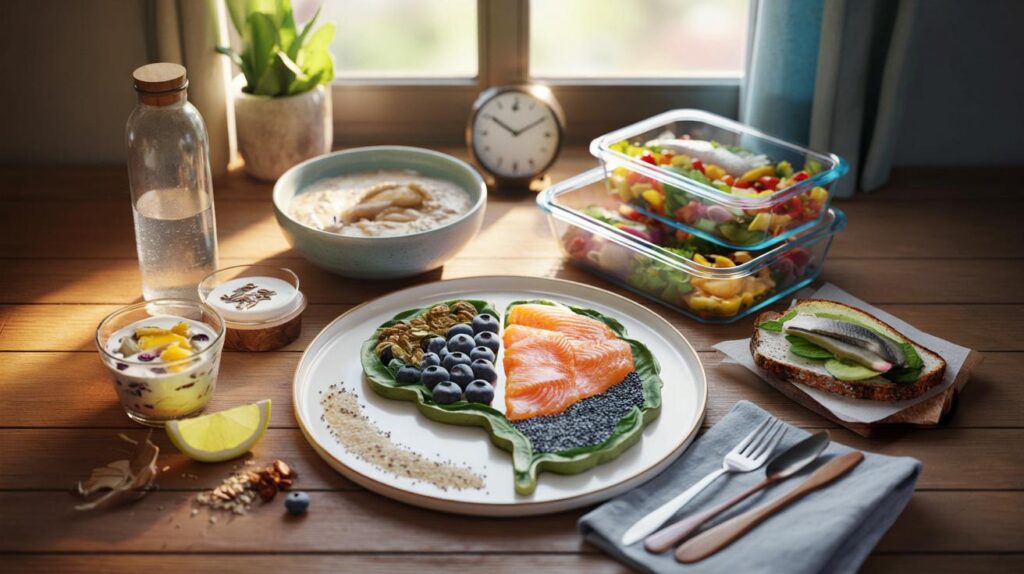
Some days your brain feels like a browser with twenty tabs open and one of them playing music you can’t find. You reach for coffee, skip breakfast, and promise yourself you’ll eat “properly” later. Mood dips, focus frays, sleep goes weird. Food seems like a small thing. It’s not.
It’s early at a London station and the air smells faintly of toast and diesel. A woman on the platform stares at her phone, thumbs darting, then looks up as if remembering her own body, the hollowness under her ribs, the tightness under her eyes. She sips a latte, checks the time, and you can almost see the calculation: will this get me through the morning? I’ve made that calculation too, on mornings where the mind feels foggy and fragile, and the day looms like a hill. Then I tried eating for my brain, not just my belly. A tiny shift. A real difference. The kind you only notice when it goes quiet.
Feed your mind, not just your hunger
Your brain weighs about a bag of sugar yet burns a fifth of your energy. It doesn’t like drama; it likes a smooth stream of fuel and steady signals. Think of mood as a boat on a calm lake. That calm comes from steady blood sugar and nutrients that build neurotransmitters, a kind of glycaemic calm you can taste in your day.
One Monday, I swapped my usual white toast for porridge with walnuts, blueberries, and a drizzle of tahini. The afternoon wobble didn’t arrive. A friend, Sam, did the same with a sardine salad at lunch and noticed fewer sharp dips. Large studies keep finding the same pattern: better diet quality links with better mood and clearer thinking. *Food isn’t therapy, but it can be a friend.*
There’s a logic behind the lived experience. Oats and beans drip-feed glucose into the blood, so neurons aren’t yanked from feast to famine. Leafy greens, pulses and eggs supply folate, B12 and iron, which help your brain make dopamine and serotonin. Fatty fish and flax bring omega-3 fats, building flexible cell membranes that help signals pass cleanly. Fibre feeds gut microbes; they, in turn, talk to your brain. When the plate is varied and colourful, the head feels steadier.
The clock on your plate
Eat with your body clock and meals become quieter companions, not noisy events. Anchor your day with a protein-forward breakfast within an hour of waking: yoghurt with seeds, eggs on seeded rye, or tofu with greens. Aim for 20–30g protein to blunt mid-morning cravings. Bring your main meal earlier when you can, and keep late-night eating light. Caffeine? Try a cut-off in the early afternoon, and keep that first cup a little later to let your natural cortisol wake you.
The most common misstep isn’t willpower. It’s chaos. Skipping breakfast, grazing on sugary snacks, then a giant dinner under bright screens. Your body doesn’t hate you; it’s hunting stability in a messy schedule. Start with one anchor meal at the same time each day. Drink water before you hunt for biscuits. Let’s be honest: nobody really does that every day. Small, kind repeats shift the baseline.
Rhythm matters because your brain runs on clocks as well as chemicals. Daylight, meal timing, and regularity cue the system. Try this for a week and watch the edges soften.
“When meals land roughly on time, mood stops pinging,” a dietitian told me. “It’s like giving your nerves a timetable.”
- Swap jam on white toast for seeded rye with smashed avocado and lemon.
- Trade crisps for a handful of mixed nuts and a clementine.
- Make lunch the star: mackerel on toast with pickles and rocket, or a chickpea, pepper and olive salad.
- Keep a fermented friend: live yoghurt with berries, or a small side of sauerkraut.
- Tea break upgrade: two squares of 85% dark chocolate and a cuppa.
Make it real this week
We’ve all had that moment when the brain won’t shift out of neutral, and the day insists on happening anyway. Food won’t fix the world, but it will change the feel of your hours. Set one morning to batch-cook a pan of oats or a tray of roast veg, and portion it into the week. Pick two fish days, two meat-free days, and two “lazy assemblies” where dinner is just good bread, hummus, tomatoes, and olive oil. Bring a bottle of water to your desk and a snack that grew on a plant. If night-time snacking keeps ambushing you, move a chunk of dinner earlier and take a short walk after. If anxiety spikes, keep a steady lunch with carbs, protein, and fat. When your meals are kind and roughly on time, your mind stops clattering. That’s a quiet sort of power.
| Point clé | Détail | Intérêt pour le lecteur |
|---|---|---|
| Protein-first breakfast | 20–30g protein within an hour of waking (eggs, yoghurt, tofu, beans) | Fewer cravings, steadier focus before lunch |
| Twice-weekly oily fish | Salmon, mackerel, sardines or trout for omega-3 fats | Supports brain cell signalling and mood regulation |
| Regular meal timing | Anchor meals and reduce late-night eating to respect your circadian rhythm | Calmer energy across the day and better sleep quality |
FAQ :
- What’s the fastest food fix when anxiety spikes?Go simple and steady: a small bowl of porridge with a spoon of nut butter, or wholegrain toast with cheese. Add water and a short walk.
- I’m low and don’t feel like cooking. What can I eat?Think “assemble, don’t cook”: tinned sardines on toast with lemon, a microwave pouch of lentils with chopped tomatoes, or yoghurt, berries and oats.
- Is coffee bad for mental health?Not by default. Keep it to the morning or early afternoon, pair with food, and watch your personal edge. If sleep suffers, dial it back.
- Can time-restricted eating help mood?Some people feel clearer with a gentle 12-hour overnight fast and an earlier dinner. Go easy, keep meals balanced, and notice how you feel.
- What are budget-friendly brain foods?Oats, tinned fish, frozen berries, carrots, chickpeas, eggs, and bulk bags of seeds. Flavour with herbs, lemon, and olive oil.



Loved this—going to try the protein-first breakfast within an hour of waking. My mornings are chaos; maybe oats + walnuts will calm the brain-fog. Also, the “clock on your plate” idea makes so much sense 🙂