
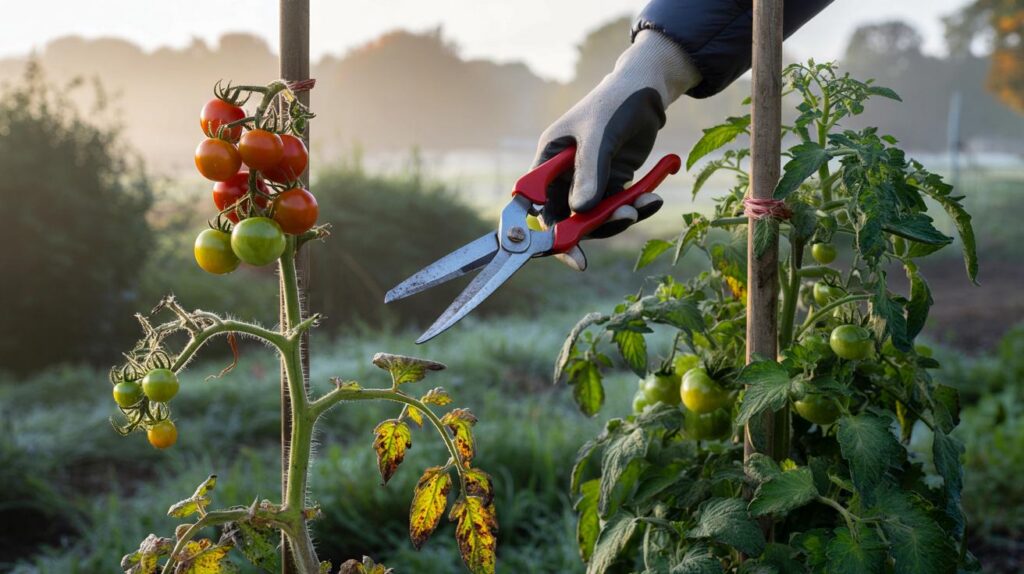
Misty mornings, shrinking daylight and stubborn green trusses: you’re weighing secateurs against patience while your tomatoes stall in October.
Across Britain, gardeners face the same late-season riddle. Cut back and gamble on a quick flush of colour, or keep the canopy and ride out the weather’s mood swings. The answer hinges on temperature, disease pressure and how you balance plant energy this late in the game.
What late-season tomatoes really need
By mid-October, growth slows because light falls, nights cool, and dew lingers. Leaves yellow as plants reallocate nutrients. Fruit skin thickens. Late blight risk rises when foliage stays wet for hours after dawn.
Plants still photosynthesise on clear days. They need enough leaf area to power ripening and to shield fruit from sunscald on bright afternoons and from driving rain. Strip too much, and fruit lose their living umbrella just when weather swings turn harsh.
Keep a working canopy: aim to retain at least 60–70% healthy foliage so the plant can drive sugars into existing trusses.
Prune in October: quick boost or last blow?
Pruning now can help if done lightly and early in a dry spell. You redirect energy to fruit already swelling. You also improve airflow in clammy conditions. But a harsh cut removes engines and armour at once.
How pruning works when days are short
October pruning targets wasteful growth. That means pinching out new side shoots, removing fresh flowers that won’t set, and topping plants a node above the last worthwhile truss. The goal is simple: no new commitments, more resources for what exists.
When nights sit above 8–10°C and sunshine appears, a modest tidy-up can advance ripening by a week. You may net an extra half-kilo per plant before the first frost.
Where pruning backfires
Cutting hard during a wet spell leaves open wounds that invite blight spores. Removing most leaves exposes fruit to cold shock and cracking after rain. Taking off green trusses at the wrong stage discards potential that might have turned with a few bright days.
Never prune within 48 hours of rain or foggy, still conditions. Choose a breezy, dry window so cuts seal quickly.
Gentler tactics that buy you ripening days
If your forecast shows variable nights and damp mornings, you can still steal time without battering plants. These low-risk moves focus the plant without gutting it.
- Strip flowers and pea-sized fruit so the plant feeds mature trusses.
- Tie or slightly incline heavy trusses to catch more light, without kinking stems.
- Use horticultural fleece on nights below 6°C; remove it by mid-morning to avoid trapped humidity.
- Ease off watering; keep soil evenly moist but not wet to push sugars into fruit.
- Remove only leaves that are badly spotted, slimy or shading a nearly ripe truss.
In October, small corrections beat big surgery. Direct light to the fruit, reduce new growth, and protect from cold snaps.
Night temperatures, risks and actions
| Night minimum | Disease risk | Action | Likely extra ripe fruit |
|---|---|---|---|
| ≥ 10°C | Low to moderate | Light prune; remove flowers; retain canopy; ventilate well | 6–12 per plant |
| 7–9°C | Moderate | No hard pruning; tidy only; fleece clear nights; reduce watering 20–30% | 4–8 per plant |
| 4–6°C | High | Harvest first blush fruit; bring mature green trusses indoors; spot-remove diseased leaves | 2–5 per plant on the vine |
| ≤ 3°C | Very high | Strip all usable fruit; clear plants; compost waste safely | 0 on the vine; ripen indoors |
Timing your last cuts and harvests
Act after a dry, breezy afternoon when leaves feel crisp, not clammy. Disinfect secateurs with methylated spirits before and between plants. Make clean cuts above a leaf node so sap flow continues to the truss below.
- Top only once, a node above the highest promising truss.
- Pinch side shoots under that top truss; leave a small nub so you don’t tear the main stem.
- Keep 5–7 healthy leaves per plant as a minimum canopy.
- Stop high-nitrogen feed now; a potassium-lean regime favours flavour and colour.
- Mulch to steady soil temperature; avoid cold, wet roots after rain.
If late blight shows as brown, greasy lesions on leaves or stems, act fast. Remove affected tissue into a bag, not the compost. In wet, mild regions, pruning becomes a hygiene job rather than a ripening strategy.
Got green fruit? Ripen safely indoors
Pick fruit at full size with a slight gloss. Leave a short stem to limit rot. Grade by maturity so batches colour together. Use these steps for steady results.
- Spread fruit in a single layer in trays at 18–21°C, away from direct sun.
- Add a ripe apple or banana per 3–4 kg to supply ethylene.
- Vent boxes daily; remove any fruit showing soft spots.
- Expect colour within 7–14 days for mature greens; longer for hard, pale fruit.
For flavour, finish blushed fruit on a bright windowsill for two days. Avoid the fridge; cold dulls aroma and texture.
When to stop pruning altogether
Call time when forecasts show repeated nights below 5°C, or when plants carry more lesions than clean leaf. At that point, pruning won’t buy ripening; it only spreads spores and stress. Clear vines, salvage fruit, and reset beds before soil turns heavy.
Past the first sharp frost warning, the winning move is a clean harvest and a clean bed.
Thinking ahead: varieties, spacing and training
Next year’s choices set your October workload. Choose blight-tolerant types such as Crimson Crush, Mountain Magic or Ferline for open plots. In damp districts, grow under a simple rain cover or polytunnel to cut leaf wetness hours.
- Train indeterminate (cordon) plants to one or two stems; remove suckers early.
- Space 45–60 cm between plants for airflow; keep foliage off the soil with clips or twine.
- Water at the base in the morning; avoid evening sprays that prolong wet leaves.
- Start a preventive hygiene habit: disinfect tools and bin diseased foliage, every time.
A quick simulation helps planning. With five cordon plants, nights at 8–10°C and two dry weeks, a light October tidy can add 30–50 ripe fruits total. Shift the same set-up to 4–6°C nights with damp mornings, and your best return comes from fleece, hygiene and indoor ripening, not from cutting.
Linked jobs that lift your odds
Use a soil thermometer to track root-zone temperature; tomatoes stall under 12°C at the roots. Lay a 2–3 cm compost mulch to buffer swings. Swap to drip lines if you still top-water. Clean canes and clips with a dilute bleach solution before storage.
If you save seed, separate fruit from any plant that showed blight symptoms. Note which varieties coloured earliest under your conditions. A simple notebook entry—date of first ripening, number of usable fruits after 1 October, and any disease notes—turns this year’s muddle into next year’s clear plan.



Nights here sit around 8–9°C with foggy dawns and high humidty. Your table says 4–8 extra fruits per plant—realistic in a small, shaded garden? Does removing pea-sized fruit move the needle much, or is keeping 60–70% canopy the real driver?
My tomatoes are basically holding a sit-in—green from stubbornness, not chlorophyll. If I give them a light haircut now, am I just giving blight a VIP pass, or can I squeak out a week of colour? Asking for a plant that’s named Gerald 🙂