
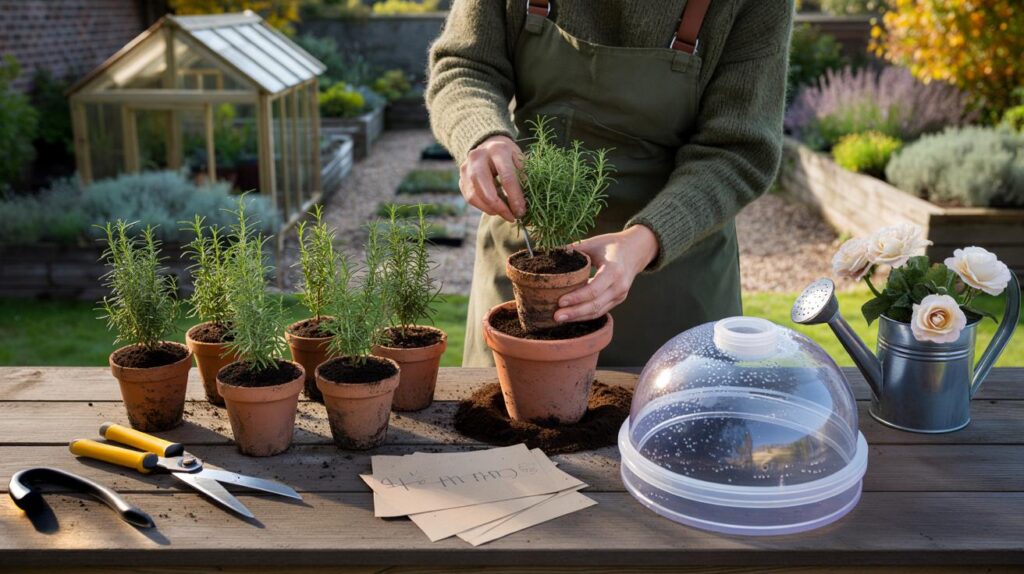
October creeps in with cool air and long shadows, and gardeners face a small, time-limited chance to shape winter scent.
The seasonal shift favours quick, low-cost moves that pay off for months. Rosemary cuttings sit near the top of that list.
Why October sets the stage
Cooler days in Britain slow top growth while soils still hold warmth. That balance nudges rosemary to root rather than rush into shoots. Nights stay damp, which reduces water stress. Daylight softens, which cuts scorch risk for tender cuttings kept under cover.
Most UK regions sit around 8–15°C in October. That range suits rooting. Frost stays sporadic in many areas. The window is short, so a weekend session makes sense.
Work to a simple target: 15–18°C air, bright shade, and evenly moist media. Roots form in roughly 3–5 weeks.
What cooler days do to rosemary
Rosemary holds its oils even as growth slows. Semi-ripe stems harden just enough to resist rot. The plant diverts energy to healing the cut surface. That shift promotes root initiation. You gain robust clones that carry the parent’s scent, shape and colour.
Step-by-step: from stem to rooted plant
Tools you actually need
- Sharp secateurs or a clean knife
- 9–10 cm pots with holes
- Free-draining mix: 50% peat-free compost, 50% sharp sand or perlite
- Label, pencil, and a watering can with a fine rose
- Optional: a clear bottle dome or propagator lid
Cutting selection that works
Choose non-flowering shoots, 10–15 cm long. Look for semi-ripe wood: still flexible, but not soft. Cut below a node at a slight angle. Strip leaves from the lower third. Pinch out the tip if it is very soft. Avoid woody, flowered, or pest-marked stems.
One healthy mother plant can yield 12–20 viable cuttings in a single session without weakening the shrub.
Planting and aftercare that speed rooting
Fill pots with your mix. Firm lightly. Use a pencil to make a pilot hole. Insert each cutting so at least one node sits below the surface. Space one or two cuttings per pot to reduce disease pressure. Water until the first drips appear from the base, then stop.
Set pots in bright shade. A cold frame, porch, or sheltered windowsill works. Aim for moving air, not draughts. Keep the compost just moist. Lift any clear cover for ten minutes daily to vent condensation.
| Condition | Target | Why it matters |
|---|---|---|
| Air temperature | 15–18°C by day, 8–12°C by night | Fuels rooting without soft, leggy growth |
| Light | Bright shade, no direct midday sun | Prevents scorch and water stress |
| Humidity | 60–70% around foliage | Slows transpiration while cuts heal |
| Watering | Light, 2–3 times per week as needed | Rosemary hates a soggy root zone |
| Medium | Peat-free compost with sharp sand/perlite | Good drainage limits fungal rot |
If the top 2 cm of compost feels dry, water. If it feels cool and damp, wait a day.
Root checks and potting on
Start testing after three weeks. A gentle tug should meet resistance. Do not yank. Tip out one trial pot if unsure. White roots mean green light. Move successful cuttings into individual 1-litre pots. Keep them sheltered for another fortnight. Feed with a half-strength, balanced fertiliser once after potting on.
Where your new plants pay off
Rooted rosemary plugs change the feel of a border. Beds keep shape in winter. Paths gain scent on breezy days. Containers on a sunny step throw fragrance every time you brush past. The shrub pairs well with thyme, sage, santolina and drought-tolerant grasses.
Beds, borders and pots with winter scent
- Sunny bed: repeat rosemary every 60–80 cm for rhythm and structure
- Low hedge: line a path with compact cultivars for a scented guide
- Mixed pot: combine rosemary with ivy-leaved cyclamen for contrast
- Kitchen step: keep one pot by the door for easy sprigs on wet evenings
Spacing matters. Good airflow limits mildew. Mulch with gravel or coarse grit to reflect heat and keep stems dry at the base. Avoid heavy feeds; too much nitrogen softens growth and dulls flavour.
Common pitfalls and how to dodge them
Water and fungus
Overwatering invites botrytis and damping off. If leaves blacken from the base, cut losses and bin the worst pots. Clean tools before taking fresh cuttings. Vent covers daily. Sprinkle cinnamon or use a commercial biofungicide if problems repeat.
Frost and wind
Young roots hate freeze–thaw cycles. Move pots against a south-facing wall or into an unheated greenhouse when frost threatens. Avoid exposed sills where wind strips moisture faster than roots can supply it.
Numbers that help you plan
Work with a simple budget. Eight cuttings fit neatly in a standard tray. Expect 60–80% success under decent care. That gives five or six plants from one go. A bag of peat-free compost and a sack of sharp sand often cost under £10 combined. Many households already have pots and a bottle dome to hand.
Five rooted plants can edge a 3-metre bed by spring, saving £20–£30 compared with retail prices.
What to do next while roots form
Shape the parent shrub now. A light trim keeps it compact and feeds your kitchen with fresh trimmings. Plan placements on paper. Mark sunny spots that sit above winter wet. Check drainage by filling a hole with water; if it lingers after an hour, raise the planting area with grit and compost.
Extra gains, risks and related moves
October also suits thyme and lavender cuttings under the same regime. You spread risk across species and fill gaps evenly. If your garden sits on heavy clay, prioritise raised beds or pots for rosemary. Root rot remains the main threat in cold, wet ground. Grit and spacing reduce that risk without chemical fixes.
Cook with intent to make the most of new plants. Dry small bundles near a radiator or in a low oven at 50°C with the door ajar. Store in jars for stews. Keep a living plant by the kitchen for soft tips, which taste brighter than dried leaf.
If you want a quick simulation for space, count backwards from your bed length. At 70 cm spacing, a 4.2-metre border needs six plants. Take nine cuttings today to allow for losses. Pot spares into gifts. Neighbours remember the gardener who hands over a fragrant, well-rooted rosemary when nights draw in.



Brilliant guide—I’ve never had rosemary root this fast. The 50/50 peat-free compost and sharp sand made all the differnce in my pots. Quick Q: do you pinch the tip on every cutting or only the very soft ones?
Seven cuttings in 20 minutes sounds optimistic. In the North East we’re seeing night lows around 3°C already; would you still aim for bright shade outside, or bring them onto a cool windowsill? Also, how do you keep draughts off without stagnent air?