
Weather nervously watched. Seed catalogues circled. Yet the biggest swing factor sits in your hands this autumn, not the sky.
Across Britain, gardeners chase bigger bowls of redcurrants and blackcurrants. Many look to feed, water and hope. A quiet, almost cost‑free habit now can reset next spring’s odds in your favour.
Why a single autumn cut changes next year’s harvest
The tradition some gardeners still check in the calendar
Between 12 and 26 October 2025 many allotmenteers marked a descending moon window. They swear by it for hardwood cuttings. If you missed those dates, do not panic. The broader autumn dormancy still gives you prime rooting conditions: cool air, mild soil, steady moisture.
Autumn hardwood cuttings bank energy below ground, not into leaves. Roots form quietly while frosts come and go.
What plant science says about timing
Currants set next year’s fruit on wood that grows this season. Take a healthy shoot now, and you redirect energy into new roots. Soil stays moist longer in autumn, so cuttings avoid stress. You also sidestep summer heat that wilts soft growth. Result: stronger plants by March and earlier clusters by late spring.
Set yourself up: tools, site and a five‑minute routine
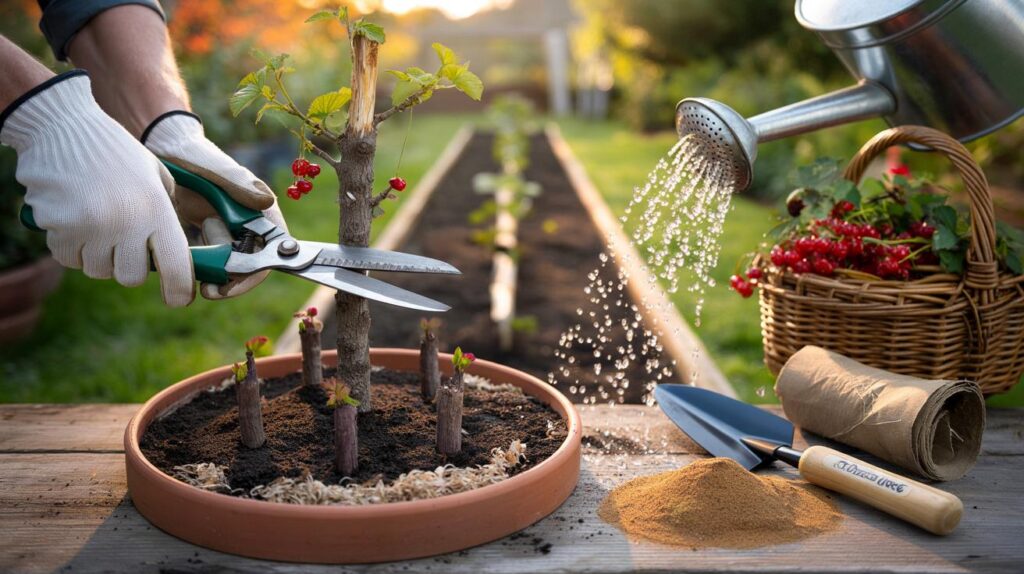
What you need on the bench
- Sharp, clean secateurs
- Gloves and a bucket for offcuts
- Pots or a well‑drained strip of bed
- Free‑draining mix: two parts compost, one part sharp sand
- Watering can with a fine rose
- Mulch: leafmould, straw or chipped bark
Step by step: one cut, one push, one mulch
- Pick a vigorous, pencil‑thick shoot grown this year, about 20–25 cm long.
- Cut just below a bud at the base, and just above a bud at the top.
- Strip leaves and soft tips. Keep three to four buds for planting.
- Push two thirds of the cutting into the mix or a prepared slit trench.
- Space cuttings at least 10 cm apart to prevent root competition.
- Firm, water gently, then mulch to lock in warmth and moisture.
Plant two thirds deep, one third showing. Buds above ground, clean stem below: a simple rule you will not forget.
Winter care that keeps disease at bay and roots ticking
Moist but not sodden: beating rot and frost
- Add grit or sand if your soil puddles after rain.
- Use a breathable mulch. Keep it a finger’s width off the stem.
- Lay horticultural fleece before hard snaps. Remove it on mild days to vent condensation.
- Water only when the top few centimetres feel dry.
Early signals your cuttings have taken
From late February, buds swell. By March, a gentle tug meets resistance. That grip signals roots. Keep the surface slightly damp and weed‑free. Do not feed with high nitrogen. You want roots first, fruiting buds next.
Proof in numbers: yield, savings and a simple calendar
Hardwood cuttings cost pennies and scale well. A morning’s work creates a mini orchard from one healthy bush.
- Typical first summer: a modest taster crop, 300–800 g per plant.
- Year two: 2–4 kg per mature redcurrant; 3–6 kg per mature blackcurrant.
- Year three: 6–8 kg from a well‑sited blackcurrant, 4–6 kg from redcurrant.
- Shop price: £8–£12 per kg of fresh currants. Ten plants can offset £80–£200 a year.
| When | Action and outcome |
|---|---|
| October–November | Take and plant hardwood cuttings; mulch; label varieties. |
| December–January | Check moisture; ventilate fleece on mild days; no feeding. |
| February–March | Look for bud swell; firm wind‑rock; pot up any early rooters. |
| April–May | Plant rooted cuttings out; water in; pinch weak shoots. |
| June–August | Pick first clusters; net against birds; water during dry spells. |
Skip fertiliser until growth starts. Then use a light, balanced feed or a ring of compost to support strong canes.
Pitfalls that quietly steal next spring’s fruit
Shade, soggy feet and overfeeding
Currants like sun for at least six hours a day. Plant in deep shade and you stunt flower set. Sit the cutting in waterlogged soil and fungi move in. Pour on nitrogen early and you get lush leaves, not fruiting spurs. Keep a steady hand. Thin out weaklings so the best plants claim the space and the food.
Varieties that thrive here and why choice matters
Match your taste and your site
For blackcurrant, reliable British stalwarts include ‘Ben Lomond’, ‘Ben Connan’ and ‘Ben Hope’ for disease resistance. For redcurrant, try ‘Jonkheer van Tets’ for early bowls or ‘Rovada’ for long strings. Fans of the fragrant French classic ‘Noir de Bourgogne’ can stick to cordials and jams. Redcurrant ‘Junifer’ and ‘Andega’ suit cooler plots. Take cuttings from healthy, true‑to‑type plants and label each batch.
Small spaces, big bowls: balcony and courtyard tactics
Root in pots now, shift to planters next spring
Use three cuttings per 30–35 cm pot through winter, then keep the best one. Move it to a 40–50 litre container by April. Water deeply, mulch, and place the pot where morning sun hits. Netting stops blackbirds stripping fruit the day you turn your back.
If you want a bit more certainty
Boosts that nudge success rates higher
- Dip bases in homemade willow water for a natural auxin kick.
- Make a neat heel cut by tearing a side shoot off with a sliver of older wood attached.
- Angle the top cut so rain sheds away from the bud.
- Use two planting spots: half in pots, half in a trench. Hedge your bets.
Take ten cuttings per variety. Aim for six to eight to root well. Cull the rest without regret.
Extra context gardeners ask for
What about pruning the mother bush?
Taking cuttings doubles as clever pruning. Remove the oldest, darkest canes at the base and use younger, pencil‑thick shoots for cuttings. That refreshes the parent and feeds your next wave of plants. Keep an open, goblet shape to let light in and air flow. That simple shape limits mildew and helps fruit ripen evenly.
Risk, reward and a quick sanity check
Risk stays low: a £5 outlay covers sand, labels and a fleece. Time cost sits under an hour for a dozen cuttings. Reward scales fast: by year two, a row of eight plants can hand you 20–30 jars of jam or a freezer drawer of sharp, bright fruit. If you are new to this, start today with five redcurrant and five blackcurrant cuttings. Track which spot roots best and repeat the winner next autumn.



Brilliant breakdown! I’d always faffed about with feeds, but this £5 hardwood‑cutting habit makes sense—bank energy into roots now, bigger bowls by May. Going to try ten cuttings from my ‘Ben Hope’ and ‘Rovada’—labelled this time! Thanks for the step‑by‑step and the 2/3 rule.