
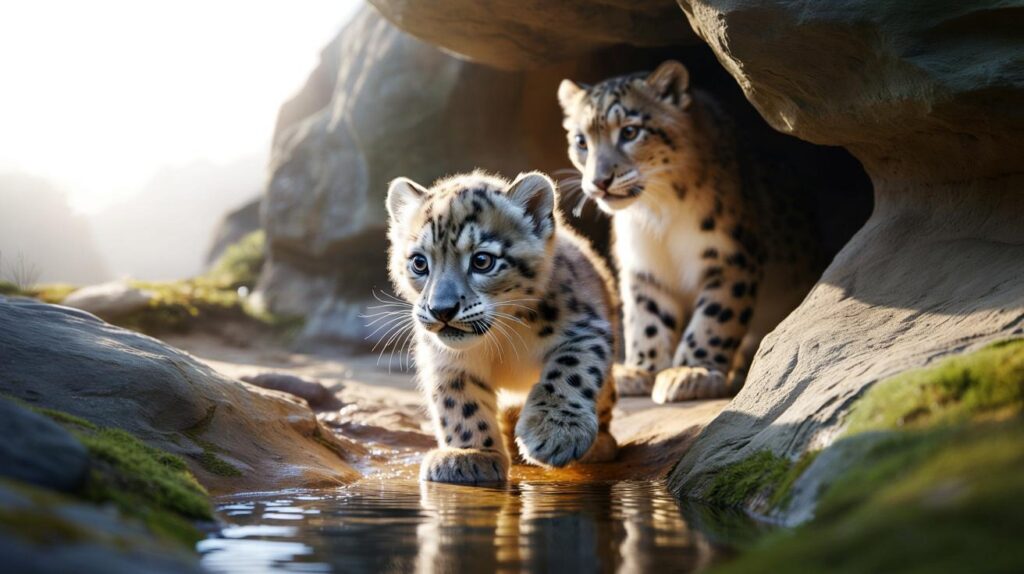
From a quiet den to a bright threshold, a shy set of paws has captured digital crowds and keepers alike.
Chester Zoo has revealed that its rare snow leopard cub has been named Bheri after thousands of public suggestions, following weeks in which millions tuned in to watch the youngster and her mother, Nubra, on a den camera before their first steps into the outdoor enclosure.
A name chosen by people who cared
The tiny female’s name, Bheri, nods to her mountain heritage. The word is used across Himalayan regions and appears in the names of fast, cold rivers that carve through high valleys. Keepers said the choice emerged from an avalanche of entries, with many visitors drawn to names that reflect the species’ harsh, beautiful home.
Assistant team manager for carnivores, Rachael Boatwright, described the moment Nubra shepherded her cub into daylight as quietly electrifying. She said the cub showed early confidence, padding about the rocks, sniffing new scents and bounding back to mum for reassurance between bursts of curiosity.
Millions watched the den stream as Nubra nudged her cub into the open, a tender debut that lasted only minutes but stayed with viewers.
Why people picked Bheri
Names carry weight in conservation. Here, the choice signals a direct link to the rugged Himalayas and Central Asian ranges where the species survives. It also turns the cub into a symbol of connection: a mountain-born cat raised in Cheshire by a team working with partners across the snow leopard’s range.
Why snow leopards matter right now
Snow leopards, Panthera uncia, prowl some of the highest landscapes on Earth, from the Hindu Kush and the Pamirs to the Tien Shan and the Himalayas. They move across snowfields and scree, sheltering among cliffs and ledges that offer ambush points for blue sheep and ibex. Their dense, pale coat scatters light, their long tail keeps balance on knife-edge ridges and curls around the body for warmth, and wide, furred paws act like snowshoes.
Around 4,000 snow leopards are thought to remain in the wild and the species is listed as Vulnerable on the IUCN Red List.
That figure is an estimate. The animal’s nickname, the “ghost of the mountains,” is well earned. These cats avoid people, range widely and rarely leave clear trails. Yet the threats they face are concrete: shrinking habitat, a warming climate that unsettles prey and pasture, illegal killing and conflict where livestock and predators meet.
Threats across the high country
- Habitat loss as infrastructure cuts through remote valleys and disrupts movement corridors.
- Retaliatory killing after livestock predation, especially where corrals are unprotected.
- Poaching for skin and bones, and opportunistic snaring that catches non-target species.
- Climate change pushing treelines upslope and altering the distribution of wild prey.
Inside the breeding programme
Bheri’s birth forms part of the European endangered species breeding programme, which pairs animals carefully to preserve genetic diversity. Chester Zoo staff coordinate closely with studbook managers and other zoos to make sure each pairing strengthens the population held under human care.
Bheri was born into a coordinated European breeding effort, coupled with field partnerships designed to keep cats and people safe in the mountains.
At the same time, the zoo supports work by the Snow Leopard Trust and community partners in Kyrgyzstan. That collaboration focuses on practical solutions: better livestock enclosures to reduce night-time attacks, local jobs linked to wildlife-friendly crafts, and herder-led monitoring to track cats without disturbing them.
What millions saw on camera
The den camera offered an unusual view of a usually hidden life. Viewers watched Nubra groom her cub, respond to faint noises beyond the den entrance and change her resting positions as the youngster wriggled and fed. Keepers used the footage to judge feeding frequency, maternal care and the moment when the cub seemed bold enough for a first outdoor look.
How a cub grows in the first months
Early growth for snow leopard cubs follows a steady curve. While every youngster is different, keepers track milestones to gauge health and confidence. The timeline below shows common markers seen in the species.
| Age | Typical milestone | What keepers look for |
|---|---|---|
| 1–2 weeks | Eyes opening; stronger suckling | Steady weight gain; responsive movement |
| 3–5 weeks | Wobbly walking; short play bouts | Coordination; curiosity without distress |
| 6–10 weeks | Exploration beyond the nest area | Confident steps; safe interactions with mum |
| 10–14 weeks | Brief outdoor visits, then longer outings | Balanced climbing; quick retreats to safety |
Climbing skills arrive early. Short, careful scrambles lead to nimble leaps across rocks in a matter of weeks, guided by a tail that acts as a counterweight. Keepers structure the enclosure to mimic mountain edges, adding varied perches and sheltered corners where a young cat can vanish from view and reappear on its own terms.
How field partners reduce conflict
Conservation in the range countries often begins in the farmyard. Unsecured pens invite night raids; strong corrals with chain-link roofs stop them. When calves survive, tolerance grows. Locally managed insurance schemes also change the equation: if a snow leopard kills livestock, the fund helps a family recover the loss, removing the trigger for revenge.
Lived solutions in Kyrgyzstan
- Reinforced corrals that keep goats and sheep safe at night.
- Community guardians trained to record signs of cats on ridgelines without chasing them.
- Women’s craft co-operatives producing wool goods with wildlife-friendly branding.
- School workshops that turn rare sightings into pride rather than fear.
What Bheri means for readers
A cub with a camera on her den has brought a remote species into everyday conversation. That attention can lift field projects and give zoo-based programmes the backing they need to plan decades ahead. It also reminds us that global conservation often hinges on small choices made at home.
Five ways you can help from your sofa
- Support reputable groups that work with herders, not against them.
- Choose wool and cashmere from suppliers that invest in predator-friendly herding.
- Back climate actions that cut emissions, because warming shifts the balance in alpine pastures.
- Share accurate information about snow leopards to counter myths that drive persecution.
- Visit accredited zoos that fund range-country partnerships and publish results.
Facts that add context
Snow leopards hold territory across 12 countries, often above 3,000 metres. They patrol long distances and rely on cliffs to stalk and escape. Their nasal passages warm thin air, and their fur grows dense even on the paws and belly. Prey numbers swing with winter storms, so the cats stretch their range to find food, especially in difficult years.
Bheri’s name resonates because it gestures to mountains and rivers that rarely appear in British lives. In Nepal, for instance, the Bheri River carves a steep path from high catchments. The word itself conjures cold water, dark gorges and the raw geography that shaped this species. That sense of place helps bind a Cheshire-born cub to a much larger story.
Captive populations, when managed carefully, act as a genetic safety net and a public window. They do not replace wild cats. Instead, they buy time: time to improve corrals, to test camera-trapping methods that map hidden populations, to phase out illegal trade and to strengthen pride in coexisting with a rare predator that prefers to pass unseen.



Watching Nubra nudge Bheri into daylight felt quietly epic. The den cam turned the “ghost of the mountains” into a living, breathing neighbor. Loved the name’s river roots and the link to the Himalayan range. Please keep sharing updates on the European breeding programme and the field work in Kyrgyzstan—especially the corral upgrades and herder insurance. It’s rare to see storytelling tie directly to practical fixes. More behind-the-scenes notes on how you measure stress vs curiosity in cubs would be amazing. 😊