
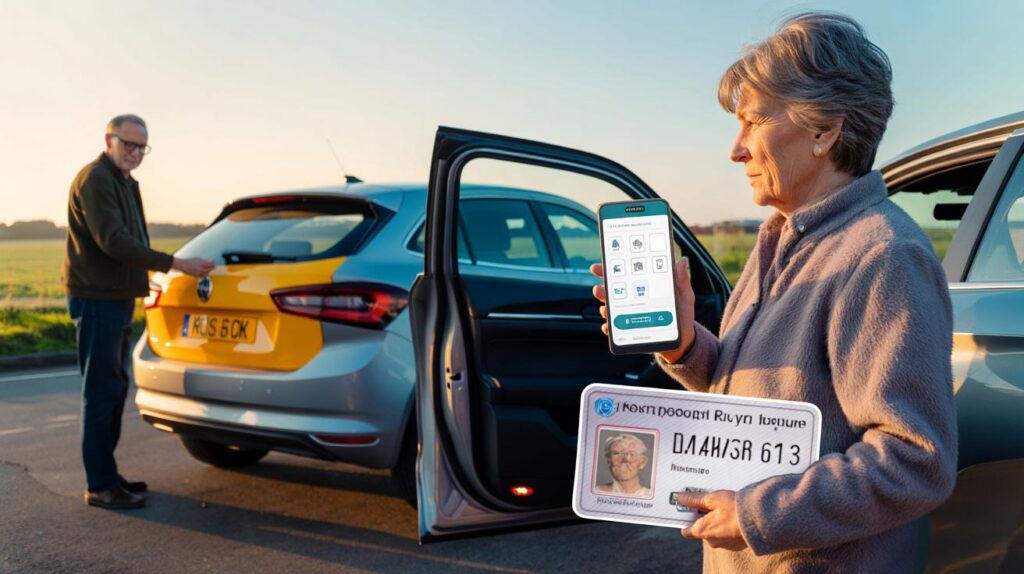
The supermarket car park is filling as the school run ebbs away. A man in his mid‑sixties folds a newspaper under his arm, taps the bridge of his glasses and pauses by a silver Jazz, reading the number plate like a quiet ritual. On the radio, a clipped bulletin mentions “new licence rules for over‑62s from November 2025,” and he frowns, half‑listening, half‑mapping the route home. Nearby, a woman in a fleece checks her phone, then opens the glove box to find a dog‑eared photocard slipping out with the petrol receipts. It’s such an ordinary scene you might miss the ripple moving through it: small admin, big consequence. The road can be generous to habits, right up to the point it isn’t. A date in the diary has a way of sneaking up.
What’s actually changing from November 2025?
Here’s the nub: the government’s modernisation push means older drivers will see a sharper, more digital renewal journey. The Department for Transport has flagged an expanded health self‑declaration for drivers aged 62 and over when updating or renewing their licence, with a clearer set of questions on eyesight, medications and recent medical events. DVLA’s online services will sit at the centre of this, with paper still available but nudged to the margins. **No, turning 62 won’t automatically take your licence away.** The goal is cleaner data, earlier flags for medical risks and faster, simpler renewals for everyone who’s fine to drive.
Numbers help the picture settle. There are millions of older drivers on Britain’s roads, and the vast majority drive without incident. Think of Pat in Warrington, 64, who renewed online last month out of habit and realised she’ll be in the first wave of the new questions next year. She jokes that her daily Pilates probably does more for her motorway posture than any form. We’ve all had that moment where a small task suddenly feels like a test. The new process is designed to be brisk: short yes/no prompts, a chance to upload a sharper photo, and only those who flag issues will be asked for a GP note or eye test result.
Why now? Three forces are converging. First, medicine is changing: more people drive well into their seventies with treatable conditions, and the rules need to map reality without scaring anyone off the road. Second, DVLA is moving to digital identity checks and faster back‑office triage, so decisions can land in days, not weeks. Third, insurers and safety bodies keep circling the same point: clear standards reduce grey areas. **Timeline remains subject to final confirmation by DfT and Parliament.** The outline is plain enough, though. More self‑reporting at 62+, more clarity on eyesight, medication and episodes like blackouts, and more emphasis on keeping contact details live so reminders reach you.
What you can do now without losing your weekend
Start with the basics you can control in an hour. Open your wallet: when does the photocard expire, and is your address current. Create or update your DVLA online account, add an email and mobile, and take a fresh, well‑lit photo on a plain background. Book an eye test with an optician you like and keep the receipt. Make a simple list of your regular medicines with doses. That’s your ready‑to‑go pack when the 62+ questions land. It’s not about age; it’s about fitness to drive, and about proof of it. If you prefer pen and paper, set a calendar alert and tuck a printed checklist into the glove box.
Common trip‑ups are boring and expensive. People move house and forget to change the address, then miss a letter. Others click a Google ad and pay a third‑party site that charges a “service fee” for a DVLA job that should cost less. Let’s be honest: nobody really does that every day. Give yourself a single weekend coffee slot to sort it and you’re done for years. If you use varifocals, try reading a number plate from 20 metres in good daylight and again at dusk. Both should be easy. **If in doubt, talk to your GP before you click submit.**
One thing you’ll hear from professionals is simple: the system doesn’t exist to catch you out; it exists to keep everyone moving safely.
“Older drivers aren’t the problem. Unreported medical changes are,” says Maria Patel, a community optometrist in Leeds. “A quick check today beats weeks of worry after a near‑miss.”
Here’s a small box to cut through the noise:
- Check photocard expiry and address.
- Set up DVLA online with email and mobile.
- Eye test booked; keep the receipt.
- List current medicines and recent medical events.
- Ignore unofficial websites that add fees.
The bigger picture, and the road ahead
The change landing in November 2025 isn’t a culture war about age. It’s a nudge toward honest self‑checks and quicker admin, wrapped in tech that’s finally catching up with how we live. Some will grumble, some will breeze through, some will pause and book an eye test they’ve put off. The truth sits between pride and practicality. Families will talk, group chats will buzz, and the conversation won’t only be about forms. It will be about confidence, independence, and the moment you choose the quieter route home. That choice is still yours. The form just asks you to make it with your eyes open.
| Key points | Details | Interest for reader |
|---|---|---|
| 62+ self‑declaration | Short health and eyesight questions at renewal from November 2025, with GP or optician evidence only if flagged | Know what you’ll be asked and prepare once, not twice |
| Digital‑first process | DVLA account, email/SMS reminders, faster decisions; paper remains available | Faster turnarounds and fewer postal surprises |
| Vision and medication focus | Re‑affirm the 20‑metre number‑plate standard; list regular medicines and recent episodes | Clarity on what really matters for safe driving |
FAQ :
- Will I lose my licence at 62?No. Age 62 triggers enhanced questions at renewal, not removal. You can keep driving if you meet the medical and eyesight standards.
- Is the November 2025 start date locked?The government has signalled November 2025. Final go‑live depends on the legislative timetable and DVLA delivery.
- Do I need a GP letter even if I’m healthy?Only if your self‑declaration flags something that needs medical confirmation. Otherwise, the online journey should be straightforward.
- Can I still use a paper form?Yes. Paper remains an option, though the fastest route will be digital with email or SMS updates.
- What eyesight standard applies?You must be able to read a number plate from 20 metres and have adequate field of vision. An optician can check both in minutes.



Useful explainer. A few practical Qs: if I turn 62 in Oct 2025 but my photocard expires in 2026, do the new questions wait until renewal? Is there any grace period if DVLA processing runs late after a self‑declaration flags something? For people without reliable broadband (rural), will Post Office check-and-send still exist, and can a GP note be uploaded later or posted? Also, does ‘address current’ mean every prior adress must match on medical records to avoid delays?