
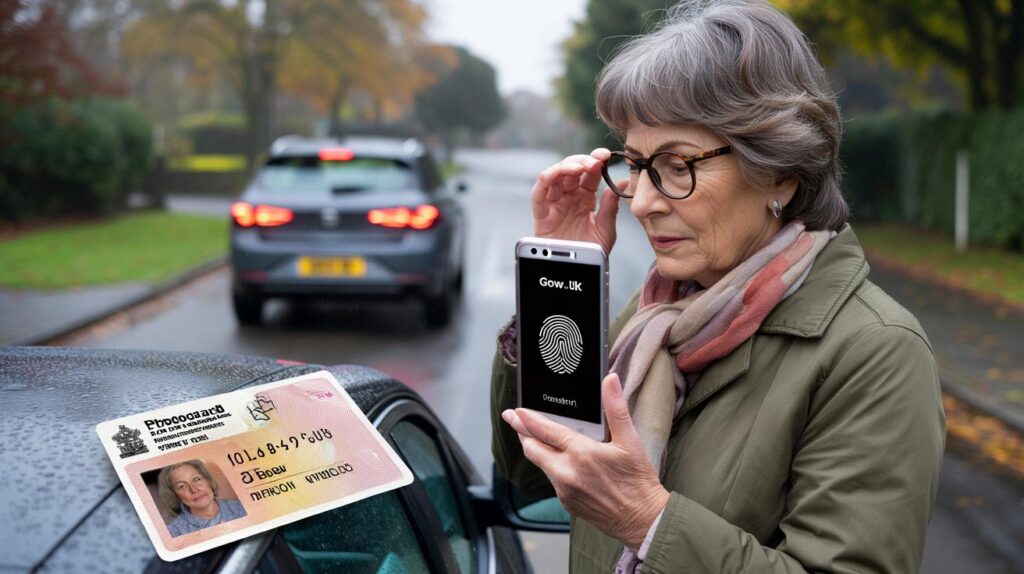
New rules are set to shake up how older drivers manage their licences from November 2025. If you’re 62 or over, the talk is about digital-first renewals, tighter health declarations and clearer eyesight checks. The aim is safety and simplicity — yet the shift could catch people out who leave admin to the last minute.
It’s a grey morning at the post office in Shrewsbury, and two people in thick coats are peering at a licence form like it’s a crossword. One of them is 63, still commuting twice a week, and trying to remember when their photocard runs out. The counter clerk mentions changes coming “next year” and a move to online logins, and suddenly the queue leans in. Nobody wants to be the person who finds out their licence lapsed on the way to pick up the grandkids.
We’ve all had that moment when a small admin task becomes a big, heart-thumping worry. From November 2025, older drivers will notice the system nudging them differently — earlier reminders, clearer medical prompts, tighter identity checks online. The essentials won’t scare you. But the details matter.
Something small could cost you big.
What’s changing for over‑62s — and why November 2025 matters
The headline is simple: the government is phasing in a more digital, health‑aware licensing system, with a key push landing in November 2025. That means GOV.UK One Login for DVLA services becoming the standard route, stronger ID checks, and refreshed wording around medical self‑declaration. If you’re 62 or older, you won’t suddenly need to sit a test. You will be asked clearer questions, earlier in the cycle, and mostly online.
There’s also the photocard issue. Photocards expire every 10 years, long before the “age 70” milestone many people remember. Plenty of drivers at 62, 64 or 69 are driving with a photo that’s quietly out of date. Fines can reach £1,000 for this slip. And with the digital shift, reminders are likely to move to email and text by default — great for speed, risky if your inbox is a mess.
Safety is the spine of the update. The rules around eyesight — being able to read a number plate at 20 metres and meeting the legal standard with or without glasses — are not new. The change is how they’re surfaced and checked when you renew. Expect more direct prompts about conditions that affect driving, like sleep apnoea, diabetes, blackouts or glaucoma. Failing to declare can lead to a fine, and worse if a crash follows. The system wants honesty, and it’s nudging that honesty sooner.
How the new flow will feel — and what to do now
Picture the steps. You’ll log in using GOV.UK One Login, which asks for an email and a mobile for two‑factor security. Then you’ll confirm your address and photo status, with a nudge if your photocard is approaching the 10‑year mark. Next come medical and eyesight prompts in plainer language: any recent blackouts? Do you wear corrective lenses to drive? Any changes your GP has flagged? It’s the same law, more direct questions.
Soyons honnêtes : nobody runs a personal audit of health, eyesight and admin every week. Life is busy and licences feel “set and forget”. The trap is that small changes stack up — a new address, a photo that’s 11 years old, a sleep issue that now has a name. People at 62 or 63 often tell me they’ll “sort it at 70”. That’s a myth. The photocard clock is its own thing, and the rules on notifying DVLA about medical conditions apply at any age.
Renew your photocard on time. That one habit protects you from the “I didn’t know” fine and lets the new system work for you. Keep your address current, and do the basic eyesight check: can you read a number plate at 20 metres in daylight? If you need glasses or contacts to hit that mark, wear them. If you’re on the fence about a health change, declare it. The DVLA’s guidance is surprisingly readable and errs on clarity over clutter. Your car is freedom; the paperwork is the key.
Real lives, real examples — what older drivers are asking
Take Maureen, 66, a part‑time bookkeeper in Devon. She switched to progressive lenses last year and noticed night glare on the A38. Under the refreshed prompts, her renewal asked directly about glare, headaches and recent optician checks. That led her to a free NHS eye test — over‑60s qualify — and a tweak to her prescription. She kept her licence, sleeps easier, and says the new questions “nudged me in the right way”. That’s the point: not punishment, prevention.
Or think about someone with type 2 diabetes controlled by tablets. Under the current rules, many don’t need to tell DVLA unless there’s hypoglycaemia or specific complications. The 2025 refresh won’t invent a new rule for them, but it will surface the “tell us if…” scenarios more plainly. The hope is fewer grey areas, fewer drivers guessing, and faster decisions when a doctor’s letter is needed. Nobody wants weeks without wheels because a form was hazy.
Eyesight: 20 metres. It’s the most human test in the book, and it’s staying. What changes is the way the system links that test to your renewal and your story. Expect reminders that feel less legalese, more “can you actually see that plate in the real world?” One driving assessor put it neatly:
“The law is cold. The road is warm. Ask people the question in a way their day understands.”
- Declare medical conditions early. If you’re unsure, check the DVLA list and call your GP for wording.
- Use your free NHS eye test if you’re 60+. Get a printout to keep with your licence renewal email.
- Set up GOV.UK One Login now. Add recovery options so you’re not locked out when you need it.
- Scan your photocard date (field 4b). If it’s close, renew before the rush.
Practical steps to stay ahead — with less admin and more peace
Start with three dates. One: your photocard expiry (field 4b on the front). Two: your birthday nearest to 70, when the three‑year renewal cycle starts. Three: your last eye test. Put all three in your phone calendar with yearly nudges. It’s dull, it works, and it stops surprises at petrol‑station forecourts.
Next, tidy the digital trail. Create a folder in your email called “DVLA + Insurance” and drop in renewal confirmations, eyesight results and GP letters. Add your licence number in a note on your phone, locked if you prefer. If you’d rather stick to paper, keep a single clear plastic wallet in your glovebox. Let’s be honest: nobody does that every day. But once is enough to save you a morning of panic.
And keep a simple checklist in the car door:
- Number‑plate test at 20m: pass with glasses/contacts if needed.
- Medication changes in the past year: check DVLA list if yes.
- Address and name match your licence.
- Photocard within 10‑year window.
- GOV.UK One Login set up and working.
There’s a quiet dignity in getting older behind the wheel. You’ve built instincts other drivers are still buying. The 2025 shift treats you as a partner: more prompts, fewer mysteries. And yes, it nudges you to speak up if your body is changing or your eyes need help. That’s not an accusation. It’s an invitation to keep driving well, for longer.
One thing nobody tells you: the system isn’t out to catch you. It wants clean data, honest answers, and photos that actually look like you. Answer straight, and it tends to move quickly. There will be grumbles about phones, logins and codes that expire in 10 minutes. If tech stresses you out, pair up with family or a neighbour for the first run‑through. After that, it’s muscle memory.
There are myths to ditch. No, you don’t automatically lose your licence at a certain age. No, there isn’t a secret “over‑65 retest”. Yes, if a condition affects your driving and you don’t tell DVLA, you can be fined and face worse if something happens. The November 2025 update won’t change those foundations; it will put them in bolder text and wrap them in a digital process that’s built for today’s habits.
The road ahead isn’t scary. It asks you for clarity, a recent photo and a few honest ticks in boxes that speak your language. If you give it that, it gives you back freedom. And if you’re the helpful sort, pass it on — the friend who “probably needs to look at their licence” is already in your contacts list. A short message now beats a long tow‑truck later.
| Key points | Details | Interest for reader |
|---|---|---|
| Digital‑first renewals from Nov 2025 | GOV.UK One Login, stronger ID checks, clearer medical prompts | Know what to expect and set up your login early |
| Photocard expiry at any age | 10‑year photo cycle, fines up to £1,000 if out of date | Avoid costly slips by checking field 4b and renewing |
| Eyesight and medical honesty | 20‑metre plate test, declare conditions that affect driving | Stay safe, legal, and avoid suspensions or delays |
FAQ :
- Do over‑62s need to retake their driving test in 2025?No. There’s no automatic retest based on age. The 2025 changes focus on renewal prompts, digital access and clearer health questions.
- What happens if my photocard is already expired?You can renew online or by post; driving with an expired photocard risks a fine up to £1,000. Renew promptly to avoid enforcement and insurance headaches.
- Will I be forced to go online to renew?Online will be the default, with GOV.UK One Login. Postal routes are expected to remain for those who need them, but digital is faster and better tracked.
- How do I know if I must tell DVLA about a health condition?If a condition affects your ability to drive safely — blackouts, sleep apnoea, certain eye conditions, insulin‑treated diabetes, seizures — check the DVLA list and report it. When unsure, declare and seek your GP’s wording.
- What’s the eyesight standard in plain English?You must read a number plate at 20 metres and meet the legal visual acuity and field standards, with glasses or contacts if required. If you can’t meet that, don’t drive until an optician helps you reach the standard.



Thanks for the heads‑up—had no idea photocards expire every 10 years. Calendar updated.