
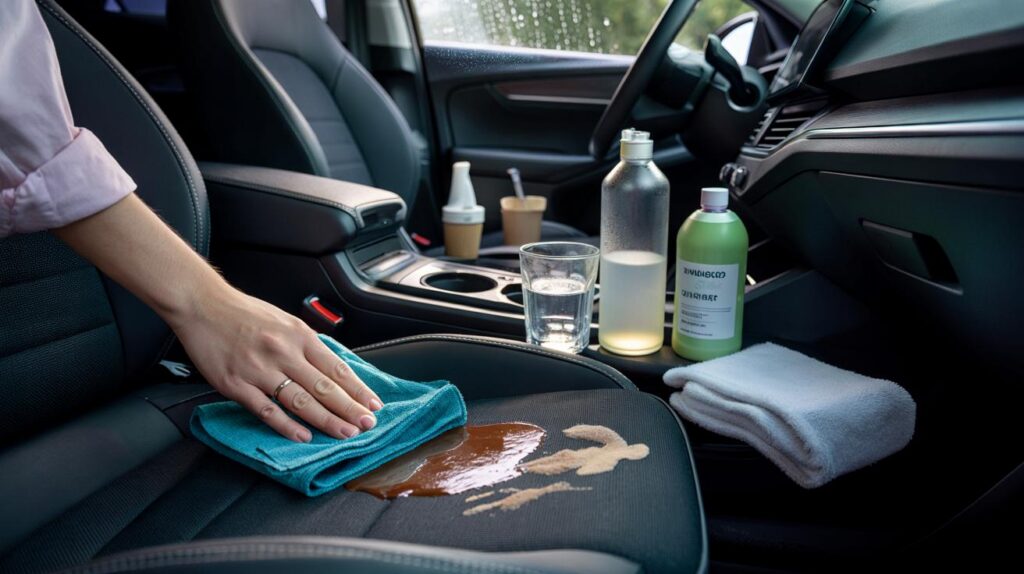
Half-term snacks, wet coats and muddy boots are back. Your car seats face a daily storm before winter even starts.
Across the country, drivers report that stains arrive faster than they leave. Households want fixes that cost pennies, not paydays. As rain and road grime climb, one low-cost routine is spreading through family group chats and valet forums. It uses cupboard staples, avoids harsh fumes, and leaves no rings or colour shifts on fabric seats.
Why this budget fix is in the spotlight
Professional interior valeting starts near £70 and often tops £120 for larger cars. Rental extractors are cheaper per day, but they soak foam and can leave musty smells if you misjudge drying. People want something simpler, safer and quicker. A three-part mix—warm water, white vinegar and mild washing-up liquid—has become the go-to for school-run spills, pet prints and muddy splashes.
Blot, don’t scrub. Go light on moisture. Rinse, then move air across the fabric. Rings vanish when you respect these three rules.
The £2.50 recipe that tackles most stains
What you need
- 500 ml warm water
- 50 ml white vinegar
- 1 level tablespoon mild washing-up liquid
- Two clean microfibre cloths
- A soft brush and a hairdryer with a cold setting
How to use it
- Vacuum first. Lift grit from seams and stitching so dirt cannot smear into the weave.
- Mix the solution in a jug. Test on a hidden patch to check colourfastness.
- Lightly dampen a cloth. Do not saturate it.
- Blot the mark from the outer edge towards the centre. Short presses release residue without spreading it.
- Rinse the area with a second cloth dampened in clean water to remove surfactant film.
- Dry with moving air. Open windows, run the fan, or use the hairdryer on cold. Keep the cloth away from direct heat.
The mix breaks down sugar, oil and mud. Vinegar shifts mineral traces. The detergent lifts grime so the cloth can carry it away.
Dry methods when water is a problem
Some stains improve without moisture, especially on seats that trap water or in cold weather. Three cupboard options earn praise for speed and safety.
- Bicarbonate of soda for odours and light grime. Shake on a fine layer, tease gently with fingertips, leave 60 minutes, then vacuum.
- Talc or a clay-based powder for grease. Cover the spot, leave two to six hours, then brush or vacuum. Repeat if the mark feels slick.
- Plain white shaving foam for coloured spills. Spread a thin film, work lightly with a soft brush, wait five minutes, then wipe and rinse with a barely damp cloth.
| Stain type | Product | Dwell time | Key action |
|---|---|---|---|
| Chocolate, fizzy drink, mud | Warm water + vinegar + washing-up liquid | Immediate, work in passes | Blot edge to centre, then rinse |
| Chips, lipstick, sunscreen | Talc or clay powder | 2–6 hours | Let powder absorb, then vacuum |
| Spilt milk, pet smells | Bicarbonate of soda | 1–12 hours | Deodorise, then vacuum slowly |
| Fruit juice, felt-tip | White shaving foam | 5–10 minutes | Light agitation, then a damp wipe |
Mistakes that create rings and damage foam
- Flooding the area. Excess water drives residue into the cushion and leaves a tide mark.
- Scrubbing hard. Abrasion lifts fibres and can distort the weave, making future stains cling.
- Skipping the rinse. Detergent left in fabric attracts soil and dulls colour.
- Heat drying. Warm air bakes in outlines and can warp adhesives under the upholstery.
- Using coloured or perfumed foam. Dyes and fragrance oils can leave new marks.
Use the least liquid that does the job. Multiple light passes beat one aggressive soak.
How this compares with pro services and machine hire
A family hatchback interior valet usually costs £70–£120, with deep extraction adding time and money. Hiring a wet extractor for a day sits near £30 plus deposit, but it requires skill and warm, dry weather. The home recipe costs roughly £2.50 for several seats and takes about 15–20 minutes per stained area. It suits fresh food spills, footprints, make-up marks and everyday grime. For vomit, large dairy spills or dye transfer, a specialist may still pay off because bacteria and pigments can migrate deep into foam.
Set up a quick-response kit for everyday mess
Speed decides whether stains lift cleanly or set into the pile. Keep a small pouch in the boot so you can act in under five minutes.
- Two microfibres sealed in a bag to stay clean.
- A 250 ml spray of the mixed solution, labelled clearly.
- A shaker of bicarbonate of soda for odours.
- Disposable gloves and a few zip bags for soiled wipes.
- A soft brush and a folding plastic card to lift crumbs from seams.
Care tips that slow future staining
Vacuum seats weekly, including the junctions between base and backrest. Fit mats under child seats to catch crumbs. Rotate who eats in the car and limit sticky snacks to short windows when you can clean immediately. Crack the windows for a minute after a wet-school-run to drop humidity. Tuck a little sachet of bicarbonate under the seat to absorb odour in damp months.
Safety and fabric notes you should know
Always test on a hidden patch first, especially on patterned cloth and older cars. Some seats contain side airbag modules. Avoid soaking seams and do not use pins or aggressive tools near stitching. If your car has heated seats, let them cool completely before you start and keep products off the connectors under the seat. Fragrance-free products help families with sensitive noses. If mould appears under a previously wet seat, ventilate, treat the source, and consider professional help.
When to escalate and when to protect
If a dark halo persists after two careful passes, stop. Allow full drying, then try the powder route before another wet clean. For recurring coffee mishaps, a fabric protector can add a water- and oil-repellent layer for six to twelve months. The protector reduces wicking, so spills bead and blot easily. If you lease your car, check the agreement first, as some treatments may affect return conditions.
Real-world timings to plan your clean
Most light stains lift in three to five minutes. Medium food and drink marks take ten to fifteen minutes, including drying. Grease needs dwell time; schedule two to six hours for powder to work while you get on with your day. Plan airflow at the end: five minutes of cabin fan on cool does more than twenty minutes of still air. A cheap battery moisture meter can confirm that cushions have dried before the next downpour.



Tried the 500ml water / 50ml vinegar / 1 tbsp washing-up liquid mix on a chocolate smear and a juice ring—blotted, rinsed, fan on cool. Both vanished in about 12 minuts. Honestly saved me from booking a £90 valet. Only tweak: I used fragrance-free soap to keep the car from smelling like a chip shop. Definitley keeping a small spray in the boot now.