
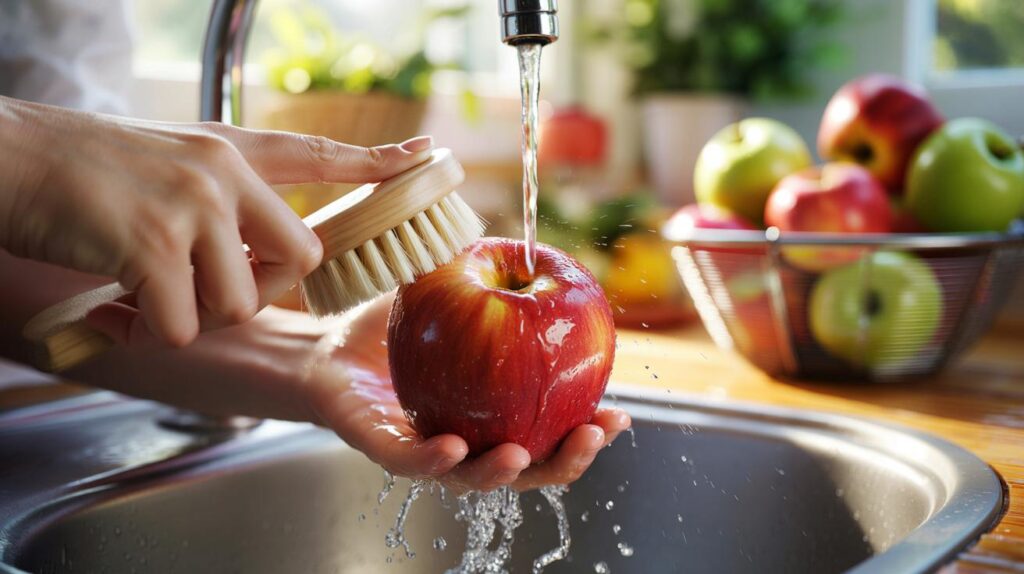
As apples pile high this season, families face a quiet worry about hidden residues and the best way to wash.
Researchers now point to a simple, hands-on routine that households can use in minutes. It does not require special solutions, harsh chemicals or peeling. It aims to reduce what stays on the skin while keeping the fruit’s crunch and fibre.
A shiny fruit with a murky side
Apples look clean, travel well and feel safe. Yet monitoring programmes frequently detect traces of plant protection products on the skin. Growers treat orchards and post-harvest storage to prevent scab, rot and cosmetic blemishes. Those treatments leave small but measurable residues on many conventional apples by the time they reach your fruit bowl.
Peeling seems like an easy fix. It removes surface wax and much of what sits on the skin. It also strips away the very layers richest in fibre and polyphenols. Some modern pesticides are systemic or move through micro‑pores, so a slice of the flesh can contain trace amounts too. You throw away nutrition and still may not remove everything.
Why peeling is not a cure
Laboratory analyses indicate that residues can penetrate just beneath the cuticle. The thickness varies by variety and growing conditions. That is why a better wash matters: it targets the outer load without binning the goodness under the peel.
Popular washing tricks that fall short
Cold tap rinses lift dust, loose microbes and the outer layer of edible wax. Vigorous rubbing on a tea towel adds friction, but it rarely dislodges residues lodged in the skin’s micro‑crevices. Vinegar baths and salty or lemon water are common home hacks. These tend to reduce odours and surface grime rather than dismantle tightly bound chemical films on a smooth, hydrophobic peel.
Cold water alone removes what you can see. The goal is to remove what you cannot.
What researchers tested and what worked
Comparative tests of washing routines highlight one approach that consistently outperforms the rest: warm water plus gentle brushing. The idea is practical physics as much as food science. Slight heat softens wax films and lowers surface tension. A soft produce brush applies controlled friction, pushing water into tiny grooves around the stem, calyx and lenticels.
In trials, warm water in the region of 40 °C combined with around 20 seconds of brushing per fruit achieved markedly higher reductions in residues on the skin than a quick cold rinse. Reductions vary by compound and contact time, but the pattern is clear: temperature plus mechanical action beats water alone.
Two simple variables do the heavy lifting: a warmer rinse and a dedicated soft brush.
The method in two parts
- Use comfortably warm water, about 40 °C—warm to the touch, not hot.
- Use a clean, non‑abrasive brush kept just for fruit and veg.
How to do it at home, step by step
- Wash your hands with soap, then rinse.
- Fill a bowl with warm water at about 40 °C.
- Dip the apple, then brush the entire surface for roughly 20 seconds.
- Pay extra attention to the stem cavity and the blossom end.
- Rinse under running water to carry loosened residues away.
- Dry with a clean cloth or air‑dry on a rack.
If you keep a brush by the sink, the routine becomes second nature. Replace or sanitise the brush regularly and avoid harsh bristles that could scratch the skin.
How common methods compare
| Method | Likely effect on surface residues | Notes |
|---|---|---|
| Quick cold rinse | Low | Good for dust; limited action on bound residues or waxy films. |
| Vinegar or salty soak | Low to moderate | May reduce microbes and odour; inconsistent impact on pesticides. |
| Warm water + soft brush (≈40 °C, 20 s) | Moderate to high | Improves removal from micro‑reliefs; preserves peel and texture. |
| Peeling | High for surface only | Removes nutrients concentrated under the peel; not all residues are surface‑bound. |
Keep the peel after a proper wash to retain fibre and antioxidants while trimming your exposure.
What this means for health and taste
Small amounts add up across a week, especially for children who snack on fruit daily. Reducing the load where it is highest—the skin—lowers your cumulative exposure from a staple food without changing what you buy. You keep the crunch, colour and aroma that make apples so satisfying. Fibre content stays high, which supports digestion and helps tame blood sugar peaks after snacks.
Families who batch‑wash fruit when they unpack their shop tend to eat more of it. A clean, ready‑to‑eat bowl on the worktop beckons hungry teenagers after school far more than an unopened bag at the back of the fridge.
Limits, trade‑offs and smart shopping
No wash removes everything. A fraction of residues can sit beneath the skin. Warm water and brushing reduce the bulk of what lingers on the outside, which is where most contamination sits. If you want to drive your risk down further, rotate varieties, buy in season, and source from growers who use fewer post‑harvest treatments. Organic apples usually carry fewer and different residues, though they are not automatically residue‑free.
Storage affects results too. Waxed apples resist water. Brushing still helps, but it takes a little longer to shift films around the stem and blossom end. For heavily waxed fruit, two short brush cycles with a fresh warm rinse in between can improve removal without damaging the peel.
Extra tips: kitchens, kids and packed lunches
- Brush hygiene: Rinse the brush after each use, shake off water and let it air‑dry. Replace when bristles deform.
- Tap temperature: If your hot tap runs hotter than 50 °C, mix in cold water. Aim for warm, not scalding.
- Lunch prep: Wash and dry apples the night before. Moisture left on the peel can soften the bite in a lunchbox.
- For small hands: Let children count to twenty while they brush under supervision. It builds a habit and a sense of control.
- Beyond apples: The same approach works for pears, cucumbers and nectarines, adjusting time for delicate skins.
Think of it as dental care for fruit: gentle, regular brushing keeps the surface clean without stripping the good stuff.
If you still prefer to peel
Some people dislike the texture of peel or need softer fruit for dental reasons. If you peel, wash first. You avoid dragging surface residues across the flesh with the knife. Use a sharp peeler to take the thinnest layer possible and eat soon after, as vitamin C and polyphenols degrade on exposure to air.
The bigger picture
Warm water and a soft brush cost pennies and take under a minute per apple. Over a year, that habit can meaningfully reduce what your household ingests from a fruit you eat weekly, if not daily. Combine the routine with seasonal buying, shorter supply chains and varieties that keep well without heavy post‑harvest coatings. The changes are small, the gains are tangible, and the fruit remains a joy to eat.
For keen home cooks, try a simple test: wash half a batch by the warm‑water‑and‑brush method and leave the rest for a quick cold rinse. Slice and sniff the blossom ends. You will often notice less waxy odour and a cleaner bite on the well‑washed fruit. That sensory difference hints at what the lab instruments quantify—and it comes from nothing more complex than temperature and touch.



As a parent, this is super practical. Warm (about 40°C) plus ~20 seconds with a soft brush feels doable. Curious about heavily waxed apples: does it take longer, or is two short cycles better than one?
90% reduction? That sounds… generous. Do you have the study link and sample size? Also, were systemic pesticides accounted for, or just surface residuess? Thanks.