
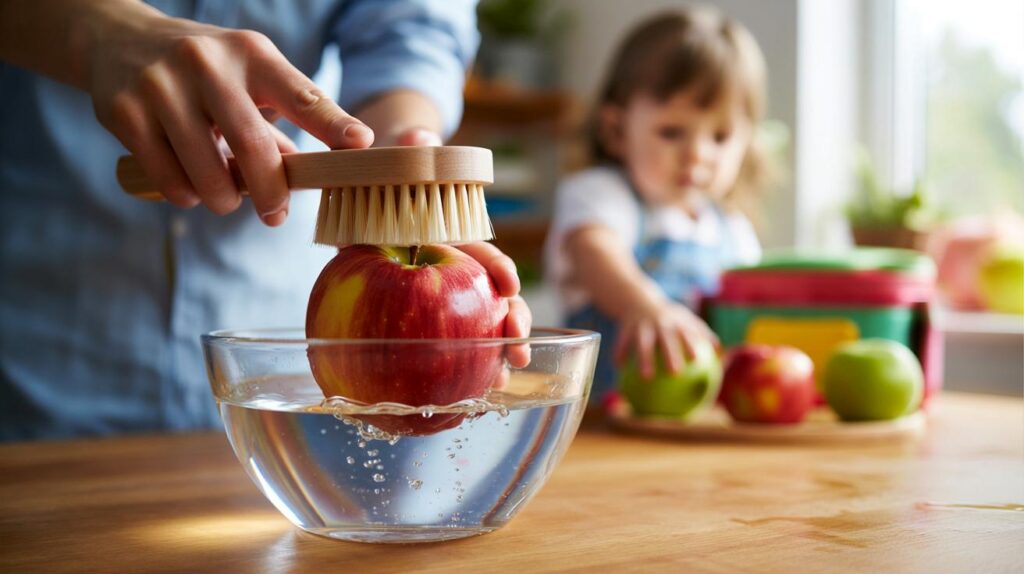
A favourite of lunchboxes and fruit bowls alike, the humble apple carries a quiet question to your sink. Could a small change at washing time make a big difference to what you and your children actually eat?
Households reach for apples all year, trusting a quick rinse to do the job. Yet surface films and field treatments can cling stubbornly to the skin. Lab tests now suggest a simple, low-cost routine can lift far more residue than a cold splash under the tap.
A wholesome fruit with hidden risks
Apples look pristine. Shiny skins sell. That sheen can also mask what has collected from orchard sprays, storage coatings and transport. Routine monitoring in Europe has repeatedly found residues on a proportion of conventionally grown apples, even when producers operate within the rules.
Peeling seems like the easy fix. It is not. Some substances migrate through the epidermis into the flesh during growth or storage. Strip the skin and you lose fibre, polyphenols and much of the vitamin content that sits just beneath the surface. The goal is to cut exposure while keeping the parts that make an apple so good for you.
The washing myths many of us trust
A fast rinse under cold water feels reassuring. A vinegar soak smells reassuring. Bicarbonate, lemon or salted water often enter the conversation. These methods have limits. They help with dust, loose wax and some microbes. They struggle with chemicals bonded to the skin’s microtexture, and they do little against systemic treatments inside the fruit.
Cold tap rinses remove dust and some wax. They do not shift most surface residues that cling to the skin.
Another habit crops up in kitchens: washing fruit with washing-up liquid. Don’t. Soaps are not meant for produce and can leave their own residues behind. Water temperature and friction matter far more than bubbles.
What researchers found at the sink
In controlled tests, one method consistently outperformed the crowd. No proprietary spray. No elaborate soak. Just two elements that work together: warmth and gentle brushing. Water at about 40°C loosens the thin films that trap residues. A soft produce brush breaks their grip on the skin’s tiny creases. The combination dislodges far more than water alone or acidic baths.
Warm, not hot. Brush, not scour. Around twenty seconds per apple beats a rushed rinse every time.
Step-by-step at your sink
- Wash your hands before you handle fruit.
- Fill a bowl with water at roughly 40°C. It should feel warm, not hot.
- Use a clean, soft brush kept only for fruit and veg.
- Immerse the apple and brush the entire surface for about 20 seconds.
- Pay extra attention to the stem cavity and the blossom end where residues collect.
- Rinse under running water and dry with a clean towel or air-dry.
Done properly, this routine reduces surface residues while preserving the skin. That means more fibre, more antioxidants and the texture you bought the apple for in the first place.
How common methods compare
| Method | What it tackles | Trade-offs |
|---|---|---|
| Quick cold rinse | Dust, loose wax, some microbes | Limited effect on clinging residues |
| Vinegar or lemon bath | Some microbes, mild surface cleaning | Limited chemical removal, lingering taste |
| Bicarbonate soak | Light surface debris | Does not reliably reach bonded residues |
| 40°C water + soft brush | Most surface residues, wax films, debris | Needs a brush and a little time |
| Peeling | Skin residues | Removes fibre and beneficial compounds |
| Buying organic | Lower likelihood of certain residues | Can cost more; not residue-free by default |
Why this matters to health and flavour
Reducing repeated, low-level exposure is a sensible step, especially for children, pregnant people and anyone eating apples daily. The risk from one fruit is not the point. The pattern across a week or a term of packed lunches is where small improvements add up.
There is also the pleasure factor. Keep the skin and you keep the snap, the aroma and much of the colour. Fibre supports digestion and helps you feel full. Polyphenols contribute to the apple’s character and are concentrated just under the peel.
After a proper warm wash and brush, keeping the skin gives you fibre and polyphenols you would otherwise throw away.
Limits to acknowledge and ways to go further
No wash can remove treatments that have moved into the flesh. That is the nature of systemic products. Still, the largest share of contamination sits on the skin, so cutting that burden is a practical win. For those who want to go a step further, organic fruit or produce from low-input orchards reduces the likelihood and the diversity of residues in the first place.
Seasonal, local buying can also help. Shorter supply chains often mean fewer post-harvest coatings and shorter storage, which can reduce the extra layers that cling to the peel. Ask retailers whether fruit is unwaxed, or choose varieties with naturally dull skins if you prefer less surface treatment.
Hygiene and care for your kit
- Rinse and dry the brush after each use. Replace it when bristles splay.
- Avoid harsh scouring pads that can damage the skin or bruise the fruit.
- Do not use detergents on apples. They are not designed for food contact.
- Wash apples just before eating to prevent moisture from accelerating spoilage.
Practical tips for busy households
Batch-wash a day’s fruit. Dry thoroughly and store in the fridge to keep the crunch. For packed lunches, choose firmer varieties that tolerate brushing without bruising, such as Braeburn, Gala or Pink Lady. If a family member prefers peeled slices, wash and brush first, then peel thinly to keep as much of the nutrient-rich layer as possible.
Worried about little hands at the sink? Turn the method into a quick routine children can copy. Warm water in a bowl, count to twenty while brushing, rinse, dry, eat. It turns a hidden risk into a simple habit they can own.
When the skin isn’t an option
Some people dislike peel, others need softer textures. You can still lower exposure. Wash and brush before peeling to avoid dragging surface residues into the flesh. Then slice. Add a squeeze of lemon to limit browning if presentation matters.
What this means for your fruit bowl
The headline is modest yet powerful. You do not need special solutions or long soaks. You need warmer water and a gentle brush. That small shift pushes more of the unwanted stuff down the drain, lets you keep the skin, and keeps the apple tasting like an apple.
For those keen to go deeper, learn the terms on labels, ask about waxing, and try a mix of organic and conventional depending on price and availability. Rotate fruits through the week to spread any single exposure. And keep the habit going beyond apples: carrots, potatoes, cucumbers and pears also benefit from the same warm-water-and-brush approach.



Source for the lab tests? Peer‑reviewed or just in-house trials?