
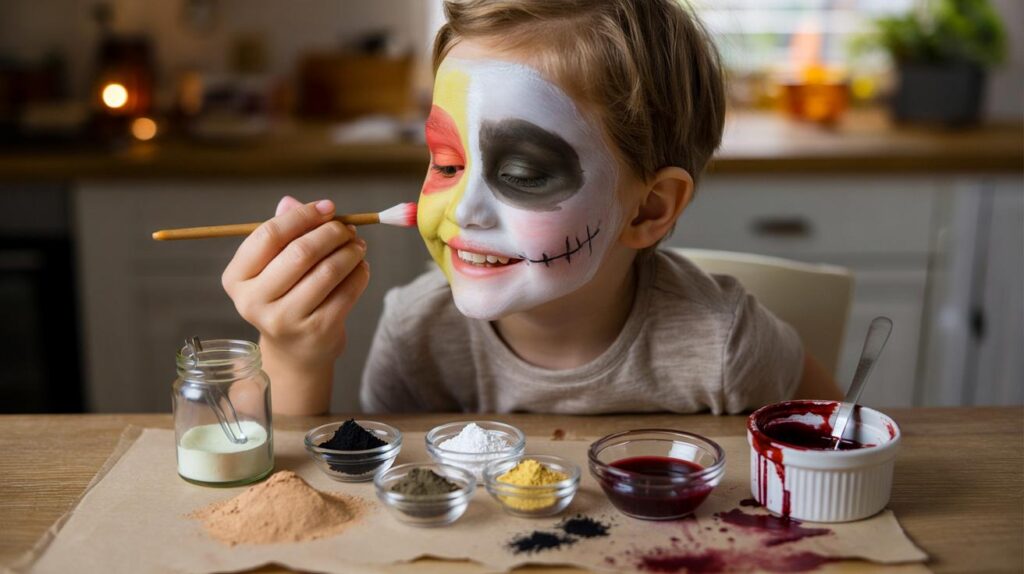
The spooky season brings new jitters: what sits on your child’s skin could linger far longer than the sweets.
Across the UK, families are trading neon palettes for pantry staples, chasing safer frights without binning cash or plastic. The shift has grown fast, and for good reason: you can craft convincing looks in minutes using three low-waste ingredients most homes already know.
Why shop-bought face paints raise alarm
Bright tubes promise impact and staying power, yet the fine print often hides preservatives, fragrance allergens, synthetic colourants and even microplastics. Trace metals such as nickel or chromium can appear via pigments, while strong solvents help products cling stubbornly to delicate skin. That mix raises concerns for children, whose skin barrier is thinner and more reactive.
The ingredients that hide in plain sight
- Strong preservatives and synthetic dyes can trigger redness, itching or tightness after short wear.
- Plastic-based glitter and polymers add to microplastic pollution when washed off.
- Heavily fragranced formulas increase the risk of irritation around eyes and lips.
One night of fun should not mean a fortnight of irritated cheeks, clogged pores or stained costumes.
The 3-ingredient fix families are turning to
Households are reaching for mineral clay, activated charcoal and coconut oil. Together, they cover most Halloween looks—ghostly pallor, sunken eyes, stitched scars—without harsh additives, oversized packaging or perfumed residue.
Clay for natural colour
Mineral clays arrive in earthy shades: white, green, yellow, red and pink. They blend into soft, matte pigments that suit sensitive skin and rinse away with warm water. White or yellow clay creates a cadaverous base; red or pink adds bruising tones; green knocks back redness for zombie effects.
Activated charcoal for deep shadows
Activated charcoal produces a clean, intense black for sockets, brows, stitches and cracks. Use a pharmacy-grade capsule or a fine powder. It sits lightly on skin, builds well with a brush, and lifts off cleanly with oil.
Coconut oil as a gentle binder
Coconut oil brings everything together. It softens pigments, spreads evenly, adds slip, and helps moisturise. That means fewer tight cheeks and a smoother finish under low light. If coconut doesn’t suit your household, try olive squalane or shea butter as alternatives.
Three staples, five minutes, under £3 to set up—and often under 40p per face thereafter.
Step-by-step in under five minutes
- 1 teaspoon mineral clay (choose shade: white, red, yellow, green, pink)
- 1/2 teaspoon coconut oil
- Up to 1/2 teaspoon activated charcoal for darker tones (optional)
- 1–2 drops floral water to loosen texture (optional)
Blend clay and charcoal first. Work in coconut oil until you reach a creamy paste. Test on the back of the hand. Tap on with fingers for diffused colour or use a flat brush for precise lines. For extra grip, dust clean skin with a whisper of cornflour before application, then set again at the end.
Make it last without nasty surprises
- Start on clean, lightly moisturised skin. Avoid heavy creams that make pigments slide.
- Set with cornflour or a talc‑free loose powder, especially around the nose and hairline.
- Keep drinks to straws if you’ve painted lips; re-tap colour rather than rubbing.
- Remove with coconut oil on a soft, reusable cloth. Rinse with warm water.
Kitchen-made fake blood that washes off
Skip the acrid tubes. A cupboard mix gives you glossy, believable drips that clean away without drama.
The stain-savvy recipe
- 1 tablespoon agave or golden syrup
- 1 teaspoon unsweetened cocoa powder
- 1 teaspoon cooked beetroot, finely blended (or a few drops of beet juice)
- Water drop by drop to adjust flow
Stir to a thick, pourable consistency. Beet brings a clean red; cocoa deepens to claret. For clotted wounds, fold in a pinch of cornflour. Add more beet for fresh vampire red, more cocoa for grimy zombie brown.
Safety notes you shouldn’t skip
- Patch test on the inner forearm 24 hours before, especially for children with eczema or allergies.
- Avoid applying charcoal inside the waterline or too close to eyes.
- Use cosmetic-grade clay and food-grade powders. Don’t use garden soil or fireplace ash.
- Keep tools clean; decant mixes with a spoon, not fingers, to avoid contamination.
What this saves: money, time and waste
| Option | Time per face | Approx cost | Waste |
|---|---|---|---|
| DIY clay-charcoal-coconut | 3–5 minutes | £0.20–£0.40 | Refillable jars; no wipes needed |
| Shop-bought palette + remover | 5–8 minutes | £6–£15 upfront | Plastic trays, seals, single-use wipes |
Families report faster get‑ready times and less post‑party scrubbing—no more harsh removers or stained sinks.
Microplastics and glitter: what to use instead
Plastic glitter lingers in waterways. If you want sparkle, look for plant‑cellulose glitter labelled biodegradable, and press it over a thin layer of coconut oil so it grips without glue. Mica-based shimmer powders can add glow; choose verified ethical sources where possible.
Aftercare, storage and skin comfort
How to tidy up without tears
Massage coconut oil over painted areas, wipe with a damp reusable cloth, then rinse. Skin feels soft, not squeaky. No sting, no perfume cloud, no neon residue on pillowcases.
Save the leftovers
- Spoon pastes into small, clean jars and label with the date.
- Store in a cool, dark place for up to three months; discard if the smell changes or you spot mould.
- Keep syrups and dry powders sealed separately and mix fresh when possible.
Extra ideas that lift your look
Tones and textures that read on camera
For deeper skin tones, boost contrast with charcoal for contours and yellow or red clay for highlights and bruising. For chalky ghost finishes that still photograph well, layer a thin white clay base, set with cornflour, then add shadow with a soft, dry brush.
Simple special effects without latex
- Scabs: mix fake blood with crushed cornflakes for quick texture.
- Raised scars: blend a dab of shea butter with clay, shape, then edge with charcoal.
- Cracked earth skin: stipple dry clay over a thin oil layer and smile to create fissures.
What dermatologists would remind you
Don’t paint over broken skin. Keep fingers and brushes clean to avoid eye infections. Limit wear time to the party window, then remove before bed. If a child reacts, rinse with lukewarm water, apply a bland moisturiser, and seek advice if redness persists.
The bigger picture for families
Switching to three staples cuts plastic waste, trims costs and hands creative control to children. It also builds a reusable kit for school plays and birthday themes. Most households can assemble a starter set for under £3 from pantry and pharmacy items, then top up for pennies per face.
Want more control? Keep a small swatch card. Note ratios that worked—1 tsp yellow clay to 1/4 tsp charcoal for “sickly green,” or 1 tsp red clay plus a dab of cocoa for bruises. Next year’s monsters get ready even faster.



Love this! Tried the beetroot blood last night; it rinsed right off the sink—no pink stains. Any tips to stop the coconut oil from melting under warm party lights? My ghoul kept getting glossy.