
Half-term plans meet a seasonal curveball as sniffles spread in classrooms and busy parents seek quick fixes close to home.
With influenza rising sooner than expected among school-age children, health teams are opening walk-in vaccination sessions in familiar community spaces, cutting travel and waiting times so families can act before classrooms fill again.
Why schools are feeling the strain
Public health surveillance indicates flu activity picking up weeks ahead of the usual winter curve. Rates are climbing fastest in pupils, where close contact and indoor mixing push transmission. Crowded buses, shared equipment and lively lunch halls create easy routes for a virus that thrives on proximity.
Many children missed natural exposure during recent milder seasons, leaving immunity patchier than usual. That combination of waning defences and brisk October mixing helps explain the early pressure, with headteachers watching attendance and parents juggling childcare when symptoms strike.
Flu is moving early through pupil-age groups, creating a narrow window to get protection in place before term resumes.
Pop-up clinics bring the flu jab to where families already are
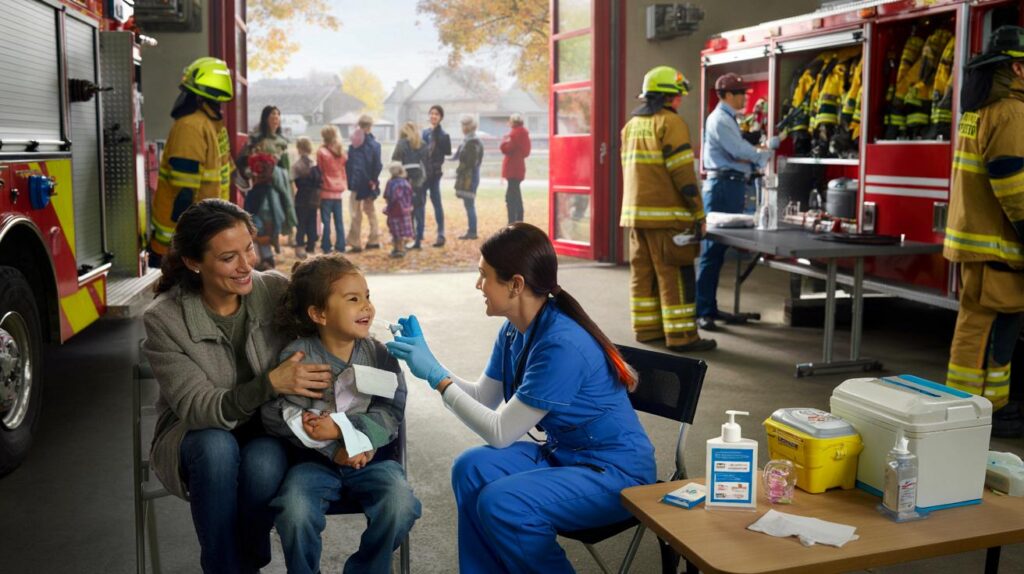
To close gaps left by missed school sessions and busy diaries, local vaccination teams are running half-term pop-ups in everyday venues. Parents can find walk-in sessions at fire stations, bowling alleys, football pitches, libraries and sports halls, often with extended daytime slots to suit siblings and work breaks.
The model is simple: take the service to familiar, well-signposted places, keep queues short and offer the quick nasal spray that most children receive. For those who cannot have the spray, an injectable alternative is available on site or via referral to a GP practice.
- Most sites offer drop-in access with no need to book ahead.
- Sessions are staffed by local immunisation nurses used to working in schools.
- The nasal spray usually takes a few minutes and needs no needles.
- Parents leave with aftercare advice and details for any follow-up dose if required.
More than 10 million flu doses have already been delivered this autumn, including around 1.5 million for school-aged children and over 300,000 for eligible two- and three-year-olds.
Who can go this week
| Group | Vaccine offered | Typical location | Notes |
|---|---|---|---|
| School-aged children | Nasal spray (alternative jab if needed) | Pop-up sites, school catch-up sessions | Walk-in widely available during half-term |
| Children aged two and three | Nasal spray (alternative jab if needed) | GP surgeries, some community pharmacies | Check local availability before attending |
| Children with certain health conditions | Spray or injectable, depending on clinical advice | Pop-ups, GP, hospital clinics | Clinician will advise on the safest option |
| Adults at higher risk | Flu jab | GP, pharmacy, community clinics | Recommended for over-65s, pregnant women and eligible carers |
What the numbers mean for families
Flu moves fast in schools. A single infectious pupil can pass the virus to friends on the bus, team-mates at training and siblings at home within days. That ripple reaches grandparents and neighbours with long-term conditions who face higher risks from complications.
Now is a practical moment to cut that chain. Half-term keeps children away from busy classrooms for several days after vaccination, and protection builds over roughly a fortnight. That timing helps blunt the return-to-school spike and reduces winter absence just as mock exams and festive events approach.
A five-minute appointment during half-term can lower the odds of missed lessons, cancelled matches and illness spreading to vulnerable relatives.
Finding a pop-up without the faff
You do not need to chase multiple bookings to get your child protected. Most areas have clearly advertised community sessions run by the local immunisation team. If you cannot make one site, another nearby venue is likely open later the same day or later in the week.
- Check recent school emails or letters for local clinic times and venues.
- Look at updates from your local health trust or integrated care board for half-term schedules.
- Ask your GP practice or community pharmacy where catch-up clinics are running.
- Keep an eye on local authority and health pages on social media for same-day walk-in posts.
Bring your child’s details and any previous vaccination notes if you have them. If your child recently had a heavy cold or wheeze, the nurse may advise delaying the nasal spray for a short period and arranging a swift alternative slot.
Nasal spray, jab and side effects
The routine children’s vaccine is a quick nasal spray that does not require needles. It primes the body’s defences against circulating flu strains chosen for this season. Some children are offered an injectable alternative—for example, where a clinician advises against the spray. Both aim to reduce the risk of serious illness and the chance of passing flu on.
Common, short-lived effects include a runny nose, mild headache or low-grade fever. Paracetamol can help with discomfort if needed. Most children bounce back to normal activities very quickly. If your child is unwell on the day, staff will guide you on when to return.
Why timing matters this October
An early rise in cases means families have less time to build protection before the colder months. Half-term pop-ups are designed to fit around work, childcare and travel, cutting out long waits and multi-week bookings that put parents off.
Adults who qualify for a free jab—especially those with heart or circulatory conditions—are being urged to get protected as well. Cardiologists point out that flu can aggravate existing heart disease and raise the risk of complications, adding pressure to winter hospital services.
People with heart and circulatory disease face higher risks from flu; a simple vaccination reduces the chance of serious complications.
A quick, practical example for parents
Imagine a class of 30 where two pupils return from the holidays incubating flu. Without vaccination, several classmates may pick it up within a week, and absences ripple across the year group. If most pupils receive the nasal spray now, fewer become ill, those who do tend to have milder symptoms, and chains of transmission are shorter. That helps keep clubs open, reduces time off work for parents and protects relatives with long-term conditions.
Extra tips to keep bugs at bay
- Keep children home if they have a high temperature and feel unwell; send them back when they feel better and fever has settled.
- Encourage handwashing, tissue use and binning; give classrooms and bedrooms a burst of fresh air where possible.
- Make sure inhalers and allergy plans are up to date for children with asthma or hay fever.
- Book follow-up slots promptly if your nurse advises an alternative vaccine or delay due to recent illness.
The half-term window offers a rare mix of time, access and convenience. With pop-up clinics in familiar venues and millions already vaccinated, parents have a straightforward way to cut the risk of a rough winter for their children—and for the people they love most.



Love the idea of pop-ups at fire stations—familiar spots, easy parking. My kid hates needles so the nasal spray is a win. Do we need ID, or just show up with their details? 👍
10 million already? Feels like the queues will be longer than the actual sniffels. Anyone managed a walk-in in under 10 mins at a fire station?