
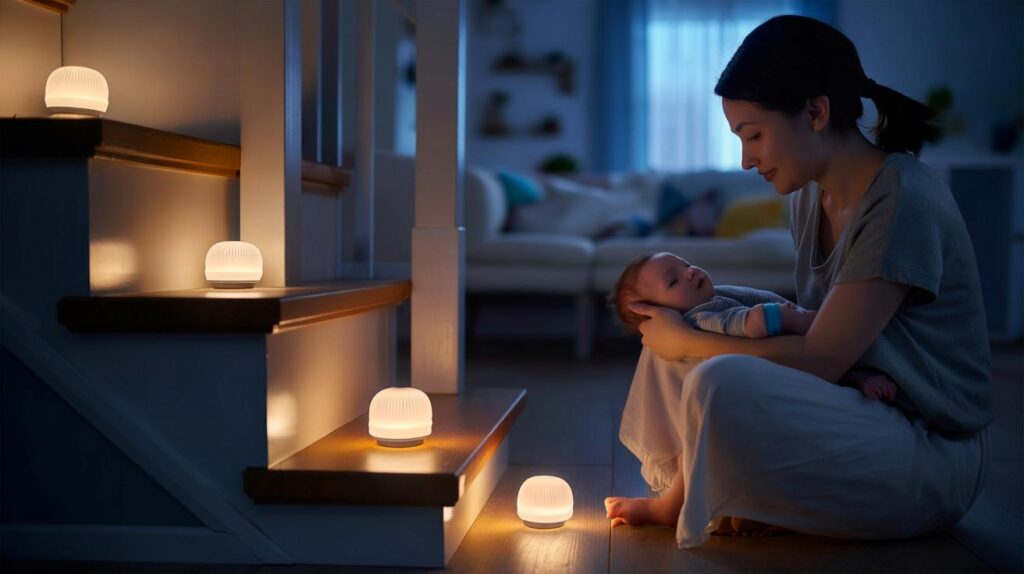
Nobody wants a blinding “big light” at midnight. A palm-sized gadget is quietly fixing gloomy corners for busy households.
Now sweeping through family chats and school-gate tips, Aldi’s £9.99 Casalux Puck Lights promise quick, wire-free brightness in awkward places without tools, mess or a dent in your budget.
What are Aldi’s puck lights
Think small discs, warm glow, and no wiring. Aldi’s Casalux Puck Lights are battery-powered LEDs you stick or place where a lamp won’t fit: on stairs, under shelves, inside wardrobes, or by the cot for low-key feeds. At £9.99 each, they sit firmly in impulse-buy territory, yet they solve problems that normally need a socket, a drill, or an electrician.
Warm, portable, and renter-friendly, these puck lights bring light to dead zones with zero drilling and near-zero faff.
Parents like them because they start softly, won’t wake a sleeping baby like a ceiling bulb, and can move room to room. The appeal is practical, not flashy: safe steps at 2am, stress-free sock matching before the school run, and no more groping for snacks at the back of a cupboard.
Why parents swear by them
- They cut night-time glare, easing wake-ups and night feeds.
- They stick where wiring is tricky or forbidden in rentals.
- They’re lightweight, so you can redeploy them as needs change.
- They make forgotten spaces – under-stairs, pantries, loft hatches – genuinely usable.
- They cost less than many smart bulbs and need no hub or app.
Real-world uses at home
Hallway or landing: a gentle guide for small feet heading to the loo, minus the harsh blast of a ceiling light. Wardrobe: clear view of colour and fabric, so outfits come together faster. Kitchen cupboards: better visibility for spices and tins – fewer duplicates, less waste. Under bunks: reading light for one child without lighting the whole room. Stairs: a soft trail that makes late-night trips safer.
Use one puck for a small alcove, two for a double-door wardrobe, and three to mark a short staircase or corridor.
Installation made simple
Set-up typically involves peel-and-stick adhesive pads or placing the light on a flat surface. Many families swap the supplied adhesive for removable strips to protect paint or wallpaper. Avoid rough, dusty or damp surfaces; wipe and dry the spot first for reliable grip. If you’re lighting a cupboard, position the puck towards the front so the beam reaches the back.
- Test position with blu tack before committing to adhesive.
- Angle the face slightly towards the area you use most.
- Label units discreetly so you rotate battery changes evenly.
- Keep within reach for children’s rooms to encourage independent night-time routines.
Costs, batteries and practicalities
These lights run on batteries, so there’s no mains cost – but you will replace or recharge cells. Many puck lights use AAA or AA batteries; Aldi’s specifications can vary by batch, so check the packaging at the shelf. For frequent use, rechargeable cells pay back quickly. For occasional use in cupboards, standard alkaline batteries may last for months.
| Use case | Typical daily use | Battery strategy | Tip |
|---|---|---|---|
| Night feed light by the cot | 15–30 mins | Rechargeable AAA/AA | Store a charged spare set nearby for quick swaps. |
| Hall/landing marker | 1–2 hours | Rechargeables strongly advised | Use a pair spaced along the route for even light. |
| Pantry/cupboard | 2–10 mins | Alkaline or rechargeable | Mount near the front lip to reach the back shelf. |
| Under-stairs nook | 10–30 mins | Rechargeables | Combine with a second puck for shadow-free corners. |
Quick maths: what £9.99 buys you
Compare a £9.99 puck light with a smart bulb at £12–£20 plus a lamp and a socket you might not have. The puck covers awkward zones a bulb can’t reach. If you run a hallway puck for 60 minutes each evening and 15 minutes overnight, a set of rechargeables rotated weekly keeps costs low. Even with two or three units, you’re spending less than a family takeaway for a safer, calmer nighttime routine.
Safety and child-friendliness
Because they’re not wired, puck lights avoid trailing cables near curious hands. Keep units out of cot reach, and check that the battery compartment secures firmly, ideally with a small screw. Avoid mounting above a cot or changing table where a unit could be knocked down. In damp rooms, look for products with appropriate moisture resistance; if that’s unclear, keep them in dry zones.
No drilling. No electrician. No mains risk in children’s rooms – just soft, targeted light where you need it.
Style, brightness and where to place them
The Casalux design is clean and low-profile, so it blends in rather than shouting for attention. Warm white works best for evenings and night-time; it keeps melatonin disruption to a minimum compared with cool white. For shelves and wardrobes, one puck typically covers about a metre-wide section. For stairs, think in pairs: one at the top, one mid-run, and a third for longer flights.
- Spacing: 60–100 cm apart for corridors; one unit per 1–1.5 m² in small nooks.
- Glare control: mount slightly above eye level and angle away from faces.
- Reflection: avoid shiny tiles that bounce light directly into eyes at night.
What to watch for
Adhesive pads can mark delicate paint when removed; test on an inconspicuous spot or use removable strips. Heavy humidity reduces adhesion; kitchens and bathrooms may need firmer fixings or a drier spot. Battery waste adds up if you rely on disposables; a couple of sets of rechargeables and a simple charger lower cost and clutter. If you need hands-free activation, consider pairing with motion-sensor variants from the same aisle when available, or position the puck within easy reach for a quick tap-on.
Who benefits most
New parents seeking calm, dim light for feeds. Primary-school families smoothing the morning dash with lit wardrobes and shoe cupboards. Renters who can’t drill. Grandparents needing safer night-time navigation without rewiring. Teen bedrooms where you want local light for wardrobes or gaming corners without lighting the whole house.
Alternatives and add-ons to consider
Motion-sensor night lights suit hallways used by multiple family members and reduce forgotten “on” time. Rechargeable magnetic light bars work well under cabinets, charging via USB between uses. Plug-in dusk-to-dawn night lights cost pennies a year to run and stay put in sockets, handy for bathrooms and kitchens. If you want smart control, scene-capable bulbs and LED strips offer schedules and dimming, but they need sockets and sometimes hubs, and don’t solve dead corners without power.
Extra tips for stretching value
Group lights into zones and label the battery sets per zone so you swap them on the same day. If you share a charger with kids’ gadgets, create a Sunday-night routine to top up cells for the week ahead. For stairs or landings, add low-profile anti-slip tread stickers and a handrail night marker to raise safety further. In a shared house, a discreet note on the fridge with “tap the hall light at night” keeps everyone on the same page.
Three pucks for under £30 can transform a landing, a wardrobe and a cupboard – a small spend that removes nightly friction.
Bottom line for busy households
If mains light wakes the whole house or a socket doesn’t exist where you need one, Aldi’s £9.99 puck lights bridge the gap. They’re quick to fit, gentle on tired eyes, and flexible enough to follow family life as rooms change purpose. Pair them with rechargeable batteries and thoughtful placement, and you turn black spots into usable, calmer spaces without touching a single wire.



We stuck two on the landing and one by the cot; night feeds no longer blind us. £9.99 each felt like a no-brainer. Pro tip: go rechargeable AAs, rotate weekly, and label the sets. Genuinely renter-friendly and calm at 2am.
Do they actually save money if you’re chewing through AAA cells? Math plz: hours per puck per set of alkalines vs rechargeables, and total cost over, say, 6 mnths. Otherwise this just shifts the bill from the meter to the battery drawer.