
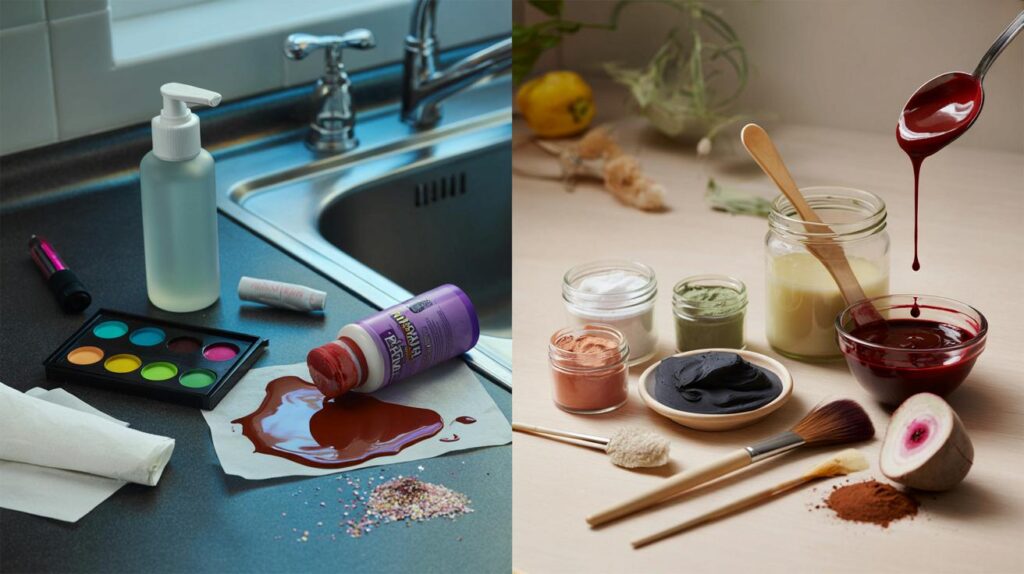
Across Britain, parents weigh last-minute face paint buys against home hacks as Halloween looms and safety questions bubble up.
Shops brim with neon palettes and tubes of stage blood. Families want bold looks, fast. Dermatology helplines see predictable spikes in skin complaints every October. A growing group now turns to quick, home-mixed alternatives that use three pantry-safe ingredients, cost less per face, and rinse away without harsh solvents.
Why shop-bought face paints raise eyebrows
Many budget kits rely on synthetic dyes, strong preservatives, plasticisers and microplastics. Labels rarely list every trace impurity. Children have thinner skin and smaller surface area. That increases the impact of irritants and fragrance allergens.
Parents report red patches, flaky cheeks and stinging eyelids after a single night out. Strong perfumes mask chemical odours yet also trigger reactions. Glitter sheds microplastic specks that migrate to sinks, towels and waterways.
One spooky night is brief. Additives and microplastics can linger on skin, costumes and bathroom drains for days.
Short-term reactions you can spot
- Itching on temples, cheeks and around the mouth after removal.
- Stubborn stains that need scrubbing, increasing irritation risk.
- Watery eyes from fragranced gels and sprays.
- Pores clogged by waxy binders left behind overnight.
Three-ingredient kit mixed in under five minutes
A simple set covers most looks. You need coloured clay, activated charcoal and coconut oil. Pharmacy shelves and wholefood aisles stock all three. Each item doubles as a household staple, so nothing goes to waste.
Three jars on your counter can replace a multicolour palette, a liner pen and a bottle of remover.
Clay colours straight from the ground
Choose white, red, yellow, green or pink cosmetic clay. The grains are fine and gentle. White gives a cadaverous base. Green dulls warm tones to ghostly grey. Red or yellow add bruised undertones without synthetic lakes.
Activated charcoal for lines and shadow
Charcoal powder delivers a deep matte black. It defines brows, cracks and stitches with a soft brush. It blends into clay for smoky sockets and hollowed cheeks.
Coconut oil as binder and buffer
Coconut oil binds powders into a creamy paste. It glides on, reduces drag and eases removal. It also replaces make-up wipes. Patch test if your child has a nut or coconut sensitivity.
Face colour recipe you can tweak
- 1 level teaspoon cosmetic clay in your chosen shade
- 1/2 teaspoon coconut oil
- Up to 1/2 teaspoon activated charcoal for darker tones
- 1–2 drops floral water for a thinner texture (optional)
Stir powders first. Add oil until a spreadable paste forms. Test on the back of your hand, then adjust with a pinch more clay or a drop of water. Apply with a clean finger for broad areas. Use a brush for fine scars and creases.
Making it last without harsh fixatives
Start on clean, dry skin. A light, fragrance-free moisturiser helps glide. Dust a little cornflour or plain loose powder on top to set. Carry a cotton bud dipped in oil for quick fixes on the go.
Kitchen fake blood that rinses off
Stage blood often stains and stings. A kitchen mix looks convincing under street lights and flashes, and it washes out of cotton. The colour comes from beetroot, depth from cocoa, and stickiness from syrup.
Quick recipe for a deep crimson
- 1 tablespoon agave or golden syrup
- 1 teaspoon unsweetened cocoa powder
- 1 teaspoon cooked beetroot, finely blitzed
- Few drops of water for flow
Combine until glossy and thick. Add water drop by drop to reach a slow drip. For clotted wounds, whisk in a pinch of cornflour. For vampiric sheen, mix in a touch more syrup. Test on fabric offcuts if a costume is precious.
Thicker for wounds, thinner for splatter: a pinch of starch or a drop of water changes the scene in seconds.
What it costs compared with shop-bought
Prices vary by region and retailer. These indicative figures show the order of magnitude in the UK.
| Item | Typical price | Approx. uses | Cost per face |
|---|---|---|---|
| Budget face-paint palette (6 colours) | £6–£10 | 8–12 | £0.50–£1.25 |
| DIY set: 100 g clay + 50 g charcoal + 200 ml coconut oil | £12–£18 total | 30–40 | £0.30–£0.60 |
| Tube fake blood (30 ml) | £3–£5 | 3–5 | £1.00–£1.67 |
| Kitchen blood: syrup, cocoa, beetroot | £5–£7 for pantry pack | 15–20 | £0.25–£0.35 |
Turn prep night into a hands-on ritual
Set out bowls and teaspoons on the table. Give each child a task: measuring, stirring, shade testing. Curcuma adds gold glints. Spirulina gives a mossy green. Cocoa deepens sockets without fumes.
Keep tools simple and clean. Separate brushes for dark and light pastes reduce muddiness. Label small jars and keep lids tight for next weekend’s party.
Safety and storage notes families rely on
- Patch test every new mix on the inner arm for 20 minutes before use.
- Avoid inner eyelids and broken skin. Keep mixes away from mouths unless made with food-only ingredients.
- Use cosmetic-grade clays, not pottery clays. The grind is finer and the source is controlled.
- Spoon out what you need. Do not double‑dip to prevent microbial growth.
- Store pastes in clean, dry jars. Keep for a week in the fridge, then remake.
Removal and low-waste clean-up
Massage coconut oil over colour until it lifts. Wipe with a soft, reusable cloth. Rinse with lukewarm water and a mild, fragrance-free cleanser. Skin stays calm and supple.
Leftover kitchen blood goes in food waste. Powder remnants can be sealed for next use. No plastic wipes, no glitter fallout, no solvent-laced sprays.
Extra context parents ask about
Why fragrances and microplastics keep being used
Fragrance blends mask odours and signal “fun” to shoppers, yet they drive many reactions. Microplastics add slip and shine at low cost. Both are cheap fixes to formulation problems, which is why budget kits rely on them.
How to scale for a school fair or club
Mix a base paste of white clay and oil in a large bowl, then split and tint. Assign a hygiene lead with gloves, disposable spatulas and labelled jars. Set a queue for patch testing on the wrist while costumes go on, which reduces last-minute surprises.
When to seek medical advice
Stop use if skin burns, blisters or swells. Rinse with plenty of water and a bland emollient. Contact a pharmacist for antihistamine guidance if itching spreads. Photograph reactions in case a patch test is needed later.
Recognise ingredients you can spell. Reduce waste you can count. Keep the fright on faces, not in bathroom cabinets.



Brilliant guide—finally something that doesn’t rely on mystery ‘fragrance’ and microplastics. The clay/charcoal/coconut trio sounds doable, and the cost per face beats the budget palettes here. This is definitley going on my prep list. I appreciate the patch-test reminder and the no-wipe removal. Quick Q: will spirulina or turmeric stain lighter skin or towels? Bookmarking for the school fair this weekend.