
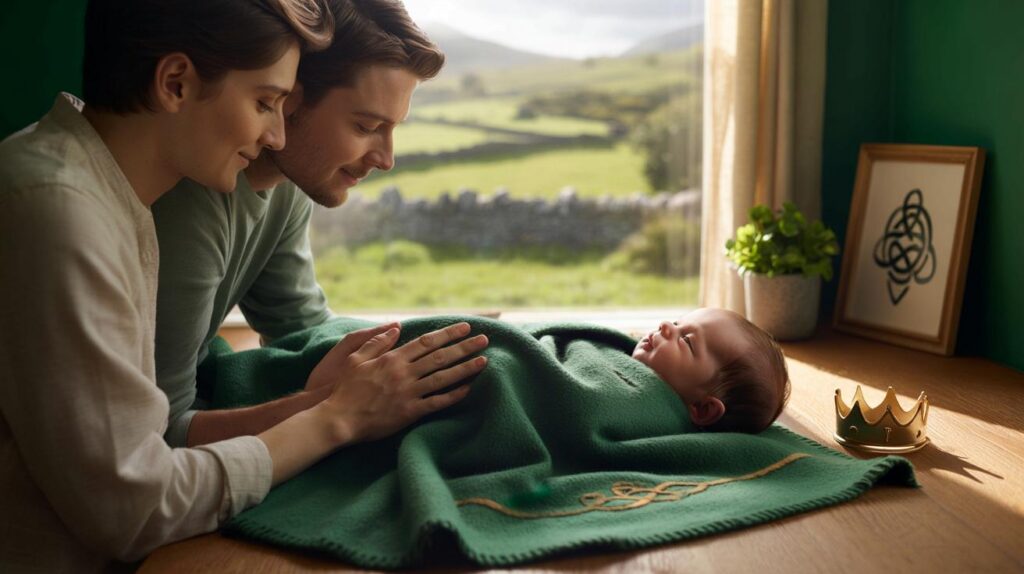
A gentle-sounding boy’s name with ancient roots is nudging its way into modern lists, soothing nerves and splitting fewer households.
Amid debates over spellings, family traditions and trend fatigue, Tiernan is stepping forward with a story, a steady rhythm and a clear meaning.
What Tiernan really means
Tiernan comes from the Old Irish Tighearnán, a diminutive of tighearna. The core idea is leadership grounded in respect. Parents who want a name that signals character, not swagger, often land here after tiring of vowel-heavy fashions and long-short mashups.
Meaning: ‘little lord’ from Irish Tighearnán — a title linked to stewardship, dignity and calm authority.
Unlike abstract virtue names, Tiernan ties its values to a real linguistic past. It reads gentle, yet it carries weight. That balance sits well with families seeking something warmer than a surname-first pick and sturdier than a fleeting trend.
A name with roots and resonance
The Irish thread is unmistakable. Tighearna once described a lord or master in Gaelic society, and echoes of that status still hum beneath Tiernan’s modern spelling. Irish lore even records the legendary figure Tigernmas, a ruler remembered in early narratives for resolve and reform. You don’t need a PhD in Celtic studies to appreciate it; you can feel the history in the sound.
Many modern Irish names ride the same line between heritage and ease. Tiernan sits comfortably beside Cillian, Niall or Finley, yet keeps its own identity. It looks familiar on the page. It sounds clear to English speakers. And it sidesteps the “name twins” problem at nursery.
Is Tiernan popular?
It rarely tops mainstream charts in English-speaking countries, which is precisely the draw for many parents. Several baby-name platforms now show Tiernan with a reported popularity score around 72%, signalling growing attention while leaving plenty of room for distinctiveness.
Rarity with recognition: a reported 72% interest score, yet still uncommon enough to feel genuinely yours.
That “sweet spot” matters. You want grandparents to pronounce it; you don’t want five of them in one classroom. Tiernan hits that balance as more families look past headline-grabbing trends toward names with a patient, lived-in quality.
Sound, spelling and pronunciation
The everyday guide
Most British families say it as “TEER-nən” — two syllables, stress on the first, and a soft, quick second syllable. It reads as it sounds for many, which defuses the usual first-day-of-school worry over corrections.
Pronunciation: TEER-nən — two beats, clean stress, no tricky consonant clusters.
Variant spellings exist in older texts (Tighearnán) and in related surnames (Tierney), but Tiernan remains the friendliest for modern use. It fits with a broad range of surnames and rarely clashes with common English phonetics.
Middle names and sibling matches
Because Tiernan is soft at the edges, pairing it with a grounded middle can sharpen the full name. Alternatively, you can lean into its rhythm with equally lyrical choices.
| Style goal | Middle name ideas | Why it works |
|---|---|---|
| Classic contrast | James, Charles, Edward | Adds crispness and a traditional anchor |
| Modern flow | Arlo, Jude, Rowan | Keeps the melody without losing clarity |
| Irish heritage | Seamus, Patrick, Fionn | Leans into Gaelic roots with easy pronunciations |
For siblings, names with clean beats and soft consonants sit well beside Tiernan: Orla, Maeve, Cillian, Niamh, Rowan, or Esme. The set reads cohesive without feeling themed.
What parents like about it
- Built-in meaning without sermonising — it signals steadiness and care.
- Recognisable to English speakers, yet not overused.
- Irish heritage that feels approachable rather than academic.
- Works from nursery to boardroom, with no need to shorten.
- Pairs neatly with both classic and modern middle names.
Practical checks before you decide
Everyday life test
Say the full name aloud with your surname. If your surname starts with an N sound, listen for a blur across the syllables. Add or adjust a middle name to create a clearer break if needed.
Initials and rhythm
Check initials for unintended words. A 2-1-2 syllable pattern often sings: Tiernan James Walker. If your surname is two syllables, a one-syllable middle can sharpen the cadence.
Nicknames and short forms
Tiernan doesn’t demand a nickname, which many parents appreciate. If you want options, T, Tier, or Nan (in family settings) crop up naturally without feeling forced.
Cultural and historical notes
While the meaning traces back to social rank, contemporary use reads more as “steady hand” than “social ladder.” That nuance matters in 2025: parents value names that suggest character rather than status. Tiernan’s story threads leadership with service, which resonates across communities and backgrounds.
The mythological link to Tigernmas lives in legend, not bureaucracy, so you’re borrowing atmosphere rather than obligation. It’s heritage as texture, not homework.
How Tiernan fits today’s naming mood
Parents have cooled on ultra-rare inventions and runaway top-ten hits alike. The middle lane — names with roots, gentle music and clear meanings — has momentum. Tiernan embodies that lane. It sidesteps fashion spikes, travels well across accents, and carries a built-in story you can tell a curious child.
A name that grows: soft for a baby, calm for a pupil, assured for an adult.
Going further: variants, links and careful pairings
Related forms and cousins
- Tighearnán — the older Gaelic form; authentic but cumbersome outside Irish contexts.
- Tierney — a related surname-now-first-name with a similar root, often used for girls and boys.
- Tiernán — accented Irish spelling seen in Ireland; the sound remains the same in English use.
If you love Tiernan’s feel but want a slightly different flavour, consider Ronan, Eamon or Ciarán for boys; Orla, Aoife or Róisín for girls — each offers heritage with simple everyday use.
Final checks parents ask for
Run a week-long “coffee test”: use the name when speaking about your baby at home and in texts to friends. Note how it feels at different times of day. If you find yourself smiling rather than second-guessing, you likely have your answer.
For families balancing two cultures, Tiernan usually passes the pronunciation hurdle across the UK, Ireland and much of Europe. If you expect frequent use in languages that avoid the “ear” vowel, keep a short form (Tier) ready for introductions. The name keeps its warmth even when shortened.



We’ve been circling Tiernan for months and this nails why. The TEER-nən pronounciation is clear, my mum can say it, and the ‘sweet spot’ of familiar-but-rare feels right. Love the idea of pairing it with James to sharpen the edges. Thanks for the heritage notes without the homework! 🙂