
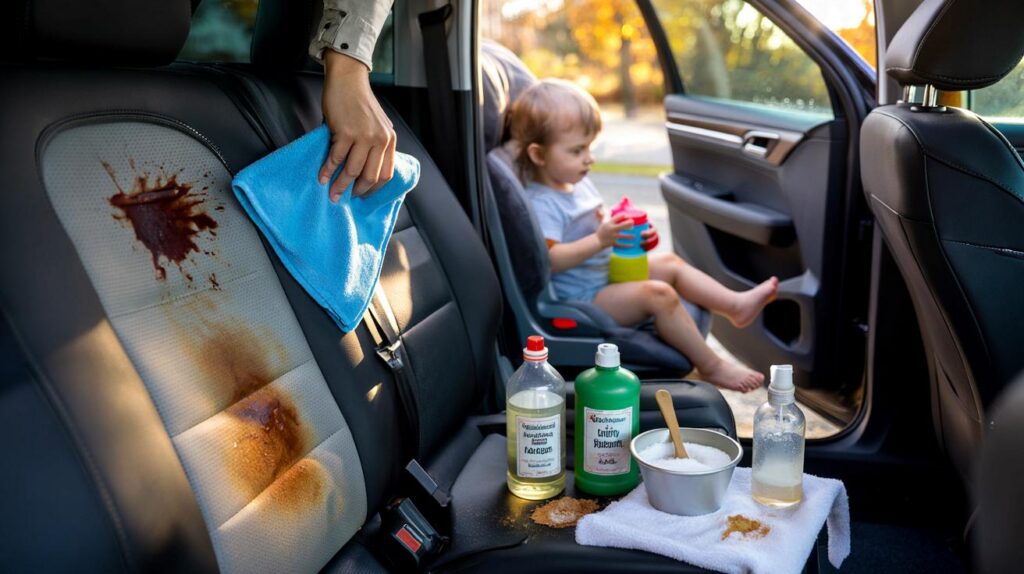
Rain, school runs and hot drinks meet fabric seats at the worst time of year, leaving marks that test your nerves.
With half-term journeys and damp mornings piling up, we trialled a low-cost cleaning routine that drivers say rescues stained fabric in minutes. It uses common cupboard staples, needs little elbow grease, and avoids the dreaded ring that follows heavy scrubbing.
Cold weather, sticky spills: why autumn stains your seats fast
Moist air softens fibres, so liquids penetrate faster and hang around longer. Sugary drinks glue themselves to threads. Mud carries oils that smear rather than lift. If you rub, you push pigment deeper and stretch the weave, which spreads the stain and leaves a halo.
That’s why the winning strategy focuses on gentle chemistry and controlled moisture. You dissolve, lift and blot. Then you rinse lightly and dry quickly so water doesn’t wick outward and mark the fabric.
The £1 three-part mix that beats rings
A simple, scent-neutral solution cleans most food, mud and sticky mishaps without bleaching or fraying. Use warm water to speed lift, white vinegar to cut minerals and deodorise, and a mild washing-up liquid to break surface tension and emulsify grime.
Use a 10:1:0.2 ratio: 500 ml warm water, 50 ml white vinegar, 1 level tablespoon mild washing-up liquid.
Measurements and method
- Vacuum crumbs and grit to stop particles scratching the fibres.
- Mix 500 ml warm water, 50 ml white vinegar and 1 level tablespoon mild washing-up liquid.
- Lightly dampen a clean microfibre. Do not soak it.
- Blot the stain from the outside edge towards the centre. Keep the surface only just moist.
- When colour transfer slows, switch to a cloth with plain water and blot again to rinse soap residue.
- Press a dry towel to lift leftover moisture. Finish with cool airflow (windows open or a hairdryer on cold).
Never rub. Always blot from the edge inwards, then rinse lightly and dry fast to prevent halos.
What we saw in testing
Cola, chocolate and ketchup lifted within 3–6 minutes. Mud and shoe scuffs needed a second pass. No watermark appeared when we kept the fabric only lightly damp and dried with moving air. The cabin odour improved because the vinegar neutralised stale smells rather than masking them.
Dry fixes when water isn’t wise
Some seats sit over foam that soaks up liquid. Others hide power seat motors or heating elements. In those cases, use low-moisture methods and let powders do the heavy lifting.
For oil and grease
Dust the mark with talc or fuller’s earth. Press gently and leave for 2–4 hours so the powder wicks oil out. Brush and vacuum. Repeat if the spot still looks darker.
For odours and damp
Shake bicarbonate of soda over the area, work it in with fingertips, and leave for at least an hour. Vacuum thoroughly. This reduces mustiness and helps with light tea or coffee ghosts after a spill.
For dyes and set-in stains
Use a small amount of plain white shaving foam. Spread a thin layer, wait 2–3 minutes, then dab away with a barely damp cloth. Test on a hidden seam first to check colourfastness.
Speed, cost and results: what you can expect
A 600 ml batch costs about £0.40–£0.80 depending on brands and will treat a bench seat. You can go from first blot to dry-to-touch in around 9–15 minutes per stain if you keep airflow moving. Booking a valet typically costs £40–£90 for interiors, which is great for deep cleans, but not necessary for everyday mishaps.
| Stain type | Go-to solution | Contact time | Action | Risk notes |
|---|---|---|---|---|
| Soft drinks, juice, chocolate | Warm water + vinegar + washing-up liquid | 1–3 minutes | Blot, rinse, dry | Keep moisture low to avoid rings |
| Mud, road grime | Same mix; lift solids first | 3–5 minutes | Vacuum, blot, rinse | Don’t rub grit into fibres |
| Oil, sunscreen, lipstick | Talc or fuller’s earth | 2–4 hours | Dust, wait, vacuum | Repeat cycles for deep spots |
| Colour transfer, ink traces | White shaving foam | 2–3 minutes | Thin layer, dab off | Patch test for colourfastness |
| Musty odours | Bicarbonate of soda | 1–12 hours | Work in, vacuum | Top up weekly under seats |
Prevention that actually works on school-run chaos
- Vacuum weekly, including the seat base seams where crumbs and grit collect.
- Keep a small kit in the boot: microfibres, a 500 ml spray bottle with the mix, talc and bicarbonate.
- Crack windows for five minutes after wet journeys to vent moisture and speed drying.
- Rotate removable mats and kick protectors; wash them before they shed dirt back onto seats.
- Consider a water-based fabric guard on high-wear bolsters once the seats are clean and dry.
Notes for child seats and airbags
Avoid soaking ISOFIX anchor zones; foam can trap damp and breed odours. If you spill inside a child seat, follow the manufacturer’s cleaning instructions—many forbid chemicals on harness webbing because detergents can weaken fibres. Keep liquids away from seat belt buckles and SRS-labelled panels, and never remove covers that affect airbag deployment without checking your manual.
What to do when stains won’t shift
If colour bleed occurs on first contact, stop and switch to dry methods. For heavy dye transfer or pen ink, you may need a pro-grade solvent designed for automotive fabric—choose one labelled safe for colourfast textiles and test quietly on a hidden area. Steam cleaners can help, but use brief passes and immediate towel blotting to keep moisture out of the foam.
Extra tips for winter road grime and pet mishaps
De-icing salt leaves pale tide marks. Dissolve them with a 1:10 white vinegar to warm water rinse, blot, then dry with moving air. For pet accidents, address odour first: apply bicarbonate after blotting up moisture, then use the main mix with two extra rinse passes to lift residues that can re-activate smells on damp days.
Set a simple weekend routine: 10 minutes to vacuum and spot-clean the worst marks, then a quick air-out on a short drive with heat on and windows cracked for the final minute. That rhythm stops minor stains from becoming permanent features and keeps resale value healthier during the cost-of-living squeeze.



Brilliant tip—used the 10:1:0.2 mix on a sticky cola patch and it vanished in 6 mins, no ring left. Thanks!
Nine minutes? Bold claim—any before/after pics?