
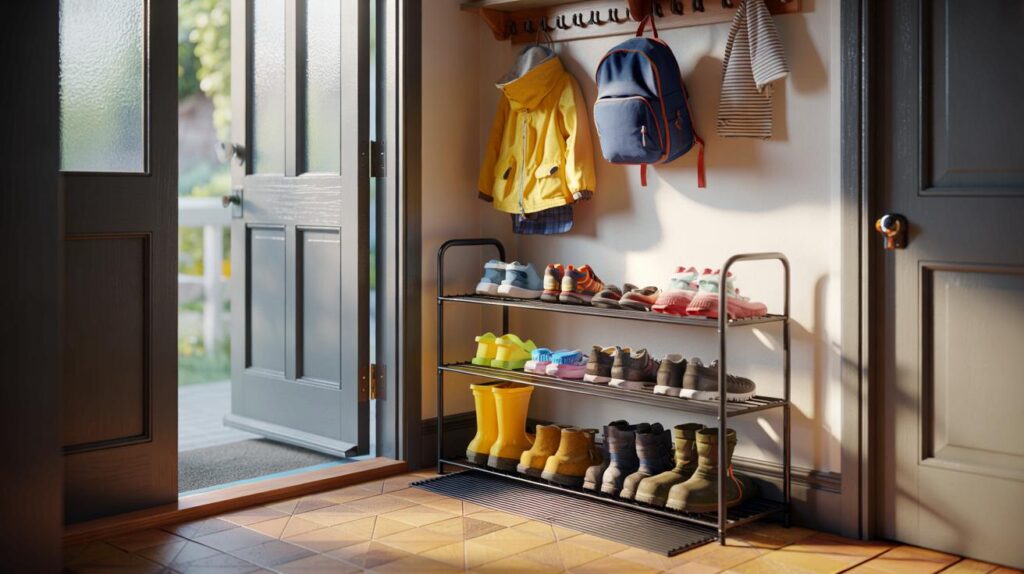
School runs, sodden trainers and winter boots are back, and the fight for floor space begins again. A small fix beckons.
Across Britain, parents and renters are turning to a budget metal rack that promises order without swallowing space or savings. It’s compact, dark and quietly practical, and it has one job: get every stray shoe off the floor and back under control.
What’s behind the £15 buzz
IKEA’s ÄLGANÄS shoe rack has ignited plenty of interest because it tackles two headaches at once: footprint and capacity. Homes with narrow hallways rarely have room for deep furniture, yet family life still demands somewhere to park school shoes, trainers and work boots. At £15, this rack offers a low-risk attempt at calm.
Price: £15. Capacity: up to 12 pairs. Size: 76 × 24 × 59 cm. Finish: powder‑coated black steel.
The form factor matters. At only 24 cm deep, it hugs the wall. It slips behind most doors, alongside radiators, or into porch corners where conventional cabinets won’t go. The black, powder‑coated frame reads as furniture rather than garage kit, so it blends with modern interiors and wipes clean after muddy dashes.
| Feature | Detail |
|---|---|
| RRP | £15 |
| Dimensions | 76 cm (W) × 24 cm (D) × 59 cm (H) |
| Stated capacity | Up to 12 pairs, shoe size dependent |
| Material | Powder‑coated steel |
| Shelf orientation | Horizontal or diagonal per tier |
| Finish colour | Black |
How the angled shelves save space
Unlike many budget racks, ÄLGANÄS lets you set each shelf either flat or on a tilt during assembly. That choice makes a difference. Slim trainers and school shoes sit neatly on horizontal tiers. Chunkier soles, high-tops and work boots often park better when the shelf is angled, because the tread nestles against the edge rather than pushing everything forward.
With the diagonal option, the small lip faces upwards, helping shoes stay put—a simple detail that prevents slide-offs near doorways. Mix orientations across the three tiers to suit your household’s sizes and styles.
Tip: place bulky footwear on the lowest tier, keep everyday pairs at hand height, and angle one shelf for boots.
Real‑world fit for small flats
At 76 cm wide, the rack matches many British skirting-to-skirting gaps. It tucks beside meters in rental porches, under coat pegs in Victorian terraces, and behind doors in student halls where every centimetre counts. In shared homes, the three-tier layout naturally splits by person or purpose—work, school and sport.
Assembly and sturdiness
Flat‑pack sceptics will breathe easier. The frame uses a straightforward screw system and simple cross rails. Most households will assemble it in under half an hour using the included hardware. Tighten all joints firmly before loading, and place it on a level surface to avoid wobble. If small children treat furniture like a climbing frame, position the unit against a wall and put heavier footwear on the bottom tier for stability.
- Lay out all parts and confirm you have six shelf pieces and the side frames.
- Decide which tiers you want angled before tightening screws fully.
- Tighten each corner gradually in a criss‑cross pattern to keep the frame square.
- Load the bottom tier first to check stability, then work upwards.
Why parents are talking about it
Families say the appeal is simple: it looks tidy, it doesn’t crowd the corridor, and it stops daily shoe hunts. When mornings run on a tight timetable, knowing that trainers live on the middle tier near the door cuts the scramble. Rental-friendly steel also suits households that can’t drill for cabinets.
For busy households, the payoff is routine: one place for every shoe, right by the exit, in a footprint that behaves.
Does it really hold 12 pairs?
Capacity depends on sizes and styles. Children’s shoes stack efficiently; adult boots eat space. A realistic breakdown for many homes is four adult pairs on the bottom, four mixed pairs on the middle, and four children’s pairs on the top. If your family wears broad trainers or thick-soled boots, expect closer to eight to ten pairs without crowding.
Space maths you can use
Measure your gap. If you have 80 cm of wall and a door swing that clears 26 cm, the rack fits. Allow a couple of centimetres for skirting depth and any radiator valves. If your hallway narrows near the door, place the rack on the wider side and angle the nearest shelf to keep toes from sticking out.
Daily time saved: a quick simulation
Say two adults and two children spend a combined three minutes per morning hunting for shoes. That’s 15 minutes on school days. Halve that with a fixed parking spot and you reclaim roughly 7–8 minutes a day, or 35–40 minutes a working week. Over a term, that’s several hours back at a cost lower than a takeaway.
Care and longevity
The powder‑coated finish shrugs off splashes and wipes clean with a damp cloth. After muddy weekends, remove grit with a soft brush before wiping to protect the coating. If the rack sits by a wet back door, place a narrow mat underneath to catch drips and protect the floor edge.
Before you buy
Check three things. First, the depth: 24 cm suits narrow halls, but broad boots may protrude; angle one shelf to compensate. Second, door clearance: ensure the door opens fully without scuffing toes. Third, household habits: if toddlers love to climb, keep heavier footwear down low and consider positioning the rack in a corner.
Measure 76 × 24 × 59 cm against your skirting and door arc. If it clears, it likely works.
Simple organising rules that keep it working
Assign each person a tier or side. Rotate out-of-season footwear to a cupboard. Keep a microfibre cloth or brush on the top rail for quick wipe-downs. Add a narrow tray beneath for wet shoes in winter. Every Sunday, reset: one minute puts pairs back together and ejects the odd single to the bedroom.
Who gains the most
Families with school-age children will appreciate the grab-and-go layout. Renters get rigid storage without drilling. Students can tuck it behind a door where a cabinet won’t fit. In compact homes, the visual calm of lined‑up shoes feels bigger than the price tag.
Worth considering alongside
If you own multiple pairs of tall boots, pair this rack with a slim boot hanger or keep one tier angled to cradle longer shafts. If sport dominates, dedicate a tier to training shoes and store pitch‑mud pairs on a washable mat by the back entrance, reserving the rack for cleaner daily wear. For families with pets, add stick‑on felt pads to the feet to protect floors and muffle scrapes as the rack moves during cleaning.
ÄLGANÄS won’t rebuild your hallway, but it offers a low-cost way to reclaim a corridor and set a daily rhythm. For £15, a compact frame that swallows up to 12 pairs and wipes clean after a muddy Sunday league feels like a smart, low‑drama upgrade to the front door routine.



Picked this up yesterday for £15—fits behind our door like a glove 🙂 The angled shelf trick actually keeps my kid’s high‑tops from sliding off. Fingers crossed it survives the soggy winter!