
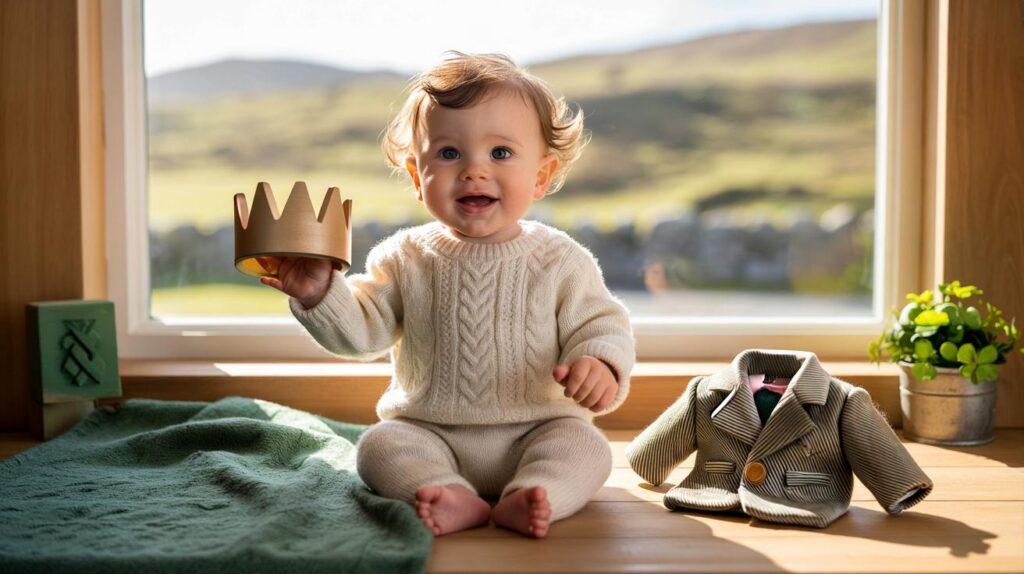
A wave of parents is quietly rethinking baby-name shortlists, drawn to something warm, storied and surprisingly modern.
In conversations at antenatal classes and on pramside chats, one Irish choice keeps surfacing. It carries heritage, reads fresh, and fits a newborn as neatly as a school blazer. The name is Tiernan.
Why parents are whispering about Tiernan
Tiernan threads a rare needle. It feels friendly at first sound, yet it wears a subtle gravitas. You can picture it on a toddler’s nursery peg and on a business card decades later. That balance attracts families who want character without fuss.
For many, the pull starts with its meaning. Tiernan comes from the Old Irish Tighearnán, a diminutive of tighearna, meaning lord or master. Most English speakers render it as “little lord”. The sense of dignity is baked in, yet the tone stays gentle.
Tiernan means “little lord” from the Irish Tighearnán—tying warmth to quiet authority in a single, easy name.
What Tiernan means, and why it still sounds fresh
Names with weight often risk sounding stiff. Tiernan avoids that trap. The two-syllable rhythm has a soft rise and fall. The central vowel stretches—“TEER-nən”—which gives it an open, approachable feel. It sits comfortably beside favourites like Finley or Cillian while keeping a distinct profile.
The history adds texture. The root tighearna signalled leadership in early Irish society, where chiefs earned respect through fairness and courage. The tradition echoes in early myth and lore, including stories of rulers such as Tigernmas. You get a name that nods to old stones and story fires without feeling trapped in a museum.
Three stats you can actually use
- 2 syllables: easy for toddlers to say and for teachers to call across a busy playground.
- 7 letters: long enough for presence on the page, short enough for forms, tags and monograms.
- 1 clear meaning: no tangled interpretations, just a straightforward link to leadership and poise.
Seven reasons parents pick Tiernan
- It’s recognisable yet uncommon, reducing duplicate names in a class register.
- The meaning signals confidence without sounding boastful.
- Pronunciation is intuitive for English speakers, with no tricky clusters.
- It pairs well with vintage or modern middle names.
- It offers simple nicknames—T, Tier, Nan—without forcing them.
- It travels across the UK and Ireland while keeping its roots visible.
- It works at every life stage, from cot to conference room.
Looking for heritage without the herd? Tiernan gives you cultural depth and day‑to‑day ease in the same breath.
How to say it and spell it
Pronunciation at a glance
Say “TEER-nən” (rhymes with “ear” + “nun”). Many families lean into the gentle second syllable, which softens the finish.
Variants and near neighbours
| Aspect | Tiernan | Why it matters |
|---|---|---|
| Origin | Irish, from Tighearnán | Signals Gaelic heritage with a clean English fit |
| Meaning | “Little lord” / “noble” | Projects calm leadership and courtesy |
| Pronunciation | TEER-nən | Easy to teach, easy to remember |
| Common mix‑ups | Tierney, Tynan, Ciaran | Close relatives; check you like the distinctions |
| Nicknames | T, Tier, Nan | Options without losing the name’s shape |
History with a heartbeat
Beyond etymology, Tiernan taps into a storytelling vein. In early Ireland, lordship meant more than power. It suggested stewardship of people and place. Songs and tales often framed rulers by their fairness as much as their feats. That nuance sits quietly inside the name. Parents notice. They hear softness, not swagger.
At the same time, the name sidesteps the dated sound that can cling to titles. There’s movement in the vowel, and the consonants never clatter. If you like names that flow—think gentle starts, tidy endings—Tiernan fits the brief without echoing half the playground.
Popularity without pressure
Tiernan does not crowd the charts in most English‑speaking regions. Many parents see that as a gift. You get a name people can pronounce on first sight, but you reduce the chance of three children answering to it at the same time. For families chasing a sweet spot—familiar, not flooded—Tiernan lands well.
Familiar to the ear, rare on the roll: Tiernan keeps your child’s name clear without making it obscure.
Middle names, sibling sets and everyday fit
Middle names that balance
Short middle names sharpen Tiernan’s line: Tiernan Jude, Tiernan George, Tiernan James. If you prefer a lyrical pair, stretch it with Tiernan Elias or Tiernan Aurelius. The cadence stays smooth because the first name does the heavy lifting early.
Sibling names that sit well
- For brothers: Finley, Rowan, Ellis, Cillian, Arlo.
- For sisters: Aoife, Maeve, Orla, Isla, Niamh.
These sets share tone—modern, melodic, quietly rooted—without repeating sounds.
Practical notes before you commit
Run the initials test with your surname to avoid awkward letter combinations. Say the full name aloud at different speeds. You should feel the rhythm hold. If your family has Irish ties, you can nod to the original spelling Tighearnán on a framed print while keeping Tiernan for daily use.
Watch for mix‑ups with Tierney or Ciaran in rushed settings. The fix is simple: a calm repeat, “TEER-nən, like ‘ear’,” usually settles it. If you like built‑in pet names, try Tier for sports kits and Nani at home; each preserves the core sound.
Final pointers for name planners
Test the name in real‑life snippets: label a dummy lunchbox, imagine it in a storybook, write it at the top of a CV. This quick simulation highlights how the seven letters sit in different contexts. The name keeps its shape and grace across all three.
If you want extra Irish texture, consider pairing Tiernan with a Gaelic middle or choosing a Welsh or Scots sibling name for a Celtic thread. If you want simplicity, couple it with a one‑syllable middle to add snap. Either way, you carry forward a meaning—“little lord”—that whispers leadership rather than shouting it. That quiet confidence is what many parents are chasing this year.



Really appreciate this breakdown—exactly the kind of practical detail (2 syllables, 7 letters, clear meaning) that helps us picture the name on labels and forms. Tiernan feels friendly but not flimsy; that ‘quiet authority’ line nailed it. We want heritage without the herd, and this seems to fit. Only hang‑up: will teachers confuse it with Tierney at first roll‑call? Any real‑life expereinces? Also leaning to one‑syllable middles—Tiernan Jude or Tiernan George—definately open to other ideas.