
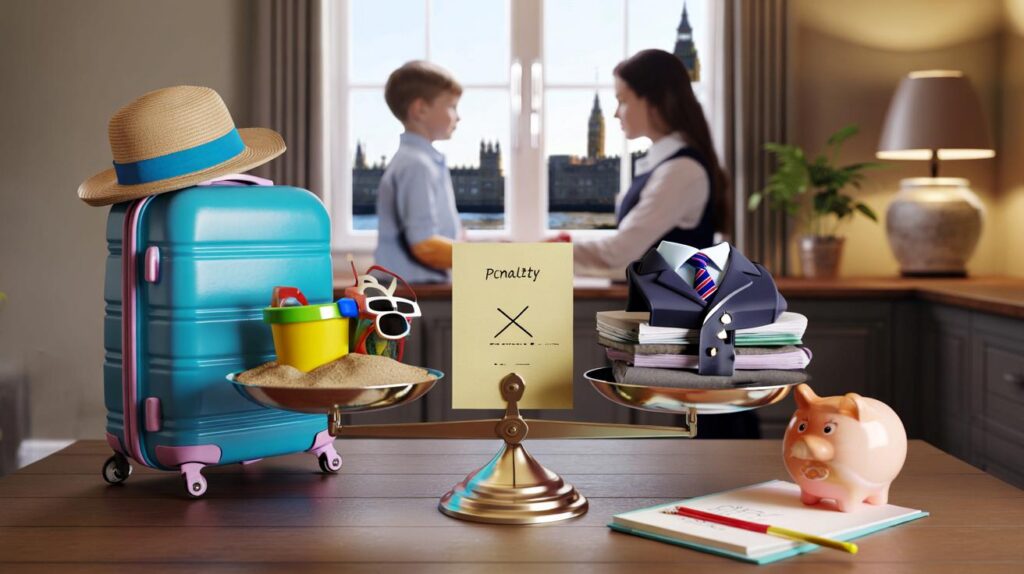
Families juggling school rules and holiday prices woke to another bruising debate, with emotions high and more questions than answers.
After a Westminster Hall debate triggered by 181,598 signatures, Labour has opted not to scrap fines for term-time holidays. Ministers restated that attendance drives achievement and said there will be no blanket right to 10 fine‑free days a year. Campaigners call the policy unfair, especially for low‑income and SEND households. So what actually changes for you now?
What Labour decided
Labour backed the line set out by the Department for Education: no entitlement to absence and no overhaul of penalties. Petitions debates are a sounding board, not a law‑making ritual, and this one ends without a bill or a new rulebook. The current framework remains the baseline for schools and councils.
Nothing in law changes today: attendance stays the priority and fixed‑penalty notices remain at £80, rising to £160 after 21 days.
Education Select Committee chair Helen Hayes MP accepted family pressures but argued against a standard allowance of days off. She warned that creating an entitlement would muddy attendance expectations at a time when schools are trying to rebuild habits after years of disruption.
How we got here
Parent campaigner Natalie Elliott’s petition rocketed past the 100,000 threshold needed for a debate, closing on 181,598 signatures. MPs met on Monday 27 October in Westminster Hall. Keighley and Ilkley MP Robbie Moore thanked families for forcing the issue onto the parliamentary agenda and described parents as being “criminalised” for trying to spend time together. He singled out the crunch for families with children who have special educational needs and disabilities, for whom quieter off‑peak travel can be a vital adjustment rather than a luxury.
Parents’ case: cost, choice and SEND
Across parties, MPs read out eye‑watering price swings for short breaks. One example cited a four‑night stay jumping from £599 in May to £1,349 in half‑term week — a 125% leap. Several said the maths makes the fine look like a predictable fee rather than a deterrent, particularly for larger families.
- Calls for a limited allowance of fine‑free days to ease pressure and reduce conflict with schools.
- Arguments that off‑peak trips can support children’s wellbeing, sensory needs and family bonds.
- Complaints about uneven enforcement between councils and even between schools on the same street.
- Ideas to test a five‑term year to spread demand and temper peak‑season prices.
- Demands for scrutiny of “predatory” travel pricing aimed at school holidays.
Committee’s case: attendance and outcomes
Helen Hayes pushed a different message: routine matters and absence erodes it. Government figures cited by MPs indicate that losing around 10 days in a year can lower the chances of meeting expected standards in key subjects by up to a quarter. She also questioned the logic of the current fine levels, noting that the penalty can be cheaper than the holiday price rise, yet she resisted an allowance that would signal that time off is normal.
Officials say missing 10 school days a year can cut the odds of meeting expected standards by up to 25%.
What happens now
Petitions Committee debates capture the public mood and force a ministerial response, but they do not write statutes. The Department for Education has already replied in writing and is not planning to introduce a right to fine‑free absences. MPs can keep the heat on through questions, committee inquiries or a Private Member’s Bill, and campaigners can relaunch the petition if support swells.
No law change automatically follows a petitions debate, and the existing attendance framework continues.
The rules that still apply
| Rule | Where it stands in England |
|---|---|
| Fixed‑penalty notice | £80 if paid within 21 days; £160 after 21 days |
| Authorised leave | Only in “exceptional circumstances” at the headteacher’s discretion |
| Enforcement | Local authorities follow a national framework designed to improve consistency |
| Term dates | Some academies and councils can vary dates; wider reform needs government approval |
What this means for your family
Unauthorised absence can still lead to a fixed‑penalty notice. Notices are issued for specific periods of absence; households can receive more than one notice if there are multiple children or repeat instances. Headteachers can authorise leave only in exceptional cases, such as a close family funeral or significant life event, but they have discretion to weigh evidence.
Many parents do the holiday maths. Consider the example raised by MPs: a trip rising from £599 to £1,349 in half‑term week. The £750 difference dwarfs an £80 fine. That calculation explains why penalties alone struggle to shift behaviour, and it is exactly why some MPs want travel pricing probed or school calendars redesigned. Until ministers move, families face the same trade‑offs.
Before you book: practical steps
- Speak to the school early. Explain reasons, dates and any SEND considerations that make off‑peak travel calmer or safer.
- Provide evidence where relevant, such as clinical letters outlining sensory or anxiety triggers.
- Offer learning plans for the trip: reading, local history visits, language practice, or journalling to show educational value.
- Ask about alternatives. Some multi‑academy trusts can vary inset days or operate flexible arrangements around major family events.
- Check your council’s guidance on penalty notices and appeals, and keep records of correspondence.
The wider policy questions
This row now sits on two tracks. The first is attendance: schools want consistent routines after disruption, and ministers argue that strong habits improve grades. The second is affordability: families face price surges they cannot ignore, and many resent feeling punished for seeking a cheaper week away. MPs from both benches floated structural fixes — reshaping term dates, regulating peak‑season pricing, or refining fines so they work as intended rather than as a predictable fee.
The Education Select Committee is already studying attendance. It could call evidence on price volatility, SEND impacts and enforcement variation, and it might recommend targeted pilots. A backbench bill could surface, though time is tight and government support would be decisive. Campaigners can regroup with fresh data on how fines fall across income groups and how often notices escalate to court action.
Key dates and figures to keep in mind
- Debate held: Monday 27 October, Westminster Hall.
- Public backing: 181,598 signatures on the petition.
- Penalty levels: £80 within 21 days; £160 after 21 days.
- Impact cited: up to a quarter lower chance of meeting expected standards with 10 missed days.
- Price swing example: four nights jumping from £599 to £1,349 in school half‑term.
Extra context for parents across the UK
Education is devolved. Rules and terminology differ in Scotland, Wales and Northern Ireland, particularly around how headteachers authorise leave and how penalties are administered. If you live outside England, check your nation’s guidance and the local authority’s code of conduct before making plans.
If your child has SEND, ask about reasonable adjustments tied to attendance. Some schools can agree tailored timetables, sensory‑friendly transitions, or phased returns after travel. Document needs clearly and propose practical steps so that learning continues smoothly before and after any time away.



So attendance is king, yet the fine stays at £80/£160 when the half‑term price jump is £750? How exactly is that meant to deter anyonee?