
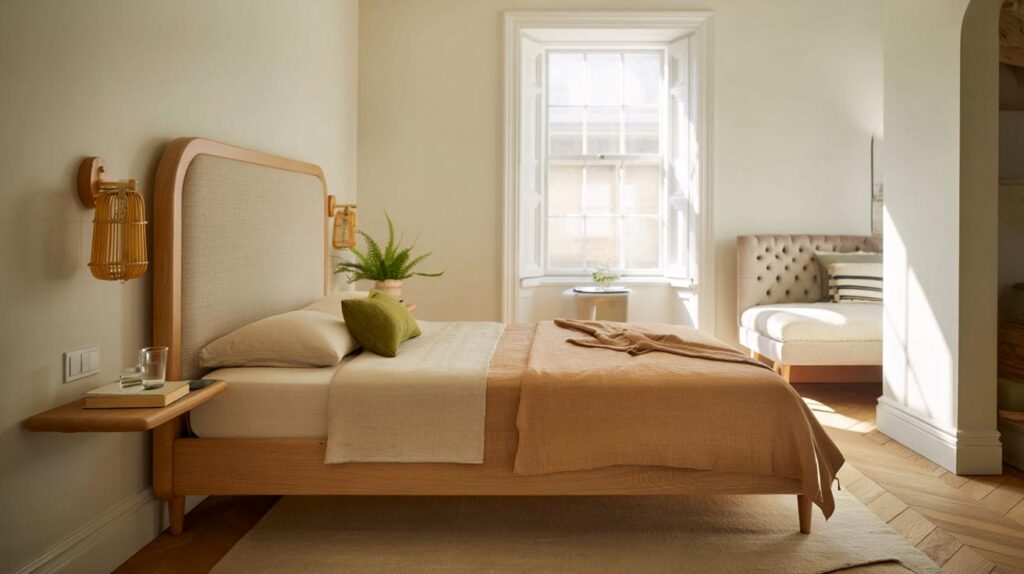
A soft shift is happening in bedrooms this season, where texture, light and quieter lines are taking the spotlight.
For years, the tufted, hotel-style headboard signalled comfort and polish. Now a calmer detail is taking over: slim timber and natural-fabric panels that lend warmth without weight. Designers say this move suits tighter budgets, smaller rooms and low-fuss routines, while keeping the bed as a true focal point.
Why tufted headboards are losing steam
Tufted upholstery has presence, but it adds visual bulk in compact British bedrooms. Deep padding can shadow a wall, soak up daylight and fight with the quieter palettes many people favour. Plush fabrics trap dust and are harder to clean, which frustrates allergy-prone households. The look also skews formal, which jars with relaxed, layered schemes built around neutral paint, pale timber and tactile linens.
What once read as “suite chic” now feels heavy. People want breathable materials, easy care and a calm, lighter silhouette.
There is also a cost and practicality angle. Heavily upholstered pieces often command higher prices and can date quickly when trends shift. Replacement covers are rare, and repairs to buttons or tufting add expense. By contrast, simple wood or linen panels adapt to many styles, making them a safer long-term choice for renters and owners alike.
What is replacing them
Two families of materials now lead the headboard conversation: pale timber and natural textiles. Both look understated, both age gracefully, and both can be swapped or updated without major work.
Materials that make sense
- Oiled oak, ash, beech or acacia slats for a warm, Scandi-influenced profile.
- Flat timber panels with rounded corners for a soft, modern line.
- Pre-washed linen in natural, bone or clay tones for relaxed drape and texture.
- Heavy cotton duck, wool felt or woven jute for an artisanal feel and depth.
- Reclaimed boards sealed with plant-based oil for character and a smaller footprint.
Entry-level options start around £99 for narrow panels or basic wall-hung textiles. Crafted timber or oversized designs rise with width, finish and detailing. Because the forms are simpler, even premium versions look restrained rather than showy.
| Feature | Tufted headboard | Wood/linen panel |
|---|---|---|
| Visual weight | High; protrudes and dominates | Low to medium; slimmer profile |
| Dust and allergens | Holds dust in tufting and nap | Smoother surfaces; easier to clean |
| Maintenance | Vacuuming, spot cleaning, rebuttoning | Wipe down, light vacuum; removable fabric panels |
| Cost range | Mid to high for deep upholstery | From ~£99; scales with size and craft |
| Installation | Bulky; brackets or floor-standing | Wall-hung, cleat-fixed or freestanding slats |
| Longevity | Prone to sagging and fabric wear | Refinishable timber; replaceable textiles |
| Acoustics | Good absorption | Good with fabric; moderate with timber |
7 reasons you’ll switch now
Choose materials that breathe, reflect daylight and feel good to the touch. The bed becomes quieter, and sleep follows.
How to try the look for less
- Fix a washed-linen drop to a slim curtain pole above the mattress line; hem width at mattress size plus 10–20 cm.
- Hang a flat-woven cotton or jute rug as a graphic panel; use evenly spaced hooks and a timber batten for support.
- Screw a reclaimed board to French cleats for an easy, renter-friendly mount; round the corners for a softer profile.
- Make a slatted headboard from 18 mm beech dowels and a hidden rail; oil with hardwax for a satin feel.
- Add wall lights in rattan or woven fibre either side; centre them 60–70 cm above the mattress for reading.
Headboard height matters. Aim for 70–110 cm above the mattress for balance; go higher only if ceilings are generous. Keep the width to mattress width plus a subtle margin. Always choose fixings based on wall type—plasterboard anchors, masonry plugs or timber studs—and check load ratings.
What designers are specifying this season
Designers are steering clients to lighter, tactile schemes that feel grounded and personal. That often means blond timber paired with a single, textured fabric and restrained metal accents. High-street autumn–winter ranges mirror this shift with more FSC-labelled woods, washed linen sets and modular panels that clip or cleat to the wall.
The palette designers reach for
- Soft terracotta, clay and buff neutrals for warmth without glare.
- Moss, olive and forest green to calm the eye and link to timber grain.
- Mellow mustard, wheat and oat for low-contrast layering.
- Bone, chalk and putty for crisp edges against wood tones.
Care, safety and longevity tips
Oil unfinished timber with a plant-based hardwax oil to resist stains while keeping a natural feel. For linen and cotton, steam rather than heavy wash to retain texture, and choose removable panels where possible. Vacuum fabrics regularly with a soft brush to keep dust at bay. If you share walls, add a thin felt layer behind a timber panel to soften sound without adding bulk.
Check labels for independently certified fibres and responsibly sourced wood. For homes with young children, round edges to a minimum 10 mm radius and avoid protrusions that can snag. Keep lighting cables external and clipped if you fix bedside lights through a panel. Where candles or incense are used, maintain clear distances from textiles and treat fabrics with a fire-retardant spray that is compatible with natural fibres.
Design ideas to widen the brief
Use a headboard to zone a small studio or box room. Extend a panel beyond the bed to become a shallow shelf or to carry sockets and switched wall lights. In period homes, a low, wide timber band can protect plaster from wear while introducing a horizontal line that calms intricate mouldings. In rentals, a hinged screen upholstered in heavy linen stands behind the bed without touching the wall, and folds away on moving day.
If you enjoy pattern, keep the headboard quiet and shift interest to cushions and throws. Two square European pillows in a contrasting weave add scale against simple panels. For sound absorption on busy streets, combine a lightweight timber frame with a layer of cork and a linen cover; the assembly remains slim yet effective.



This is exactly the airy look my tiny room needed—slim ash slats are definately on my weekend DIY list :). Any tips to keep linen from sagging after a few months?
Honest question: tufted heads absorb sound; won’t hard timber panels make late‑night reads feel echoey? The table mentions “moderate” acoustics—any real dB data or felt‑backing thickness recs?