
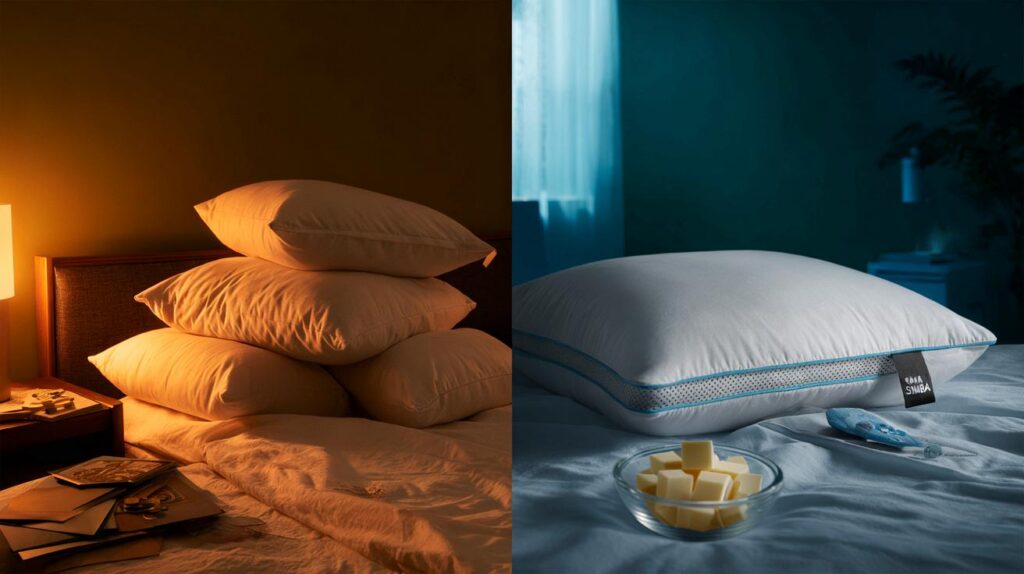
From hot summer nights to dull morning neck aches, British households face sleep woes that often start with their pillow.
As the cost of restless nights mounts, one pillow keeps cropping up in real-world reviews and bedroom chats: Simba’s Hybrid. The price looks steep, yet the promise of cooler nights and adjustable height has people reconsidering those supermarket multipacks.
Why this pillow is making people talk
The Simba Hybrid Pillow sits in a crowded market, but the numbers stand out. It costs £87.20. It carries a rating of 4.5 out of 5 from nearly 35,000 reviews. It has picked up 16 industry awards. Those figures matter because they point to consistency, not a flash trend.
The headline stats: £87.20, 4.5/5 from almost 35,000 ratings, and 16 awards for design and comfort.
Behind those figures lies a mix of cooling fabric, clever airflow, and an adjustable core. That last piece is the tipping point for many sleepers who struggle with height. One pillow sits too low. Two create a cricked neck. The Hybrid aims to solve that gap by letting you set the loft.
How the cooling design works
The outer cover is cotton. Natural fibres breathe, so heat and humidity move away rather than linger. Along one face, a specialist Stratos layer (inspired by NASA thermal management) helps draw warmth from your skin and spread it out. Around the edges, a mesh band improves airflow, reducing that clammy, stuck-to-the-pillow feeling.
The cover unzips and goes in the wash, which helps with hygiene and allergies. A washable cover also means you can use a protector without turning the pillow into a sweat trap. Cotton plus mesh is a simple combination, but it supports the cooling layer by keeping air circulating.
On hot nights, the cool-side-first ritual fades. The fabric system aims to regulate temperature so you stop flipping.
What sits inside the Simba Hybrid
Inside the casing sits a mix of small foam cubes—often called nanocubes. Because they are discrete pieces, air can move between them more freely than through a solid block. They also shift as you shift, which helps maintain alignment when you roll from back to side.
You can remove or add cubes to set your preferred height. That matters for neck alignment. If the pillow sits too high, your head tilts. If it collapses, your neck bends the other way. With cubes, you tune the depth rather than accept a one-size compromise.
Surrounding the cube pouch is a softer, recycled fibre layer made from repurposed plastic bottles. It adds a little plushness, softens the feel under a pillowcase, and supports airflow.
Key features at a glance
- Price: £87.20 at the time of writing
- Rating: 4.5/5 from nearly 35,000 user reviews
- Awards: 16 industry prizes for comfort and design
- Cover: breathable cotton with mesh border, machine washable
- Cooling: Stratos layer inspired by NASA thermal tech
- Core: adjustable foam nanocubes for custom loft
- Plush layer: recycled fibre for added softness and airflow
Who will benefit most
Side sleepers
Side sleepers usually need more height to fill the space between ear and shoulder. The Hybrid’s adjustable cubes help you build that support without adding a second pillow. Aim for a level head and a straight line from neck to spine.
Back sleepers
Back sleepers tend to prefer a medium loft. Remove a handful of cubes so your chin doesn’t tuck toward your chest. The goal is a neutral position with minimal curve in the neck.
Front sleepers
Front sleepers need a lower profile to keep the neck from twisting. Take out more cubes to reduce height and keep breathing easy. Consider a soft protector to further flatten the feel.
| Sleeper type | Target head–neck alignment | Typical cube fill |
|---|---|---|
| Side | Head level with spine | High to medium-high |
| Back | Neck neutral, chin not tucked | Medium |
| Front | Neck neutral, low tilt | Low |
These settings are a starting point. Everyone’s shoulders and mattress firmness differ. Adjust by handfuls, then sleep a few nights before changing again.
Price, value and the numbers that matter
Sticker shock puts many shoppers off. Yet the yearly cost of budget pillows mounts. Many multipacks flatten quickly, so people replace them more than once a year.
A simple scenario: four £12.50 pillows replaced twice per year equals £100 annually—more than a single Hybrid.
That cost comparison ignores back-and-forth trips, landfill waste, and disrupted sleep. The Hybrid asks for more upfront, but its adjustable core extends usable life. If the loft dips, add back some cubes you stored. When the cover looks tired, wash it rather than bin the pillow.
Care, lifespan and hygiene
- Air the pillow weekly to let any moisture evaporate.
- Use a pillow protector to cut down on washing the outer cover.
- If support feels off, open the zip and adjust cubes by a small amount.
- Fluff the pillow each morning to redistribute fill and maintain airflow.
- Rotate the pillow so both sides handle equal use across seasons.
The cube system rewards occasional maintenance. Small tweaks can keep your neck aligned as your mattress softens or as your sleep position changes through the year.
Potential drawbacks and what to check
Not everyone enjoys a modular fill. Some prefer the uniform feel of a single-piece foam or the sink of feather and down. The Hybrid also asks for a little setup time while you find the right height. Keep the spare cubes in a bag so you can fine-tune later.
Measure your pillowcases. Adjustable pillows can sit taller than standard fills even at a lower loft. A deep or stretchy case keeps the shape tidy and stops bunching at the corners.
How it compares with common alternatives
One-piece memory foam offers stable support but runs warmer because air cannot move through the core. Latex feels buoyant and springy, with better airflow than solid memory foam, but it is not height-adjustable. Feather and down feel plush and compressible, yet they need frequent fluffing and can trigger allergies.
The Hybrid sits between these choices. It gives a blended feel: shapeable like a traditional pillow, more supportive than loose fibre, and cooler than a solid block. The recycled-fibre layer softens the top without masking support from the cubes.
Before you buy: a quick self-check
- Time your sleep: how many minutes do you spend re-fluffing or flipping a pillow each night?
- Neck test: when you wake, does your neck feel stiff or does turning the head feel tight?
- Heat check: do you flip the pillow for a cool spot more than once per night?
- Allergy profile: do you react to down or dust mites? A washable cover helps manage both.
- Mattress firmness: a softer mattress sinks the shoulder; you may need fewer cubes as a side sleeper.
Practical tips to dial in your fit
Do a shoulder-gap test against a wall before bed. Stand with your back to the wall, shoulders relaxed. Measure the space from the outer shoulder to your ear line. That rough figure helps decide how much loft you need when lying on your side. Start high, then remove a handful of cubes at a time until your head sits level.
If you wake with a dull headache, your loft may sit too high. If you feel a pinch low in the neck, add cubes. For mixed sleepers, set a medium loft and let the cubes’ movement do the rest as you roll in the night.
The bottom line for restless sleepers
People who run hot, swap positions, or battle morning neck pain stand to gain the most. The numbers show broad approval—ratings, awards, and volume of reviews—yet the value lies in the adjustability. Instead of hoarding mismatched pillows, you tune one. If your needs shift, the pillow shifts with you.
Thousands of owners rate it highly for cooling and custom height. The design focuses on fit, not fluff.
If you track sleep on a wearable, test the Hybrid for two weeks. Look for fewer wake events and less time spent adjusting your position. A small change in alignment can shave minutes off those nightly wake-ups and hand you calmer mornings.



Did the maths after yet another cricked neck: four £12.50 pillows replaced twice a year is £100, plus landfill guilt. I bit on the Simba Hybrid and, after fiddling with the cubes for a week, my side-to-back shifts stopped waking me. Cooler than my memory foam slab, washable cover is handy, and I can add cubes if it flattens. Price hurt up front, but I’m definitley not “loosing” 2 hours to pillow flipping anymore.