
Viewers keep returning to a modern detective classic, praising its pace, wit and character chemistry years after broadcast.
Built from Sir Arthur Conan Doyle’s stories yet wired for smartphones and search history, the BBC’s Sherlock became a rare cultural event. Across four series and a Victorian one-off, it turned a Victorian sleuth into a global, contemporary obsession.
Why a 19th-century sleuth still rules 21st-century TV
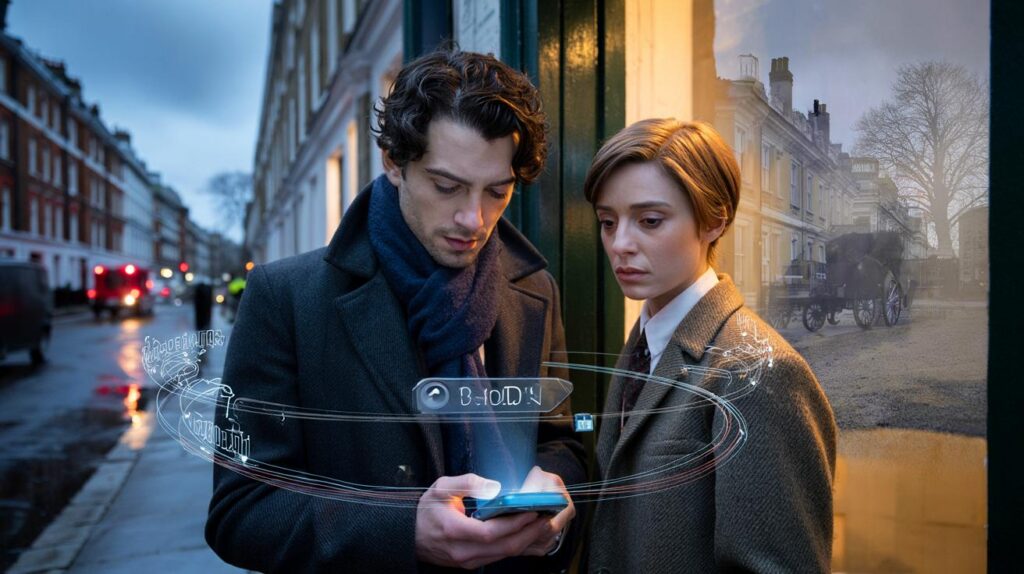
Sherlock spliced Doyle’s forensic brain with present-day tools. Texts flashed on screen. GPS trails replaced hansom cabs. A blog stood in for Strand Magazine. The result felt brisk, conversational and oddly intimate.
Creators Steven Moffat and Mark Gatiss set the pace with feature-length episodes that moved like heist films. Directors cut through exposition with sharp visual grammar. The craft lowered the barrier for newcomers while rewarding devotees with easter eggs from the canon.
Production split between Cardiff and London to keep scale high and costs lean. North Gower Street doubled for 221B Baker Street, giving the show a recognisable doorstep fans could visit. The BBC broadcast it at home, while PBS aired it in the United States under its Masterpiece banner.
Thirteen feature-length instalments, four BAFTA-winning years, one time-bending Victorian special: a compact, precise run that still sparks debate.
The cast and characters who hooked millions
Benedict Cumberbatch delivered a restless, hyper-verbal Holmes who mapped patterns at speed and shrugged at small talk. Martin Freeman’s John Watson grounded the partnership, a former army doctor who understood trauma and asked the questions viewers wanted answered. Their dynamic carried the series.
Andrew Scott’s Moriarty arrived as a riddle with a grin, a nemesis who baited Holmes with puzzles and televised theatre. Mark Gatiss’s Mycroft, Louise Brealey’s Molly Hooper and Rupert Graves’s Inspector Lestrade each added texture, from statecraft to lab benches to squad cars. Together, they built a world where deduction felt like a sport.
- 13 episodes in total, mostly around 90 minutes each.
- 4 series between 2010 and 2017, plus a Victorian special.
- 2 core filming hubs: Cardiff for scale, London for street-level iconography.
- 180+ countries licensed the show at its peak reach.
- Multiple BAFTAs, Emmys and a Peabody recognised its writing, acting and production.
| Series | Year | Episodes | Setting |
|---|---|---|---|
| Series 1 | 2010 | 3 | Modern London |
| Series 2 | 2012 | 3 | Modern London |
| Series 3 | 2014 | 3 | Modern London |
| Special | 2016 | 1 | Victorian London |
| Series 4 | 2017 | 3 | Modern London |
How it spread from Baker Street to the world
Short runs made each launch feel like an event. British viewers built ritual around three-night bursts. American audiences discovered it via PBS’s Masterpiece, where prestige drama has a loyal base. International buyers took the format everywhere from Europe to Asia, creating a global rewatch culture.
Memes and fan theories carried episodes between airings. The show’s visual language—text overlays, mind palaces, coat collars up against the wind—traveled well on social platforms. That word-of-mouth, multiplied across 180+ territories, kept it in circulation far beyond its broadcast dates.
All four series and the one-off special stream in the UK on BBC iPlayer, placing every case a click away.
What fans still argue about
The first three series won near-universal admiration for their energy and clarity. Many viewers loved the elegance of “A Study in Pink,” the swagger of “A Scandal in Belgravia” and the dread threaded through the Reichenbach storyline. Those early hours felt playful but precise.
The fourth series divided the audience. Some praised its ambition and darker tone. Others found the plotting tangled and the emotional stakes overstretched. That debate persists, which says something about how attached people became to these characters and how closely they watched each twist.
New viewers’ guide: where to start and what to watch for
Begin at the start. The opening episode resets Holmes and Watson for the smartphone age and gives their friendship space to breathe. Watch how text messages appear on screen without cutting away from faces. Notice how deductions land as quick bursts rather than monologues.
If time is short, sample one from each phase: the pilot-era thrill of Series 1 Episode 1, a mid-run high from Series 2, the reunion energy of Series 3, the Victorian curio of the special, and one from Series 4 to see where the team pushed stylistically.
Families should expect crime-scene detail, moments of peril and psychological tension. Teenagers who enjoy intricate puzzles often click with it. Younger children may need guidance or a later start time.
The bigger picture: why book-to-screen reinventions still work
Adaptations thrive when they respect source mechanics and change the delivery system. Sherlock kept the riddle-solving engine and swapped telegrams for texts, fog for CCTV and carriage rides for chase cams. That shift allowed modern anxieties—data trails, surveillance, celebrity—to sit alongside Conan Doyle’s obsession with evidence.
It also showed the value of brevity. Thirteen substantial episodes encouraged careful rewatching and lively post-episode forensic chats. Writers could build arcs without filler. Actors could treat each story as a mini-film, with room for character beats between revelations.
Short, premium runs create urgency; character chemistry turns that urgency into longevity.
Bonus context for the curious
Reading a few of Doyle’s short stories in parallel adds texture. “A Scandal in Bohemia,” “The Adventure of the Speckled Band” and “The Final Problem” sit behind some of the show’s standout hours, and the differences reveal the writers’ tactics. Compare scene order, motive changes and how clues are planted on screen.
Rewatchers can try a simple exercise: pause when Holmes states a deduction and write the evidence line on a notepad. Track how many times the episode fairly showed that clue earlier. This turns passive viewing into an engaging game and exposes the series’ penchant for planting payoffs several scenes ahead.
Practical note for UK viewers: iPlayer allows downloads on mobile devices for offline viewing, useful for commutes. Episodes average feature length, so plan battery and storage accordingly. Subtitles help with the rapid-fire dialogue and the show’s fondness for layered sound design.
Collectors may look for Blu-ray sets that include commentaries and featurettes on locations and props. Filming spots around North Gower Street remain popular for photos, though residents appreciate quiet hours, so timing a visit on weekday mornings keeps the experience considerate for everyone.



Count me in! Sherlock’s 90-minute cases feel like mini-films, and the text-on-screen trick still slaps. Rewatching “A Scandal in Belgravia” never gets old 🙂
Greatest ever? Bold claim. Series 4 lost me—the ambition was there, but the emotional stakes felt overcooked. Still, 13 episodes across 180+ countries is a flex.