
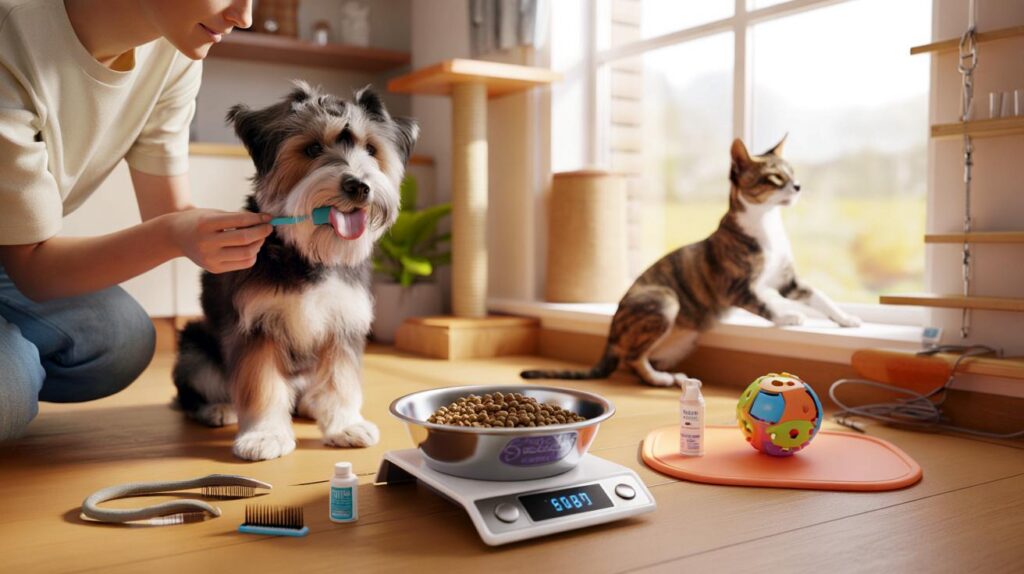
The waiting room smells faintly of disinfectant and wet fur. A terrier pants, a tabby blinks from a carrier, and everyone pretends not to hear the labrador whining by the door. A vet emerges, kneels to the terrier’s eye level, and in two minutes spots three problems the owner never mentioned: teeth, weight, and a mystery scratch behind the ear. We’ve all had that moment when a professional sees our life more clearly than we do. The advice isn’t glamorous. It’s small, repetitive, almost boring. Yet this is where the long, quiet health of dogs and cats is won. I watch the owner nod, then glance at the treat jar with a guilty smile. The vet smiles back and talks about food, walks, and parasites, no judgement, just rhythm. Every healthy year starts in ordinary places—kitchen scales, toothbrushes, sniffy pavements, sunny window ledges, and a hand that checks lumps without panic. The fix begins at home.
The quiet basics vets wish you’d do before there’s a problem
Start with the bowl. Most dogs and cats aren’t overfed because we’re careless; it’s because we’re guessing. Scoops are vague, packaging is optimistic, and a “handful” from one person is a double portion from another. Vets see it daily: pets slowly creeping into the red, joints working harder, hearts quietly stressed. **Food isn’t love; health is.** Switch from scoops to grams with a cheap digital scale and the change is real in weeks. You’ll see waistlines again. You’ll notice a spring in their step. The bowl is the first lever you can pull at home, every day.
There’s a reason so many vets bring up teeth even when you came for a booster. By age three, studies suggest up to 80% of dogs and cats show signs of dental disease. It doesn’t always look dramatic. Bad breath, a little drool, a flinch when you touch the cheek—small clues add up. Gum inflammation doesn’t stay in the mouth; it nudges the whole body towards trouble. Brushing daily is gold standard. Let’s be honest: nobody really does that every day. So start where you can. Brush three times a week. Rotate chew types. Pick veterinary dental diets or gels that actually have evidence behind them. The mouth is a health engine, not just a smile.
The most chilling lesson from any vet’s week is this: **Pain looks quiet.** Cats hide it by design. Dogs mask it to stay in the team. You might spot it only as a new habit—sleeping more, leaving food, hesitating on stairs, licking a wrist at night. Stiffness in the morning is not “just age”; it’s a symptom. Watch the walk from behind: tail carriage, hip sway, paw placement. Film a 20‑second clip on your phone every few months and compare. If you notice a change, act before it becomes a crisis. Early bloods and a hands-on exam often reveal reversible issues. Little interventions, caught early, beat heroic rescues every time.
Prevention you can actually keep up with
Parasites don’t send a save-the-date. Fleas ride in on visitors, urban foxes seed ticks in parks, lungworm lurks in slugs on patio toys. Indoor cats get fleas from soft furnishings and suitcases, then groom them into tapeworm risk. That’s why vets talk about a year-round plan tailored to your postcode and your pet’s life. Not all preventives are equal, and some combos clash. Keep it simple: one reminder in your phone, one product for fleas and ticks, a separate plan for worms. A quick message to your practice sets the schedule. Your pet keeps napping in sunny spots. You keep your sanity.
Health isn’t only physical. Boredom makes bodies ill. **Boredom is a health risk.** Dogs need sniff-walks, not just step counts. Ten slow minutes of “smell the world” can soften a whole day. Cats need places to climb, scratch, and hide, even if they never leave the flat. Swap a fraction of bowl food for puzzle feeders. Use boxes, perches, window seats. A tired brain is a calmer stomach, better bowels, fewer midnight zoomies. The science on enrichment is strong: stress hormones fall, behaviour evens out, and that odd grooming patch or upset belly often settles without drama. Enrichment is medicine you can make with cardboard.
Build a tiny routine you’ll actually follow. A five-minute weekly check gives you a baseline and catches change early.
“Preventive care isn’t a grand gesture,” says Dr Amy Patel, a London GP vet. “It’s five quiet minutes, most weeks, for years. That’s where the magic is.”
Add this fridge-note and keep it gentle:
- Nose-to-tail stroke: note new lumps, scabs, or bald spots.
- Lift the lip: pink gums, minimal smell, no grey line at the tooth.
- Ear glance: clean, not yeasty; no head-shake after.
- Gait watch: a 10‑step walk and turn; even steps, no toe-drag.
- Box/bag audit: litter clumps, stool shape, water bowl level through the week.
That’s it. It’s basic, kind, and it works.
What healthy really looks like at home
Healthy isn’t flashy. It’s a bowl weighed in grams, a brush that lives by the kettle, and walks where your dog chooses the route and you accept being late. It’s your cat leaping to a shelf you put up last weekend, and you smiling because the jump was easy. It’s a parasite plan you barely think about because your phone buzzes and you click. It’s noticing that the gum line looks calmer this month, that the terrier’s tail sits higher on Tuesday, that the tabby used the tray four times, not three. It’s ordinary. It’s repeatable. It’s yours to shape. *And once you feel it, you can’t unsee it.* Share the small wins with your vet and they’ll help you bank them. Share them with a friend and you’ll start a ripple. The best pet care is not a shopping list. It’s a rhythm you can live with.
| Point clé | Détail | Intérêt pour le lecteur |
|---|---|---|
| Weigh food, not guesses | Use a digital scale and body condition scoring every month | Steady weight, fewer joint and heart issues, longer active years |
| Mouth care is whole‑body care | Brush 3x weekly, dental chews with evidence, vet cleans when needed | Less pain, lower infection load, better breath and energy |
| Make prevention automatic | Year‑round parasite plan and a 5‑minute weekly nose‑to‑tail check | Early detection without stress, fewer surprise bills, calmer home |
FAQ :
- How do I know if my pet is the right weight?Ribs should be easy to feel under a light layer, waist visible from above, tummy tucked from the side. Your vet can teach you a 30‑second body condition check.
- What if my cat refuses toothbrushing?Start tiny: lick toothpaste from a finger for a week, then touch a front tooth for two seconds. If brushing stays a battle, use vet‑approved dental diets, gels, or wipes.
- Do indoor pets need parasite prevention?Yes. Fleas hitchhike on people and furnishings, and indoor cats can get tapeworm via fleas. Tailor the plan to your home and season with your vet.
- How much exercise does my dog really need?Think brain plus body. A 20‑minute “sniffari” and a separate brisk walk serves most adults well. Puppies and seniors need shorter, softer sessions.
- Which early signs mean I should book a vet visit?Sudden behaviour change, skipping meals, bad breath, new limp, fast breathing at rest, vomiting more than once, or any lump that grows or feels firm and fixed.



The “Pain looks quiet” section hit hard—I’ve missed those subtle stair hesitations. Filming a 20‑second walk every few months is such a simple, powerful idea.
Year‑round parasite plan sounds sensible, but is there strong evidence for monthly treatment in low‑risk urban flats? I worry about over‑treating and resistance. How do vets balance risk vs exposure, and are fecal tests + seasonal tick checks a reasonable compromise for indor cats/dogs? Please share data, not just brand recs.