
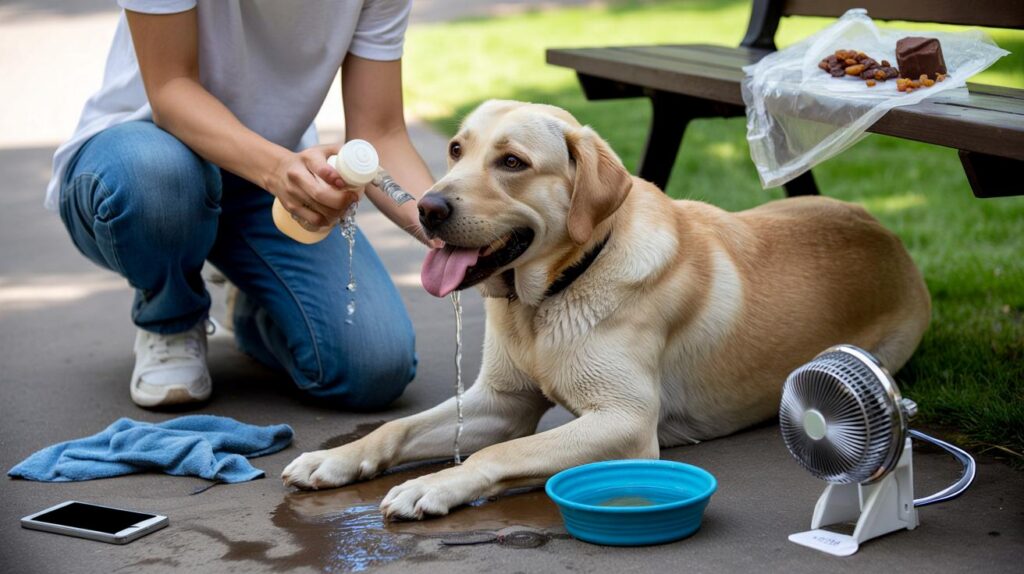
A dog can tip from “a bit hot” to crisis in the time it takes to fetch a bowl. Or inhale a mouthful of raisins before you even clock the open packet. When heat or toxins hit, the window for good first aid is short, and the mess of mixed advice gets loud fast.
The Labrador started to sway by the café fence, chest heaving like a bellows. People leapt up with offers: ice cubes, cold hose, a wet towel straight from a freezer bag. Someone dialled a vet and was put on hold, a panicked carousel of hold music, while the shadows crept across the pavement. We crouched, palms on warm fur, trying to be calm, trying to remember what helped and what harmed. It felt like the world narrowed to his eyes. Then the clock did something strange.
Heatstroke: spot it fast, cool smarter
You’ll often see it before you quite believe it: panting that doesn’t ease when they stop, tongue wide and dark, gums flushed red or pale, a strange, glassy look. Movement turns clumsy and slow; their skin and paws feel too warm, and drool strings the ground. In that first minute, move to shade, loosen gear, wet their coat with room‑temperature water, and fan for airflow.
Give small sips if they’re fully alert, not gulping or gagging, and wet the fur along the neck, armpits, groin and paws. If you have a thermometer, aim to guide them down towards 39.5°C, not a shiver-inducing plunge. We’ve all had that day where a breeze, a towel and a bottle become your whole toolkit, and it’s enough because you start right away.
Runners see this more than hot‑car headlines suggest; research from UK vets shows exertion triggers many cases, and short‑nosed breeds struggle sooner. Dogs shed heat poorly through sweat, relying on panting and evaporation, so icy water can clamp blood vessels and trap heat, plus trigger shock. Cool with tepid water and air, then call the vet and set off once the temperature is falling. Cool first, then drive.
Poisoning: the first move when a bad mouthful happens
Step one is simple: remove the source and check breathing. Call your vet or a poison helpline such as the UK Animal PoisonLine (VPIS), keep packaging, and note what, how much and when. If it’s on the coat or paws, rinse with lukewarm water and a mild pet shampoo; if it’s swallowed, don’t feed bread or milk.
Do not try internet hacks. Salt to “make them sick” can be lethal, and kitchen remedies mask symptoms the vet needs to see. Xylitol can crash blood sugar fast; grapes and raisins can harm kidneys; rat bait can affect clotting days later. Let’s be honest: nobody checks every cake box and handbag every day. We’ve all had that moment when the room goes quiet and the brownie plate is mysteriously clean.
Emergency vets I speak to say the calmest owner wins precious time with clear details and no home “treatments” to undo. Keep breathing slow, observations clear, and phone within reach.
“Your job isn’t to fix the poison at home. It’s to stop more going in, gather the story, and get the dog to targeted care fast.”
- What to say on the call: item ingested, amount, time, brand/strength, your dog’s weight, breed, age, symptoms starting now.
- Have photos of labels and the scene; send if asked.
- If the dog’s seizing or very drowsy, keep the airway clear and travel now while you’re on the phone.
- Skin contact or foxtail-type plant sap: rinse 10–15 minutes with lukewarm water, then vet.
- Useful contacts: your local vet, nearest 24/7 clinic, UK Animal PoisonLine (VPIS).
The five‑minute reflex every owner can build
First aid for dogs isn’t a course you tick, it’s a reflex you rehearse in tiny ways. Save your vet and emergency numbers under “A‑Vet” so they sit top of your contacts, stash a soft lead, a digital thermometer and a squeezy bottle by the door, and run a one‑minute “cool and call” drill in your head on hot days. Practice talking through a poison scenario aloud once this week and you’ll be quicker at it under pressure next week. Heatstroke and toxins don’t care if you’re at the beach, in a lay‑by or on a muddy footpath; the physics and the biology are the same. Small sips, shade, water + air. Source removed, labels kept, phone out. Never induce vomiting at home. Your dog needs your calm more than your heroics. Soyons honnêtes : person—no, scrap that. We both know this only sticks when you make it yours and repeat it until it’s almost boring.
| Key points | Details | Interest for reader |
|---|---|---|
| Heatstroke signs and first steps | Panting that won’t settle, red/pale gums, wobble; move to shade, tepid water + airflow, small sips, monitor towards 39.5°C | Clear, immediate moves that buy time and save life |
| Poisoning basics | Remove source, call vet/VPIS, keep packaging, no milk/salt/hacks, rinse skin exposures | Stops common mistakes and speeds correct care |
| Prepare a five‑minute reflex | Numbers saved, mini kit ready, practise the call, know your nearest 24/7 clinic | Confidence when seconds matter, wherever you are |
FAQ :
- How do I tell heatstroke from normal panting?Look for panting that doesn’t ease with rest, wide tongue, drool, red or pale gums, lethargy or collapse. Normal post‑play panting settles quickly in shade with water.
- Should I use ice or a cold bath?No. Ice can trap heat and stress the body. Use room‑temperature water on coat and belly areas, add airflow with a fan or breeze, and stop active cooling around 39.5°C.
- My dog ate chocolate/raisins/xylitol — what now?Remove access, note what/when/how much, keep the wrapper, call your vet or VPIS. Different toxins harm in different ways and doses; the call decides if you need urgent treatment.
- Can I make my dog vomit?Not at home. Some substances burn a second time on the way up, and aspiration is a risk. Vets choose if, when and how to empty the stomach or use activated charcoal.
- What belongs in a dog first‑aid kit?Digital thermometer, lubricant, saline pods, gauze, cohesive bandage, tick remover, soft muzzle or strip of cloth, squeezy bottle, spare lead, vet and emergency numbers on paper.



Brilliant, clear piece. The “Cool first, then drive” line is the kind of mantra I can actually remember under stress. I’d always heard to grab ice or a cold bath; glad you explained why that can backfire. I’ve saved the ‘sips + shade + airflow’ bit. Definately sharing with our dog park crew.
Are we sure about avoiding ice entirely? Our previous vet told us to use cool packs on groin/armpits during transport. Not trying to nitpick, just want sources so I can show my partner next time we argue over teh hose.