
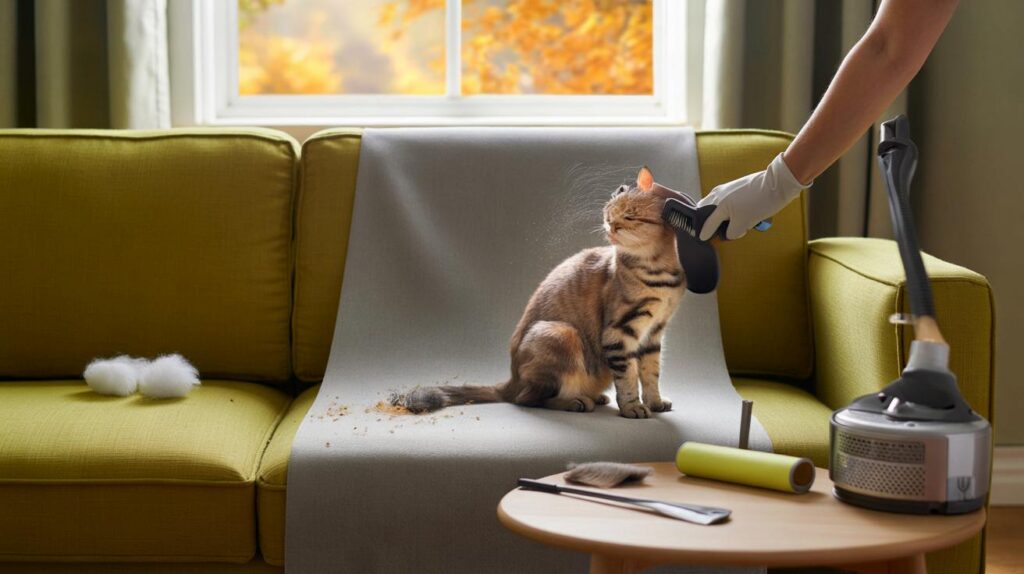
Cosy evenings return, and so does the blizzard of cat fur settling where you sit, nap and invite guests to perch.
Across the country, people are juggling candles, throws and a fresh layer of fluff on every cushion. The fix many households swear by pairs a quick grooming ritual with a smart fabric shield. The result costs little, takes minutes, and keeps furniture from looking tired by November.
Seasonal shedding and why your sofa pays the price
Cats moult with the seasons, yet indoor life keeps shedding going all year. Artificial light and constant heating confuse the coat’s cycle. Autumn often brings a heavier drop as thicker winter fur comes in. Stress, skin irritation and a thin diet can all add to the fallout. The sofa collects it first because fibres grip, static builds and cats love raised, warm spots.
Stop loose hair at the source and it never reaches the cushions. Leave it, and it clings to fabric within hours.
What pushes shedding into overdrive
- Shorter days and indoor lighting nudge the coat to change.
- Dry, heated rooms raise static, so fur sticks to upholstery.
- Routine changes, guests or noise can stress sensitive cats.
- Low omega-3 intake dulls the coat and loosens hair.
- Fleas, mites or skin flare-ups increase scratching and drop.
Daily grooming: the 10-minute shield
A brief brush every day intercepts loose hair before it hits the fabric. Pick the right tool for the coat, and keep it near the spot your cat naps. Brushing spreads natural oils, lifts dander and reduces hairballs. Most cats accept the routine if you keep it predictable and end with a treat.
- Rubber grooming glove for short coats: £6–£12, quick and gentle.
- Soft slicker brush for medium coats: £8–£18, reaches undercoat.
- Fine-tooth comb for long coats: £7–£15, untangles and collects.
- De-shedding tool used sparingly: £12–£25, lifts dense undercoat.
Work along the grain in slow passes. Finish with a slightly damp rubber glove to pick up leftovers. Two minutes per flank, one minute for the chest, one for the tail, and you are done. Place a mat under the cat and shake it outside after each session.
Ten minutes a day beats a weekend of scraping fibres from seams. Your lint roller finally gets a break.
How to make the habit stick
Pair grooming with a set cue, like the evening news or the kettle. Keep the tools in a small caddy by the sofa. Use high-value treats for the first week, then phase them to every other session. Skittish cats cope better on a stable chair or a window perch.
Washable throws: a low-cost barrier that works
A thin microfibre or polyester throw turns your sofa into a washable surface. Cover the seat and the cat’s favourite arm. Rotate two or three pieces, and wash at 40°C before fibres felt into the weave. A short tumble loosens clinging hair into the lint filter. Shake outdoors before washing to protect the machine.
| Fabric | Fur cling | Care tip |
|---|---|---|
| Microfibre polyester | Low | Weekly 40°C wash; 10-minute tumble to de-fuzz |
| Wool blends | High | Avoid for covers; fibres lock in fur |
| Velvet/corduroy | Very high | Reserve for cushions; rely on vacuum nozzle |
| Cotton twill | Medium | Use lint brush before washing |
One £15 microfibre throw can protect a £600 sofa for seasons, and it dries in under an hour.
Care and rotation that saves time
Wash covers weekly. Add wool dryer balls to reduce static and speed drying. Skip fabric softener, which can trap particles. A light mist of water on the throw before guests arrive pulls hair together for a quick sweep. Store a spare folded on the arm for a fast swap after naps.
Fast fixes when guests are on the way
Some visits come with little warning. Keep a small kit near the living room and set a five-minute timer.
- Damp rubber glove: sweep in one direction; rinse and repeat.
- Window squeegee: drag over fabric to lift embedded hair.
- Electrostatic cloth: wipe arms and headrests; avoid scented sheets.
- Lint roller: finish seams and piping, one sheet per cushion.
- Upholstery nozzle with a HEPA vacuum: slow passes capture dander.
Make it a household habit
The gains last when everyone plays a part. Share small tasks and set simple rules. Keep the roller where you sit. Brush after the last play session of the day. Put the throw in the wash on a set night.
- Daily: 10-minute brush; 30-second sweep of the throw.
- Midweek: quick vacuum of seats with the upholstery tool.
- Weekend: wash and swap throws; empty vacuum and clean filters.
Diet, comfort and calmer coats
Food shapes the coat. Many owners see a glossier finish when they add omega-3 from fish oil, following vet advice on dose. Fresh water supports skin hydration. A stable routine lowers stress, which reduces scratching and fur loss. Warm, washable bedding nudges cats off the prime spot on the sofa.
When shedding points to a health issue
Look for bald patches, red skin, dandruff, strong itching or sudden changes in shedding. That pattern calls for a veterinary check. Parasites, allergies or thyroid problems can drive hair loss. De-shedding tools should not scratch the skin. If the cat flinches or the skin looks pink, switch to a softer brush and reduce pressure.
Why this two-step plan works beyond the sofa
Brushing lowers the amount of loose hair in circulation, so fewer hairballs form. Throws trap dander and pollen, which helps sensitive noses breathe easier. The home stays tidier with less effort, and fabrics last longer because grit does not grind in with every sit-down.
Smart extras for stubborn static and cling
Dry air fuels static, so hair sticks harder. Aim for indoor humidity around 45%. A small humidifier near the lounge helps, or a bowl of water on a radiator. Spray bottles filled with plain water give a fine mist that settles flyaways before a quick sweep. Vacuum bags and filters collect more when they are no more than half full.
Time and cost: what you actually save
Ten minutes of grooming a day totals just over an hour a week. Many households report they avoid two hours of deep-cleaning at the weekend once the routine beds in. Two microfibre throws, one brush and a pack of dryer balls often come in under £40, and they keep working through the season.



The static bit rings true—my heated flat turns the sofa into a fur magnet. But weekly 40°C washes + a 10‑minute tumble sounds energy-heavy and maybe sheds microfibres. Any tips to reduce statick without extra drying? Would a light mist + rubber glove be enough on busy weeks? Also worried darker throws might bleed—do microfibre dyes run, or is cotton twill safer? Great read, just trying to balence effort vs enviro impact.